

Is finasteride safe for treating male pattern baldness?
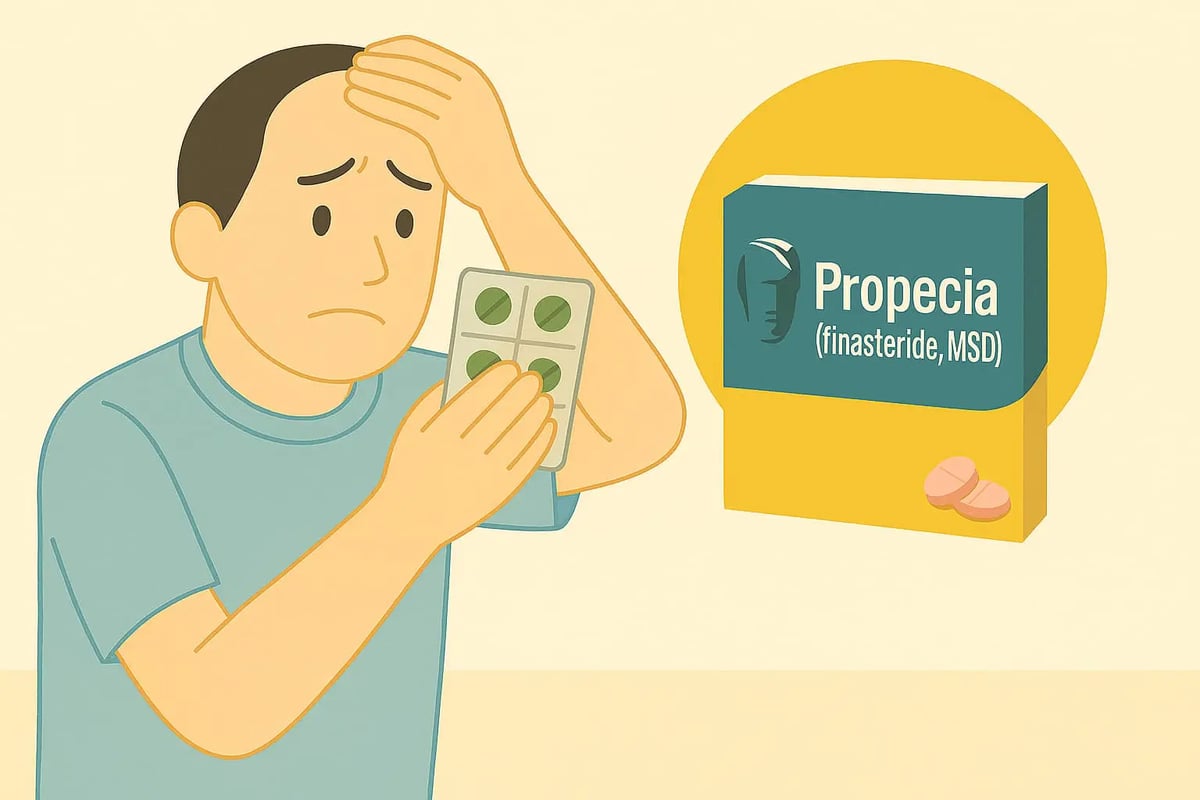
Male pattern baldness and hair loss are problems faced by many men, especially in the early stages of androgenetic alopecia. Many consider taking Finasteride in hopes of slowing further hair loss. However, regarding oral hair growth medications, the most frequently asked question is: “Does Finasteride have side effects? Is it safe for long-term use?”
Finasteride is currently one of the commonly used oral medications for the treatment of male pattern baldness. Its main purpose is not to cause hair to regrow immediately in large quantities, but to help stabilize hair condition, reduce shedding, and delay the progression of balding. For men who still possess a certain amount of native hair and want to control the progression of male pattern baldness, Finasteride is a common treatment option.
What is Finasteride and Why Does It Treat Male Pattern Baldness?
Finasteride was originally primarily used for treating benign prostatic hyperplasia (enlarged prostate). During clinical use, it was discovered that hair density improved for some users, so it was gradually applied to the treatment of male pattern baldness.
Male pattern baldness is closely related to DHT (Dihydrotestosterone). DHT affects hair follicles sensitive to hormones, causing them to gradually shrink, resulting in hair becoming finer and shorter, eventually leading to obvious hair loss and baldness.
The mechanism of finasteride is to inhibit DHT production, helping to slow down the continuous shru‑king of hair follicles, thereby achieving the effects of stabilizing hair condition and delaying the progression of hair loss.
| Item | Description |
|---|---|
| Main Ingredient | Finasteride |
| Common Uses | Male pattern baldness, Benign Prostatic Hyperplasia |
| Treatment Goal | Stabilize hair condition, reduce hair loss, delay progression of baldness |
| Common Dosage | 1mg once daily, or use as directed by a physician |
Does Finasteride Treatment for Baldness and Hair Loss Have Side Effects?
Finasteride is a medication that has been used clinically for many years, and most patients tolerate it well. However, like any medication, Finasteride may cause side effects in some users.
Commonly discussed side effects include decreased libido, effects on erectile function, and reduced semen volume. Overall, these side effects occur at a relatively low rate. In rare cases, some patients may experience breast tenderness, gynecomastia, or testicular pain.
If you experience noticeable discomfort while taking Finasteride, it is not recommended to stop the medication, increase the dose, or change the dosage on your own. You should return for a follow-up visit and discuss your condition with your doctor.
| Possible Side Effect | Description | Recommended Action |
|---|---|---|
| Decreased libido | A small number of users may experience reduced sexual desire | Monitor symptoms and discuss with your doctor whether adjustment is needed |
| Effects on erectile function | Some patients may worry about erectile dysfunction, but the occurrence rate is relatively low | If symptoms persist, return for medical evaluation |
| Reduced semen volume | May be related to the medication’s mechanism of action | If you are planning for pregnancy, consult your doctor first |
| Gynecomastia or breast tenderness | A relatively rare side effect | If breast swelling or pain occurs, seek medical evaluation |
| Testicular pain | Rare, but still possible | Let your doctor assess the condition and avoid self-management |
How to Take Finasteride? What is the Best Time to Take It Daily?
Finasteride is typically administered once daily and can be taken at any time during the day. The point is not that it must be taken in the morning or evening, but rather to take it at a consistent time so that it is easier to remember.
Common modes of administration include taking one 1mg tablet daily, or dividing a 5mg dose as instructed by the physician. Increasing the dosage on your own is not recommended, as a higher dosage does not imply superior hair restoration results; on the contrary, it may increase unnecessary concerns regarding side effects.
| Administration Key Points | Suggested Explanation |
|---|---|
| Administration Frequency | Usually once daily |
| Timing | Morning or evening is acceptable; a fixed time is ideal |
| Self-Adjustment of Dosage | Not recommended; should be followed according to the physician’s instructions |
| Duration to Observe Efficacy | Generallly requires long-term observation; premature assessment of ineffectiveness is not advised |
I will now output the final version.
Can Male Pattern Baldness Hair Transplant be Combined with Finasteride?
Yes. Many patients with male pattern baldness are advised by doctors to assess the use of Finasteride before and after hair transplantation to help stabilize their existing (native) hair.
Hair transplantation involves moving hair follicles from the occipital area (back of the head) which are less affected by DHT to the balding area. However, the remaining hair, if it continues to be affected by male pattern baldness, still has a chance of gradually thinning and falling out.
Therefore, some individuals may experience a gradual decline in overall density over time if they do not maintain long-term hair control after transplantation. Finasteride is one of the treatment options available for long-term stabilization of the hair condition.
| Condition | Suggestion for Oral Medication | Reason |
|---|---|---|
| Early Male Pattern Baldness | Can be evaluated | Helps delay the worsening of hair loss |
| Preparing for Hair Transplant | Usually recommended to evaluate | Stabilizes native hair; improves the completeness of the overall treatment plan |
| Post-Hair Transplant | Can be continued based on doctor’s advice | Prevents continued hair loss in non-transplanted areas |
| Years of Obvious Baldness | Needs individual assessment | Since follicles may have severely atrophied, medication effects alone may be limited |
What are the brands of oral drugs for hair loss? +
Finasteride is currently available in various brands and generics, and multiple drugs with the same active ingredient can be seen on the market. As long as the active ingredient and dosage are correct, the mechanism of action is generally the same. However, it is recommended to choose the appropriate medication after assessment by a physician; it is not recommended to purchase products of unknown origin on your own.
What are the side effects of Finasteride treatment for hair loss? +
Potential side effects include reduced libido, affected erectile function, and reduced semen volume, but the overall incidence is relatively low. A minority of people may experience gynecomastia, breast pain, or testicular pain. If discomfort occurs, it is recommended to revisit the physician for a discussion.
Can women planning to become pregnant take Finasteride? +
No. Women who are pregnant, trying to conceive, or who may become pregnant should not take or be exposed to Finasteride. It is particularly important to avoid exposure to broken or crushed tablets to reduce the risk of affecting fetal development.
If the husband takes Finasteride, does the wife need to stop taking medication when trying to conceive? +
Generally speaking, the husband does not necessarily need to stop medication on his own, but it is recommended to discuss his personal situation with a physician. The most important point is that the wife must not take Finasteride directly or come into contact with it.
Does Finasteride affect prostate cancer screening? +
Finasteride may lower PSA levels and affect the interpretation of prostate cancer screening. Therefore, if undergoing a health check-up while taking the medication, be sure to proactively inform the physician that you are taking Finasteride.
Can I donate blood while taking Finasteride? +
If there is a need to donate blood, it is recommended to stop the medication for at least one month and evaluate whether it is suitable for donating blood in accordance with the regulations of the physician or blood donation center.
Can Finasteride make hair grow back completely? +
The main goal of Finasteride is to stabilize hair condition, reduce hair loss, and delay the progression of baldness. If the hair follicles have severely atrophied, the chance of completely regrowing hair with medication alone is limited, and combined treatment or a hair transplant evaluation may be needed.
How long does it take for Finasteride to become effective? +
Treatment for androgenetic alopecia usually requires long-term observation; short-term use is not recommended before determining its efficacy. Actual results may vary depending on individual hair condition, the degree of hair loss, medication compliance, and the physician's follow-up results.
Related articles
This article has been reviewed and medically approved by Dr. Wen-Yi Wu

Dr. Wen-Yi Wu|Director, Mong Hair Clinic
- ● Fellow of ISHRS (FISHRS)
- ● ABHRS Board-Certified Hair Restoration Surgeon
- ● President of TSHRS (Taiwan Society of Hair Restoration Surgery)