

What Habits Help Prevent Hair Loss? 6 Lifestyle Adjustments
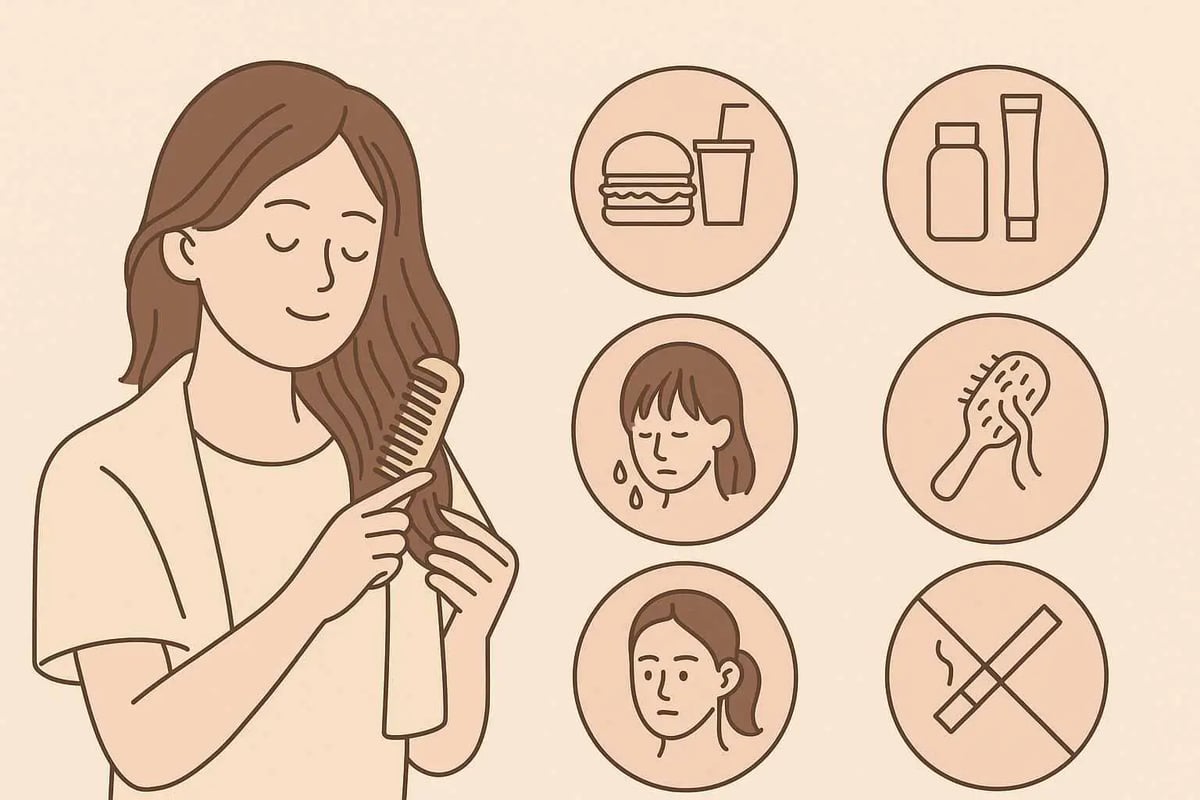
To shed less hair, you do not have to start medication or a procedure right away — a few daily habit adjustments can already reduce scalp irritation, breakage, and avoidable loss factors.
Key point: You can start preventing hair loss with 6 things: less sugar and fat, less dyeing/perming irritation, drying your hair before bed, combing wet hair gently, avoiding tying it too tight for long periods, and quitting smoking. Note: lifestyle changes are the foundation, but if you have hereditary loss, you usually still need a doctor’s assessment and long-term follow-up. If shedding clearly increases, the hairline recedes, or the scalp is red, itchy, or flaky, have a doctor check the cause and decide whether treatment or follow-up is needed.
6 Hair-Loss-Prevention Habits at a Glance
The point of daily habits is not to make hair grow instantly, but to reduce scalp irritation, breakage, and avoidable loss factors. Use the table below to check which risks you most often fall into, then start with the easiest one to adjust.
| Common habit | Possible effect | Suggested adjustment |
|---|---|---|
| High-sugar, high-fat diet | More sebum, a hot, uncomfortable scalp | Cut sugary drinks, fried food, and refined sweets; get enough protein, iron, zinc, and B vitamins |
| Frequent dyeing/perming or heat styling | Shaft damage, breakage, and scalp irritation | Space out dyeing/perming; pause irritating treatments when the scalp is sensitive |
| Sleeping with wet hair | A damp environment worsens scalp itch and flaking | Dry the scalp before bed; keep the dryer at a distance and avoid overheating |
| Combing wet hair hard | Pulling fragile strands raises breakage | Pat dry with a towel first, then use a wide-tooth comb from the ends up |
| Tying it too tight for long | Ongoing traction on temples and hairline | Loosen and rotate styles; avoid pulling the same area daily |
| Smoking | May affect circulation and the scalp micro-environment | Quit gradually, along with sleep and exercise management |
How Do Diet and Dyeing/Perming Affect the Scalp?
A high-sugar, high-fat diet does not necessarily cause loss on its own, but it may raise sebum and make the scalp hotter and oilier. Combined with an itchy or flaky scalp, folliculitis, or a male-pattern tendency, an unstable scalp makes care harder. First cut the frequency of sugary drinks, sweets, fried food, and late-night snacks, then get enough protein, dark green vegetables, whole grains, nuts, and iron-rich food; those dieting, vegetarian, or losing weight fast should also watch for telogen shedding from under-nutrition.
Frequent dyeing/perming and heat styling mainly damage the shaft — commonly frizz, split ends, breakage, and hair that looks thinner. If the chemicals contact the scalp and cause redness, stinging, flaking, or discharge, there may be scalp inflammation — pause irritation and see a doctor. With a stable scalp, you can space dyeing/perming to about 2–3 months or more; with clear loss or a sensitive scalp, wait until the scalp settles.

Why Do Sleeping With Wet Hair and Hard Combing Cause Breakage?
Sleeping with wet hair against the pillow keeps the scalp damp and hot for a long time, which can worsen itch, odour, flaking, or folliculitis — it does not mean you shed every time you sleep with wet hair, but it does make care harder for oily or sensitive scalps. How to dry without harming the scalp: pat dry with a towel first, then use low-to-medium heat from scalp to ends, keeping the dryer about 15–20 cm away; dry until the scalp is dry while the hair keeps some softness — no need to blast on high heat until it is stiff.
Wet hair is more fragile, and pulling hard from root to tip easily causes breakage and frizz that looks like more shedding. The right combing order: pat dry with a towel (do not rub back and forth), then use fingers or a wide-tooth comb from the ends up in sections; for bad tangles, use a conditioner that does not touch the scalp to avoid snapping the hair.
Can Tying It Too Tight Cause Traction Loss? And Does Smoking Matter?
Long-term high ponytails, tight buns, braids, or extensions can put ongoing traction on the temples, frontal hairline, or around the part, forming traction hair loss. Reducing pulling early usually gives the scalp a better chance to rest; once follicles are damaged, recovery is harder. If your scalp hurts after tying, small red bumps appear near the hairline, the temples get emptier, or the scalp feels tight even with hair down, switch to looser, rotating styles; if local thinning persists, have a doctor check for traction loss.
As for smoking, it may affect vascular circulation, oxidative stress, and the scalp micro-environment — no bonus for follicle health. Loss is usually multifactorial and cannot be pinned on smoking alone, but quitting is still an important step for overall health and scalp care. Managing sleep, exercise, diet, and stress together is more stable than a single care routine.
At What Point Should You See a Doctor?
People may naturally shed about 50–100 hairs a day; the point is not the number but whether it suddenly increases, keeps rising, or concentrates in one area. If loss lasts over 3 months, the hairline recedes, the crown thins, the part widens, or the scalp is red, itchy, painful, flaky, or has folliculitis, see a doctor. The doctor usually judges the direction by loss pattern, family history, scalp condition, recent stress, and nutrition, arranging blood tests, a scalp exam, or treatment follow-up if needed. The sooner the cause is clarified, the less time you waste on methods that do not suit you.
| What you observe | Possible direction | Next step |
|---|---|---|
| Sudden overall increase in shedding | Telogen loss from stress, post-illness, postpartum, dieting, or nutrition | Recall the past 2–3 months; blood test and doctor assessment if needed |
| Receding temples or thinning crown | Male-pattern or familial loss | Doctor checks follicle miniaturisation, discusses follow-up or treatment |
| A round bald patch | Alopecia areata or other local loss disease | See a doctor early; do not apply irritating home remedies |
| Red, itchy, painful, flaky scalp or pustules | Seborrhoeic dermatitis, folliculitis, infection, or contact dermatitis | Treat the scalp inflammation first, then assess if loss improves |
How much daily shedding is normal? +
Naturally visible shedding is about 50–100 hairs a day, but wash frequency and hair volume differ. If shedding suddenly rises, lasts over 3 months, or concentrates at the hairline and crown, have a doctor assess.
Are lifestyle changes alone enough? +
Lifestyle helps stabilise the scalp and reduce breakage and irritation, but male-pattern loss, alopecia areata, scalp inflammation, or nutritional deficiency usually need the cause found and treated. Do not rely on care products alone for too long when loss continues.
Can washing hair damage follicles or cause shedding? +
Normal washing usually does not damage healthy follicles; what you see when washing is mostly hair already in the shedding phase. What to watch is scratching with nails, water that is too hot, incomplete cleaning, or scalp inflammation.
Can late nights and stress cause shedding? +
Long-term lack of sleep and stress may affect the body's regulation, and some people get telogen shedding. If heavy shedding starts 2–3 months after a stressful event, note the timing and see a doctor to check for other factors.
Related articles
This article has been reviewed and medically approved by Dr. Wen-Yi Wu

Dr. Wen-Yi Wu|Director, Mong Hair Clinic
- ● Fellow of ISHRS (FISHRS)
- ● ABHRS Board-Certified Hair Restoration Surgeon
- ● President of TSHRS (Taiwan Society of Hair Restoration Surgery)