

Why is hair transplant measured in "stems"?
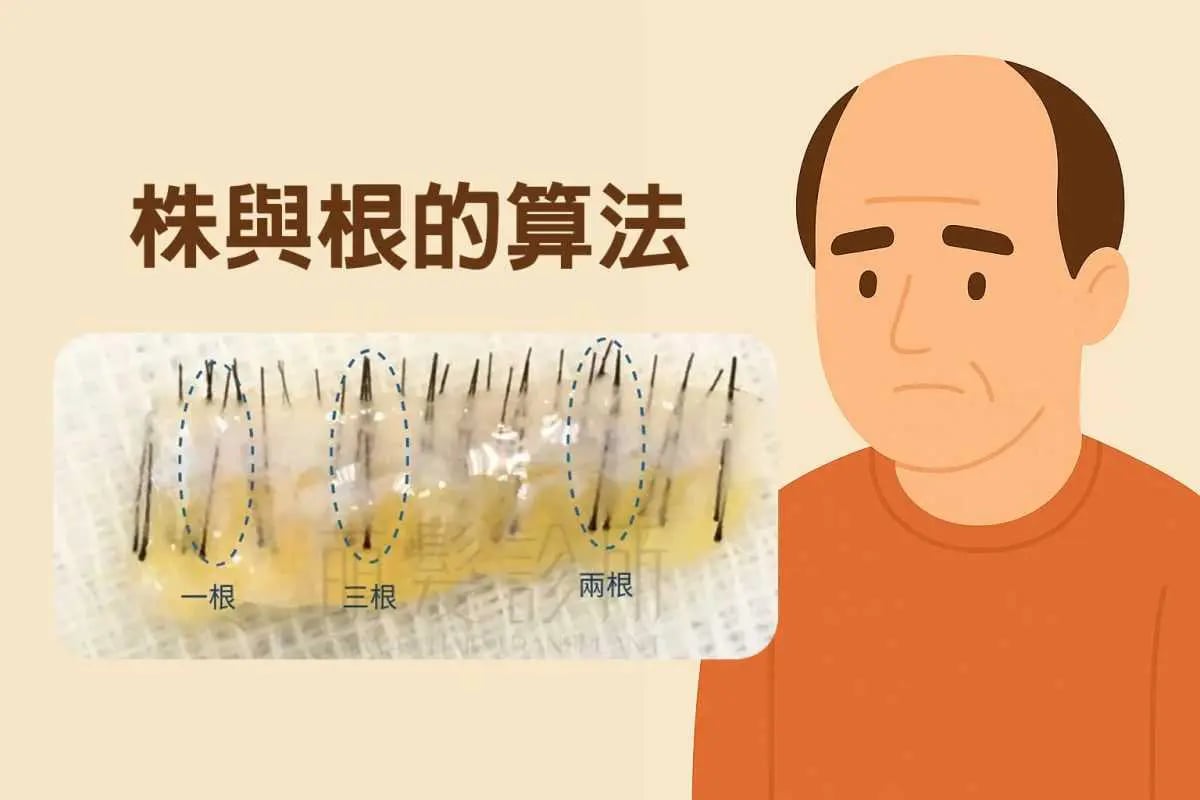
Many Hong Kong friends often ask when consulting for hair transplants: “Why is the cost not calculated by the number of hair grafts, but by the number of graft units?”
In fact, “graft units” are complete hair follicular units and the fundamental units actually extracted, classified, and transplanted in a hair transplant surgery.
Simply put, calculating hair transplantation based on “graft units” is more accurate, transparent, and aligns better with the natural growth pattern of hair.
What is a “Graft Unit”?
The “graft unit” mentioned in hair transplantation refers to a single hair follicular unit. Inside each unit, there are typically 1 to 4 hairs.
Therefore:
- 1 Graft Unit ≠ Always equals 1 hair strand
- 3,000 Graft Units ≠ 3,000 hair strands
- If the average contains 2 hairs, 3,000 graft units could equal approximately 6,000 hair strands
However, the fundamental unit actually manipulated during the hair transplant surgery remains the “graft unit,” not an individual hair strand.
Why is hair transplantation calculated using “Graft Units”?
1. Matches natural hair growth patterns
Human hair naturally grows in groups of follicular units, rather than existing as independent strands.
Doctors remove complete follicular units and transplant them to areas requiring hair restoration, resulting in a more natural look.
2. Enhances naturalness
The hairline, forehead, and crown areas require specific requirements regarding grafting angle and density.
For example, the front row of the hairline usually uses single-hair follicles to create softer lines, while the rear can use double or multi-hair follicles to increase density.
3. Clearer and more transparent pricing
Calculating by “graft units” allows patients to clearly know the actual number of follicular units transplanted. Compared to calculating by “strand count,” calculating by graft units makes it easier to evaluate the scope, density, and cost of the procedure.
Guise vs. Hair Count Comparison
| Item | Guise / Follicular Unit follicles | Hair Count |
|---|---|---|
| Calculation Method | Calculated by complete follicle units | Calculated by hair count |
| Quantity per Unit | Usually contains 1–4 hairs | Simple count of each individual hair |
| Advantages | Conforms to scalp physiological structure; more transparent pricing | Numbers are easy to understand |
| Issues | Requires professional extractions and implantation techniques | Easily confuses the actual number of follicles |
| Suitability | Common method in professional hair transplantation | Harder to reflect surgical quality |
How to Estimate Transplanted Guise Numbers?
The actual number of guises required depends on the involved balding area, hair texture (fine/coarse), the supply of follicles in the donor area (posterior vertex), and the desired density.
| Condition | Common Required Guise Count |
|---|---|
| Hairline Sculpting (Adjustment) | Approximately 800–1,500 guises |
| M-Shaped Hairline Improvement | Approximately 1,500–2,500 guises |
| Forelock Thickening | Approximately 2,000–3,000 guises |
| Sparse Crown Area | Approximately 2,500–4,000 guises or more |
The above is only a general reference; the actual number requires evaluation by a doctor.
Hair Transplant Cost Should Not Be Based Solely on Unit Price
When comparing hair transplant prices, do not only look at “how much per unit” or the “total price.” It is more important to understand:
- Doctor’s experience
- Precision of follicle dissection
- Whether the implantation angle is natural
- Reasonableness of density planning
- Completeness of post-operative follow-up
Low price does not always mean value for money, and high price does not necessarily mean suitability. Most importantly, the treatment plan must be clear, pricing must be transparent, and the results must look natural.
Q1: How many hairs are in one graft? +
A graft usually contains 1 to 4 hairs, depending on the individual's follicular condition.
Q2: Is 3,000 grafts equal to 3,000 hairs? +
Not necessarily. 3,000 grafts represent 3,000 hair follicular units. If there are an average of 2 hairs per graft, there could actually be approximately 6,000 hairs.
Q3: Why is hair transplant cost not calculated by the number of hairs? +
Hair grows naturally in follicular units. Calculating by "grafts" aligns better with medical structure and more accurately reflects the actual volume of the procedure.
Q4: Does a higher quantity of grafts mean better results? +
Not necessarily. The results also depend on follicular quality, planting density, the physician's technique, hairline angle, and post-operative care.
Q5: How many grafts are needed for a hairline? +
Generally, approximately 1,500 to 2,500 grafts are required, though the actual number depends on the hairline height, the area of hair loss, and the desired density.
Q6: Why are single follicular units used for hairline transplants? +
Single follicular units are used for the front row of the hairline to create a finer, more natural appearance and to avoid looking too harsh or artificial.
Related articles
This article has been reviewed and medically approved by Dr. Wen-Yi Wu

Dr. Wen-Yi Wu|Director, Mong Hair Clinic
- ● Fellow of ISHRS (FISHRS)
- ● ABHRS Board-Certified Hair Restoration Surgeon
- ● President of TSHRS (Taiwan Society of Hair Restoration Surgery)