

Does Wearing a Helmet Cause Hair Loss? Causes, Fixes and When to See a Doctor
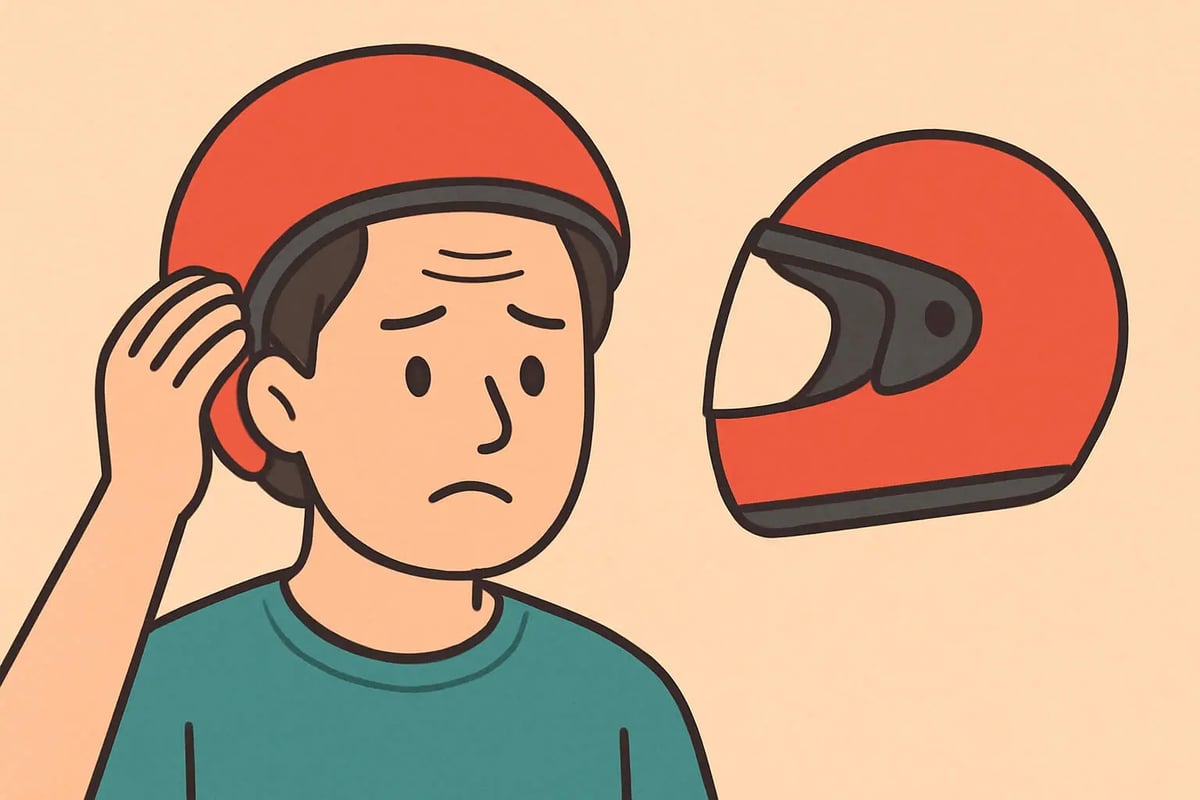
Wearing a helmet usually does not directly cause male pattern baldness, and a scalp that cannot “breathe” does not starve the follicles of oxygen. That said, a too-tight fit, long hours of repeated friction, sweat, and scalp inflammation can make breakage or localised shedding more noticeable.
If your hairline keeps receding, the crown is gradually thinning, or only the helmet-contact area shows redness, pain, and patchy loss, the cause may be different — it should not be blamed on the helmet alone.
Key point: A helmet does not change the genetic and hormonal mechanism of male pattern baldness. What really matters is a too-tight fit and friction, trapped sweat, and any pre-existing scalp condition. Adjust the size, clean the lining, and watch the pattern of shedding first; if thinning lasts for months, worsens quickly, or comes with inflammation, have a doctor assess it in person.
Does Wearing a Helmet Really Cause Baldness?
With normal helmet use, there is no solid evidence that it directly causes male pattern baldness. Follicles get their oxygen and nutrients from the blood supply, not from the surrounding air, so the idea that trapping the follicle suffocates it is simply not correct.
Male pattern baldness is mainly linked to genetics, androgen metabolism, and follicle sensitivity — a helmet does not create this predisposition. If the shedding pattern is receding at the temples or gradual thinning at the crown, male pattern baldness should be ruled out first.
Heat and sweat alone do not necessarily damage follicles, but moisture, sebum, and an unclean lining can worsen itching, folliculitis, or seborrhoeic dermatitis. Scratching and inflammation can also make short-term shedding or breakage look more obvious.
When Can a Helmet Cause Localised Hair Loss?
What deserves more attention is long-term, repeated pulling and friction at a fixed spot. A helmet that is too small, an edge that repeatedly tugs the hair, a hardened lining, or hair tied too tightly can all raise the risk of localised breakage or traction hair loss.
The following signs may mean the helmet is too tight:
- Clear pressure marks on the forehead or scalp after removal, with lasting pain or numbness
- The same area of hair being tugged every time you put it on or take it off
- A collapsed or hardened lining, or a seam that keeps rubbing the same spot
- Repeated breakage, rash, pustules, or patchy thinning at the contact area
There is no one-size-fits-all hourly limit. Rather than judging by how many hours a day, watch whether the fit is right, whether there is repeated tugging, and whether the scalp stays uncomfortable.

Telling Helmet Loss, Male Pattern Baldness, and Scalp Inflammation Apart
The location, speed, and accompanying symptoms of shedding give early clues, but they cannot replace a diagnosis. A doctor may use your history, a pull test, dermoscopy, or other tests as needed to work out why hair is thinning, breaking, inflamed, or scarring.
| What to observe | Friction / traction loss | Male pattern baldness | Scalp inflammation |
|---|---|---|---|
| Typical distribution | Fixed pressure or friction spots | Men: temples, hairline, crown; women: widening crown part | Scattered, or focused on red, flaky areas |
| Accompanying signs | Short/broken hair, tenderness, patchy thinning | Hair gradually thins, usually slow progression | Itching, oily flaking, rash, pain, or pustules |
| First priority | Reduce pulling, adjust size and lining | Doctor confirms the stage and options | Keep it clean; doctor assesses if treatment is needed |
| When to see a doctor | Keeps spreading after removing the trigger, or skin turns smooth | Hairline or crown keeps thinning | Pain, discharge, crusting, pustules, or recurring flare-ups |
How to Reduce Hair Loss and Scalp Discomfort with Daily Helmet Use
- Pick the right size and fit: Choose the helmet by head circumference and the maker’s guidance — firm but without constant pain or pressure. Do not go too small for fear it will fall off, and do not stuff bulky padding inside to change the load, while still keeping proper protection.
- Clean and fully dry the lining: Clean the removable lining regularly per the maker’s instructions, and let it dry completely before refitting; rotate clean linings if you sweat a lot. For shared helmets, use a clean, breathable personal cap liner.
- Care for the scalp without over-washing: After heavy sweating, cleanse with a gentle shampoo, then dry the scalp. Avoid scratching with nails, high-heat styling, or self-medicating with ointments long-term.
- Track the location and change of shedding: Under the same lighting, angle, and hairstyle, photograph the hairline, crown, and sides monthly — this shows trends better than just looking at hair in the drain. If the thin spot does not match the helmet contact point, consider other causes.
Will Hair Grow Back on Its Own After You Stop Wearing a Helmet?
Whether it recovers depends on the cause and the follicle’s condition. If it is mainly friction breakage or early traction, it may improve gradually once the stimulus is removed — but the hair growth cycle runs in months, so you usually will not see change within days.
If the real cause is male pattern baldness, stopping helmet use will not halt its progression. If long-term inflammation or traction has already caused scarring changes, recovery may be limited. Whether medication, scalp treatment, or a transplant is suitable must be assessed by a doctor based on the diagnosis, donor-area condition, and your overall health — not everyone needs or is suited to a transplant.
What Warning Signs Mean You Should See a Doctor?
If shedding continues for months or spreads even after adjusting the helmet and caring for the scalp, arrange a hair and scalp assessment. The following should not be watched with just a change of shampoo:
- A rapidly receding hairline, a steadily widening crown part, or clearly visible scalp
- Sudden patchy loss, or a smooth, shiny scalp surface with no visible pores
- Persistent redness, pain, pustules, crusting, discharge, or intense itching
- Recent illness, high fever, rapid weight loss, major stress, or new medication
The sooner you tell apart breakage, inflammation, male pattern baldness, telogen effluvium, or scarring loss, the sooner the cause can be addressed — but the actual diagnosis and treatment still need an in-person assessment by a professional doctor.
Does wearing a helmet every day cause hair loss? +
Normal use usually does not directly cause male pattern baldness; but a too-tight fit or poor hygiene can make localised shedding more obvious. Persistent thinning should be assessed by a doctor.
Does helmet heat damage the follicles? +
No — a lack of breathability does not starve follicles of oxygen, because they get oxygen from the blood supply. However, trapped sweat and poor hygiene can worsen some scalp conditions; see a doctor if there is redness, flaking, pain, or pustules.
Can going up a size fix the hair loss? +
If the problem comes from tightness or friction, choosing the right head circumference and spec may reduce irritation — but not so loose that it compromises protection. If the hairline or crown keeps thinning, other causes such as male pattern baldness still need to be ruled out.
How long until hair grows back after stopping? +
For simple breakage or early traction, it may improve over months once the stimulus is removed, but this varies greatly. If it still worsens after several months, the skin looks smooth, or there is inflammation, have a professional doctor assess the follicles.
Related articles
This article has been reviewed and medically approved by Dr. Wen-Yi Wu

Dr. Wen-Yi Wu|Director, Mong Hair Clinic
- ● Fellow of ISHRS (FISHRS)
- ● ABHRS Board-Certified Hair Restoration Surgeon
- ● President of TSHRS (Taiwan Society of Hair Restoration Surgery)