

Sudden Faster Hair Loss: 5 Common Causes and How Doctors Assess It
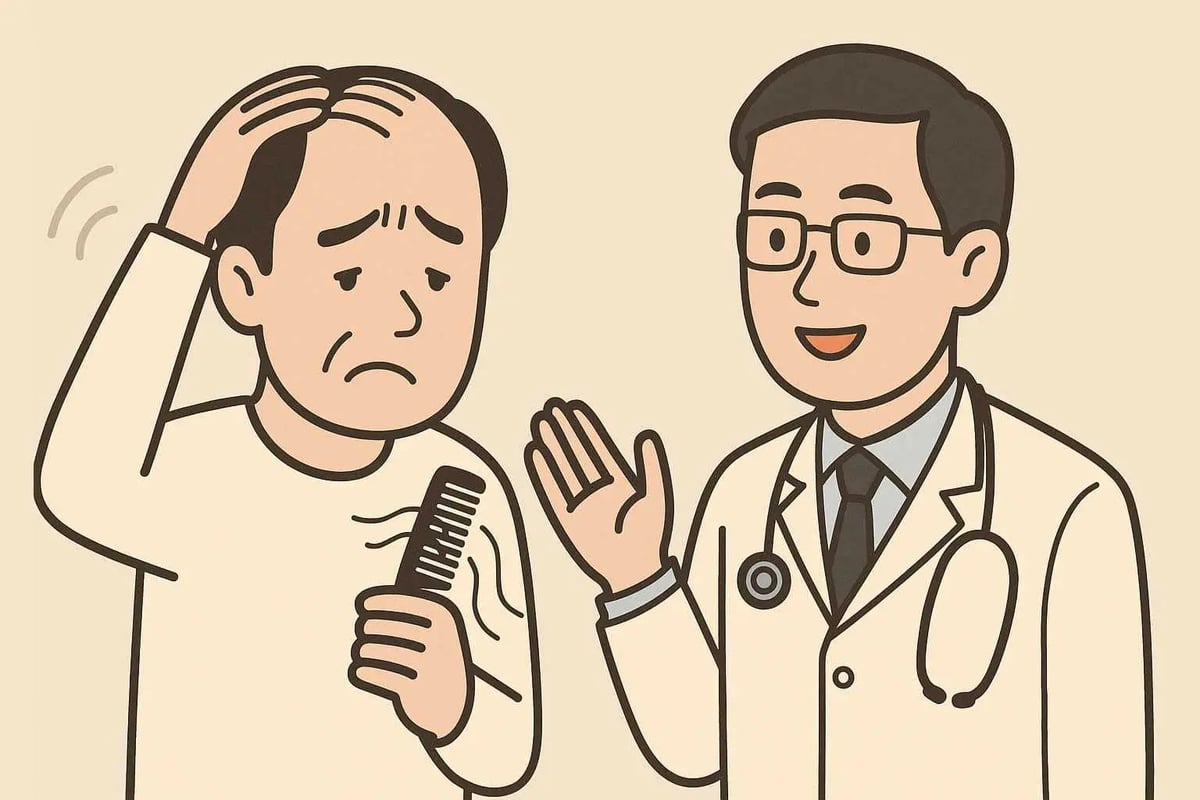
Suddenly noticing you are shedding more, and faster? Don’t panic first. Some acute hair loss is temporary, and male pattern baldness has a “golden treatment window” — the key is to work out the cause early.
Key point: A sudden increase in shedding is usually linked to accelerating male pattern baldness, life stress, hormonal swings, poor diet, or medication side effects. When daily shedding clearly rises, the part widens, or the temples recede, seize the golden treatment window and see a professional doctor for follicle testing and a personalised assessment, to avoid follicle shrinkage and death.
Why Does Hair Loss Suddenly Speed Up? 5 Common Causes
A sudden rise in shedding is rarely due to a single cause. The five most common are:
- Male pattern baldness entering a rapid-progression phase: MPB (AGA) progresses slowly at first, but with age, disrupted routines, or hormonal change it can suddenly enter a “rapid phase”; without timely action, follicles shrink faster and recovery becomes much harder.
- Acute telogen effluvium: After major stress, serious illness, surgery, rapid weight loss, or certain medication, many follicles can enter the resting phase early, with heavy shedding 2–3 months after the event.
- Lifestyle and poor sleep: Long-term late nights, too little sleep, and accumulated work stress affect scalp circulation and follicle nutrition, disrupting the growth cycle and sharply raising shedding in a short time.
- Unbalanced diet and nutritional deficiency: Extreme weight-loss diets or a lack of protein, iron, zinc, or B vitamins can impair follicle development and make healthy hair fall early.
- Autoimmune or scalp disease: Autoimmune problems such as alopecia areata, or severe scalp inflammation and seborrhoeic dermatitis, can cause rapid local or widespread loss in a short period.

When Should You See a Doctor? Telling Three Types of Hair Loss Apart
To tell which type your sudden faster hair loss belongs to, use this comparison table compiled by professional doctors.
| Loss type | Common cause | Main features | Follicle-shrinkage risk | Doctor’s advice |
|---|---|---|---|---|
| Rapid-phase male pattern baldness | Genetics, androgen (DHT) stimulation | Receding temples (M-shape), thinner/sparser crown, widening part | High (needs early medication) | Oral/topical medication, hair-growth therapy, transplant assessment |
| Acute telogen effluvium | Major stress, post-illness, extreme weight loss, medication | Even shedding across the head when washing or combing, over 150 hairs a day | Low (often recovers after the event) | Adjust routine and nutrition, ease stress, regular follow-up |
| Alopecia areata | Autoimmune system attacking follicles | Coin-sized, sharply defined bald circles in patches | Medium (early treatment can recover) | See a dermatologist; local steroid injection or application |
How Do Doctors Test and Assess Follicles?
- Dermoscopy and follicle-density analysis: The doctor uses a professional high-resolution scalp device to analyse follicle density and thickness ratio across areas (forehead, crown, back), judging whether follicles are healthy, shrinking, or degenerating.
- Detailed life and family history: Understanding your genetic background, recent stress events, diet, medication history, and sleep helps find the factors triggering the acceleration.
- A personalised combined plan: For early loss or follicles not yet fully shrunk, oral medication, topical hair-growth solution, or low-level laser can stabilise volume; where follicles in certain areas have already died, an FUE or FUT transplant can be assessed to rebuild the look.
What usually causes sudden faster hair loss? +
Common causes include worsening male pattern baldness, acute telogen effluvium (stress, poor routine, nutritional deficiency), or autoimmune dysregulation. Have a specialist do follicle testing early to find the core cause.
Can sudden faster hair loss permanently shrink follicles? +
It can, especially in a worsening male-pattern phase; without timely action such as medication, follicles may keep shrinking and even lose the ability to regrow. The earlier you are assessed and treated, the higher the chance of keeping healthy follicles.
Does faster hair loss always mean a transplant? +
Not necessarily. If follicles have only entered a temporary resting phase from stress or nutrition, adjusting routine and nutrition often helps; early male pattern baldness may also be stabilised with medication. A transplant usually suits areas where follicles have died and medication has limited effect.
Will I stop losing hair fast after a transplant? +
Transplanted follicles from the back usually survive long term, but native hair still facing male-pattern risk may keep thinning over time. So after a transplant you usually still need to continue medication or topical solution as advised, to maintain overall volume.
Related articles
This article has been reviewed and medically approved by Dr. Wen-Yi Wu

Dr. Wen-Yi Wu|Director, Mong Hair Clinic
- ● Fellow of ISHRS (FISHRS)
- ● ABHRS Board-Certified Hair Restoration Surgeon
- ● President of TSHRS (Taiwan Society of Hair Restoration Surgery)