

Thinning Fringe: Causes and Hair Transplant Assessment
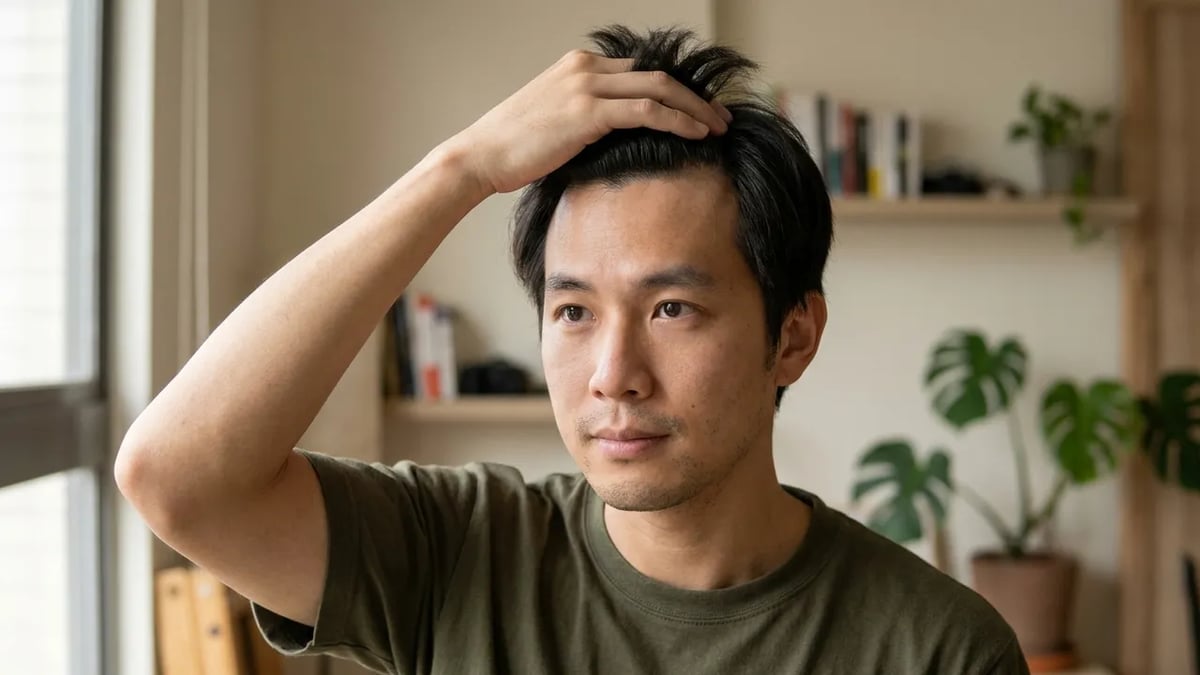
Clients often ask whether a fringe that has recently started looking thinner and harder to cover the forehead means the front is receding and they should rush into a hair transplant. In fact, seeing less hair in your fringe is not enough to jump to a conclusion. In some cases, that section of hair is breaking from frequent blow-drying, colouring or perming; in others, it is traction from tight pulling or hair clips, increased shedding across the whole scalp, or genuine thinning and finer hair around the front and temples. Until the cause is clear, there is no rush for surgery. If a specific area continues to thin, a hair transplant assessment can be arranged together.
Key points: A thinning fringe is simply what you see in the mirror and does not automatically mean androgenetic alopecia or a receding hairline. You first need to distinguish between breakage from colouring, perming and heat styling, traction from tight tying or clips, increased shedding across the whole head, or genuine thinning at the front and temples. These can also occur together. Changing your hairstyle to cover it up or buying shampoos and supplements on your own will not address the root cause. Whether you need supplements should be decided by a doctor, and you should not self-medicate. If a specific area continues to thin and the donor area at the back looks relatively stable, you can have a hair transplant assessment first.
Does a thinning fringe always mean a frontal hairline problem?
In clinic, both men and women ask what to do about a thinning fringe. Many first notice it in the mirror: a quick brush used to cover the forehead, whereas now the fringe looks see-through and parts easily. Looking thinner is a visible sign, and there is more than one reason behind it.
The American Academy of Dermatology notes that hair loss has many causes and hereditary hair loss can affect both men and women; men often notice changes at the hairline or thinning on the crown first, while women often notice overall thinning or a widening parting first. Patient information from the US National Library of Medicine (MedlinePlus) also notes that typical male-pattern hair loss can begin with changes at the front hairline, where hair follicles gradually shrink and produce shorter, finer hair. Even so, a fringe that feels thinner does not automatically mean androgenetic alopecia or a receding hairline. Do not match yourself against staging charts; a doctor needs to examine your scalp in person to tell the causes apart.
Is a thinning fringe the same as breakage, traction or increased shedding?

They are not necessarily the same thing, and they can happen at the same time. A fringe is often blow-dried, straightened, coloured or permed. The American Academy of Dermatology notes that heated tools, tight pulling and chemical treatments such as colouring and perming can make hair fragile and prone to breaking. When hair snaps mid-shaft, the fringe looks thinner, even though the roots may still be growing. In addition, long-term tight tying, hair extensions, or frequently clipping the fringe in place can create ongoing traction that thins the front or the edges of the hairline.
In other cases, shedding increases across the whole scalp, making the fringe look sparser without the front alone receding. If follicles at the front or temples are gradually shrinking, the hair there may feel finer and softer than hair at the back of the scalp. A doctor is needed to distinguish between these situations.
| What you notice | Possible direction | Suggested next step |
|---|---|---|
| Fringe is often blow-dried, coloured or permed, with mid-shaft or end breakage | Hair shaft damage causing breakage; roots may still be growing | Reduce heat and chemical damage first; see a doctor if thinning still worries you |
| Long-term tight tying, extensions or frequent clipping of frontal hair | Possible traction alopecia from pulling | Change tying and clipping habits first, and have a doctor check the follicles |
| Noticeably more shedding across the whole head, with a more see-through fringe | Overall increase in shedding, not necessarily frontal recession alone | Have a doctor identify triggers and monitor, rather than judging by a single day’s shedding |
| Hair at the front or temples feels finer, with ongoing thinning in a specific area | Localised follicle miniaturisation or pattern change, possible in both men and women | See a doctor to confirm the cause; do not self-medicate or buy supplements |
This table is only meant to help clarify possible directions and should not be used for self-diagnosis or to decide on surgery yourself. If you regularly colour or perm your hair, you can read Do Hair Dye and Perms Cause Hair Loss? Breakage, Scalp Allergy and When to See a Doctor. If you often tie your hair tightly or use clips, see Can Tight Ponytails Cause Hair Loss? Traction Alopecia Signs, Recovery and Transplant Assessment. If you feel your whole head is shedding more recently, you can read How Many Hairs Is Normal to Lose in a Day?.
When should you see a doctor? Can changing your hairstyle or buying products fix it?

Before coming to the clinic, many clients have already changed their parting, cut a different fringe to cover the area, or bought shampoos and supplements to try. Changing your style only hides it temporarily while the cause remains, and shampoos or supplements cannot replace medical care.
If your fringe or a specific area at the front continues to thin, feels noticeably finer, or overall shedding increases markedly, you should see a doctor. The UK’s National Health Service (NHS) says that if you are worried about your hair loss, you should see a doctor, and that it is best to find out the cause before considering a commercial clinic. The American Academy of Dermatology also reminds people to see a doctor if they remain worried about thinning or hair loss after adjusting their hair care, as the cause may not be hair care alone.
Whether you need medication (such as minoxidil) or supplements should be decided by a doctor after an examination, rather than buying them to use on your own.
When should you consider a hair transplant assessment for a thinning fringe or front?

Hair transplant surgery moves relatively stable follicles from the back of the scalp to the thinning front or fringe to improve density in that area. It cannot guarantee that your remaining native hair will not change later, nor can it fix ongoing breakage, traction or increased overall shedding. Deciding on surgery simply because your fringe looks thinner is not appropriate.
If you are still young, hair loss is clearly progressing, or breakage and traction have not yet been ruled out, the usual approach is to identify the cause and let the condition stabilise first before discussing whether surgery is suitable. However, the assessment itself can be done early without waiting until you feel you can no longer cover it. At the consultation, the doctor looks at the extent of frontal thinning, the thickness of your existing hair, the donor area at the back and your scalp condition, and the next step is then decided together with you. To see what criteria are checked in clinic, you can also read the Taiwan site article Am I Suitable for a Hair Transplant? 8 Self-Checks and Clinic Evaluation Criteria.
Thinning Fringe: Causes and Hair Transplant Assessment FAQs
Medical information
- American Academy of Dermatology. Hair loss: Who gets and causes. AAD information
- American Academy of Dermatology. How to stop damaging your hair. AAD information
- American Academy of Dermatology. Hairstyles that pull can lead to hair loss. AAD information
- American Academy of Dermatology. Do you have hair loss or hair shedding? AAD information
- British Association of Dermatologists. Hair loss – male pattern (androgenetic alopecia). BAD information
- British Association of Dermatologists. Hair loss – female pattern (androgenetic alopecia). BAD information
- British Association of Dermatologists. Traction alopecia. BAD information
- MedlinePlus, National Library of Medicine. Male pattern baldness. MedlinePlus information
- National Health Service. Hair loss. NHS information
Advice from Dr. Wen-Yi Wu
Tell breakage, traction and frontal thinning apart before considering surgery
Clients often tell me their fringe is looking more see-through and sparser, and worry that they are starting to bald at the front. During a consultation, I first check whether the hair is breaking mid-shaft, shedding more across the whole scalp, or genuinely feeling finer and looking thinner around the front and temples.
Until the cause is clear, there is no rush for surgery. An assessment can be done first, and if we confirm relatively stable, localised thinning with a relatively stable donor area at the back of the scalp, we can then discuss what a hair transplant can realistically improve.
In the meantime, do not buy medication to apply or take on your own, and do not buy a collection of supplements yourself; leave it to a doctor to examine you and decide how to proceed.
About Dr. Wen-Yi Wu

Dr. Wen-Yi Wu|Director, Taiwan Hair Transplant Clinic
Director, Taiwan Hair Transplant Clinic|Specialising primarily in hair transplant surgery
Dr. Wen-Yi Wu primarily performs hair transplant surgery and preoperative planning, evaluating the hairline, recipient area, and donor area. If it is not yet clear whether the issue is breakage, traction, increased overall shedding or frontal thinning, or if the scalp condition is not yet stable, the relevant specialty should address and stabilise the condition first before assessing suitability for a hair transplant.
Hair transplantation experience and international qualifications
- 21+ years: Continuously dedicated to evaluation, surgical planning, and follow-up for FUE, FUT, and COMBO procedures.
- ABHRS: Obtained ABHRS Diplomate certification in 2011, completed recertification in 2021, and has taken part in ABHRS oral examinations.
- FISHRS: Holds FISHRS Fellow status with the International Society of Hair Restoration Surgery, with long-standing involvement in professional hair-medicine exchange.
Does a thinning fringe always mean androgenetic alopecia? +
Not necessarily. A fringe that looks thinner may be due to breakage from colouring, perming or heat styling, traction from tight tying or hair clips, increased shedding across the whole scalp, or genuine thinning and miniaturisation around the front and temples. These can happen at the same time, so a doctor needs to examine your scalp rather than you guessing on your own.
How can you tell a thinning fringe apart from breakage caused by perming, colouring or frequent styling? +
Perming, colouring or frequent use of heated styling tools can make hair brittle and prone to snapping mid-shaft, making the fringe look thinner even though the roots may still be growing. If follicles at the front are gradually shrinking, the hair in that area may feel finer and softer than the hair at the back of the scalp. If you are still worried about thinning after adjusting your hair care, see a doctor to confirm.
Why does a woman's fringe look increasingly thin? +
There is more than one possible cause. Hereditary hair loss can affect both men and women, and women often notice overall thinning or a widening parting first. Breakage from frequent colouring, perming or heat styling, as well as traction from tight hairstyles or hair clips, can also make a fringe look sparser. When shedding increases across the whole scalp, the fringe can look more see-through as well. A doctor should clarify the cause before deciding how to manage it.
How can you improve a thinning fringe? Does changing your hairstyle or buying products help? +
Changing your hairstyle or parting only hides the issue temporarily while the underlying cause remains, and shampoos or supplements are not a substitute for medical treatment. Whether medication or supplements are needed should be decided by a doctor after an examination, rather than buying products to try on your own.
When should you see a doctor for a thinning fringe? +
You should see a doctor if your fringe or a specific area at the front continues to thin, feels noticeably finer, or if overall shedding increases markedly. If you are worried about hair loss, you can always see a doctor; it is best to find out the cause before considering a commercial clinic or surgery.
Can you have a hair transplant assessment first for a thinning fringe or front? +
Yes, you can have an assessment early without waiting until you can no longer cover it. Hair transplantation is better suited to relatively stable, localised thinning, moving relatively stable hair from the back of the scalp to the thinning area. In clinic, the doctor will assess the extent of frontal thinning, the thickness of your existing hair, the donor area at the back and your scalp condition. If hair loss is still actively progressing, or if the issue is actually breakage or traction, those causes are addressed and stabilised first before discussing surgery. If you want a rough checklist beforehand, you can also read the self-check guide 'Am I Suitable for a Hair Transplant?'.
Related articles
Written by:Taiwan Hair Transplant Clinic Editorial Team
This article has been reviewed and medically approved by Dr. Wen-Yi Wu

Dr. Wen-Yi Wu|Director, Taiwan Hair Transplant Clinic
- ● Fellow of ISHRS (FISHRS)
- ● ABHRS Board-Certified Hair Restoration Surgeon
- ● President of TSHRS (Taiwan Society of Hair Restoration Surgery)