

Double Crown Hair Transplant: How It Works and Key Assessment Points
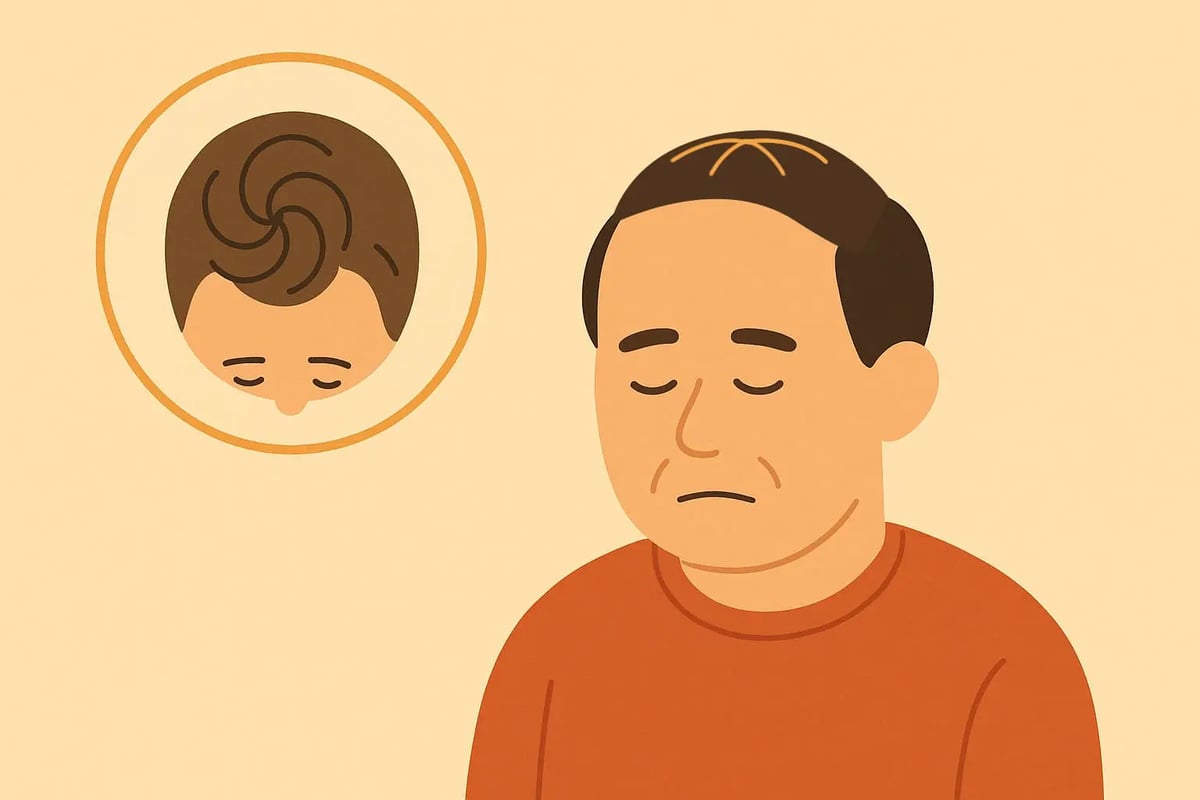
A double crown hair transplant can be considered, but the decision should never rest on visible thinning at the crown alone. A doctor will first confirm whether the sparse area is caused by male pattern baldness, telogen effluvium, alopecia areata, scarring, or simply the visual effect of the hair flow, and then assess whether the donor area at the back of the scalp is sufficient.
The difficulty of a double crown lies in the two rotational centres, the different directions of hair flow, and the three-dimensional curve of the crown. If the angle, density, or zoning is not right, the newly implanted hair can clash with the natural hair flow. This is why pre-operative design matters more than chasing a high graft count.
Key point: A double crown transplant is not about filling every gap. It starts with identifying the cause of hair loss, the direction of the two whorls, the usable donor supply, and the risk of future loss. Whether it suits you, how many grafts are needed, and what density is achievable can only be judged after an in-person examination by a doctor.
Can a Double Crown Transplant Improve Crown Thinning?
If the thinning at the crown comes from stable male pattern baldness or localised low follicle density, and the donor area is in good condition, a transplant may be one option. How much it can improve still depends on native hair density, scalp elasticity, hair thickness, and the pace of future loss.
If hair loss is still progressing quickly, or the cause — alopecia areata, inflammatory or scarring hair loss — has not stabilised, treatment and monitoring usually come first. Transplanting too early in these cases can affect graft survival and the overall aesthetic plan.
It is worth remembering that seeing scalp at the crown does not always mean a transplant is needed. For some people it is simply hair fanning out from the rotational centre, finer hair, or the angle of the light; for others it is typical male pattern baldness gradually expanding at the top. The two require different approaches, judged together through scalp examination, a pull test, family history, and medication history.
How Does a Double Crown Differ From a Single Crown?
A single crown usually has one rotational centre, and the implant direction is designed around that single hair flow. A double crown may have clockwise and anti-clockwise centres, or two centres close together, so the recipient area must be planned in segments.
During assessment, the doctor looks at the distance between the two whorls, their rotational directions, where the hair flows meet, and the border of the thinning zone. If the two whorls rotate in opposite directions, the central meeting point needs an even more conservative layout to avoid an unnatural ridge or a sense of breakage.
| Comparison | Single Crown | Double Crown |
|---|---|---|
| Flow centre | Usually one rotational centre | May have two centres or a meeting zone |
| Implant direction | Arranged along one rotation | Angle and direction adjusted per zone |
| Design challenge | Density and natural transition | Flow junctions, rotation, crown curvature |
| Pre-op assessment | Cause of loss and donor area | Also mapping the direction of both whorls |

What Should Be Assessed Before a Double Crown Transplant?
Pre-operative assessment usually begins with whether the thinning area at the crown is stable, and whether the donor area at the back and sides has enough usable follicles. If the donor area also shows diffuse thinning, the surgical plan needs to be more conservative.
The second focus is hair characteristics. People with thicker hair shafts, natural wave, and low contrast between hair and scalp colour generally get better visual coverage; fine, soft hair or a marked colour contrast may call for adjusted expectations and density planning.
Before your visit, it helps to bring photos of the crown from the past 6 to 12 months, any hair-growth medication or supplements you are currently using, your family history of hair loss, and any record of scalp itching, rash, pain, or heavy shedding. This information helps the doctor tell whether it is stable hair loss or a cause that should be treated first.
Design Priorities for a Double Crown Transplant
The priority is to respect the original hair flow, rather than filling every gap in one uniform direction. When creating recipient sites, the angle, depth, direction, and density all have to follow the curve of the crown so the implanted hair blends into the native hair.
In a double crown, the doctor may divide the crown into several small zones, handling the clockwise, anti-clockwise, and junction areas separately. Very high density is usually avoided at the rotational centre, because the whorl is naturally where hair fans out, and over-filling it can look unnatural.
Remember that more grafts is not always better. Crown transplants must account for blood supply, protection of native hair, and the donor supply available for the future. Using too much of the donor area at once leaves less room to adjust if the hairline, front, or other areas thin later.
When Is It Better Not to Do a Double Crown Transplant Right Away?
If the cause of hair loss is unconfirmed, the scalp still has inflammation or infection, or recent heavy shedding has not settled, rushing into surgery is generally not advised. Clarifying the scalp condition and the cause of loss first is more helpful for later treatment choices.
Younger people, those with a strong family history, or a crown area that is expanding quickly also need their future loss trajectory assessed — medication, scalp treatment, or follow-up photos may come first before deciding whether to transplant and how to allocate the donor area. Where donor density is insufficient, the hair is very fine, or there is diffuse thinning, the doctor may suggest lowering the density target, staging the procedure, or managing the appearance non-surgically.
Does a double crown always mean I am more likely to go bald? +
Not necessarily. A double crown is a pattern of hair flow, not a disease in itself; but where the flow separates, the scalp is more easily seen. If the sparse area grows, the hair shaft becomes finer, or shedding increases, it is best to have a doctor check the cause.
How many grafts does a double crown transplant need? +
Graft count cannot be judged from photos alone. It depends on the size of the thin area, hair thickness, donor density, the direction of the two whorls, and the target density. A doctor usually estimates a range after examination, reserving donor supply for future loss.
Can I try medication first for crown thinning? +
If the cause is male pattern baldness, some cases start with oral or topical medication to stabilise loss; if it is alopecia areata, inflammation, or another condition, the approach differs. Always get a diagnosis from a doctor before taking any medication, and understand the side effects and follow-up.
Will I keep losing hair after a double crown transplant? +
Transplanted follicles behave differently from native hair, and native hair can still thin due to male pattern baldness or other causes. Whether you need medication, follow-up, or re-assessment after surgery depends on your cause of loss and your doctor's advice.
Related articles
This article has been reviewed and medically approved by Dr. Wen-Yi Wu

Dr. Wen-Yi Wu|Director, Mong Hair Clinic
- ● Fellow of ISHRS (FISHRS)
- ● ABHRS Board-Certified Hair Restoration Surgeon
- ● President of TSHRS (Taiwan Society of Hair Restoration Surgery)