
Male Hairline Hair Transplant Case | Front View at About 3.5 and 6 Months
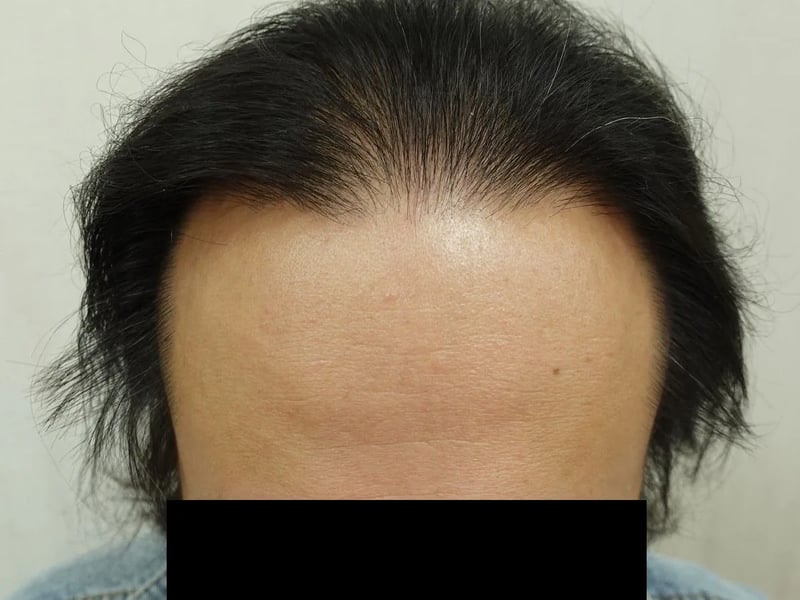
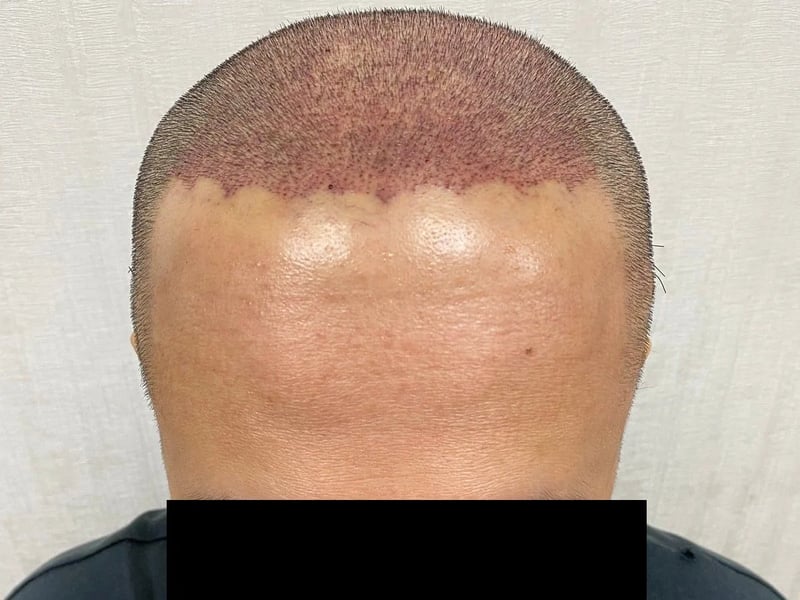
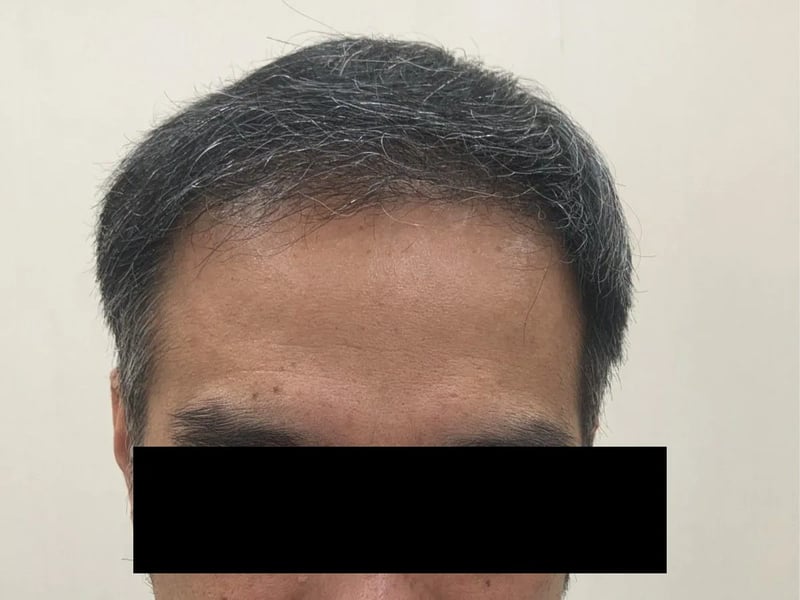
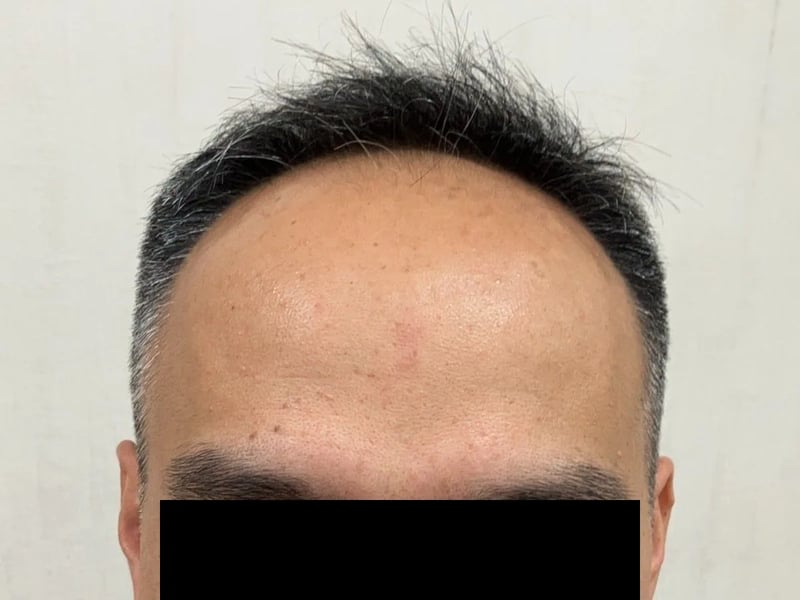
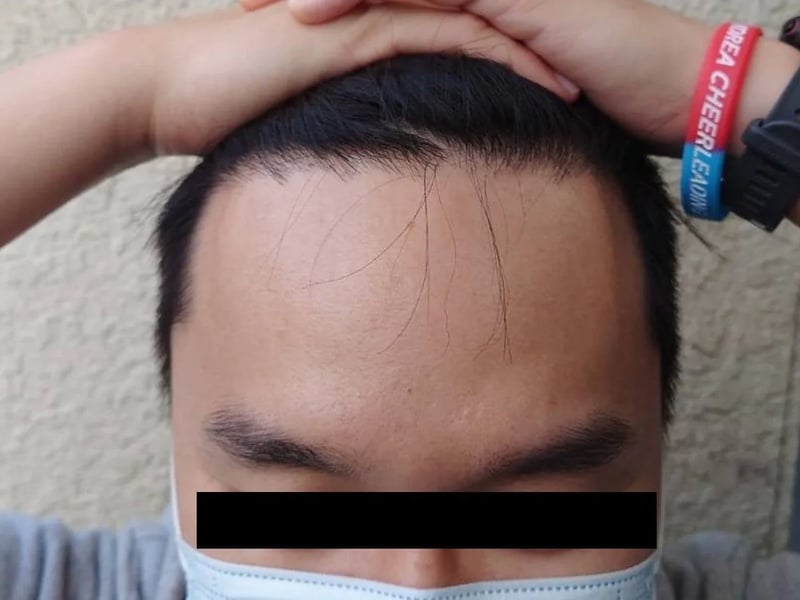
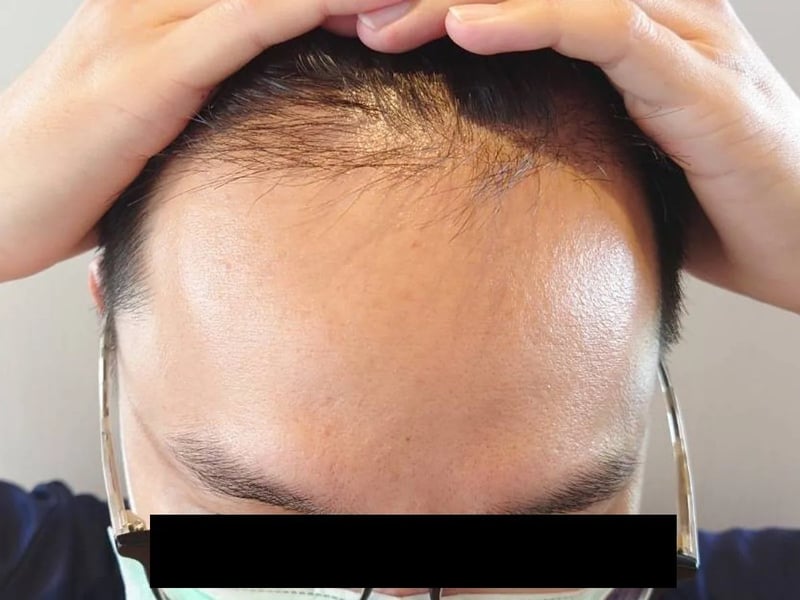
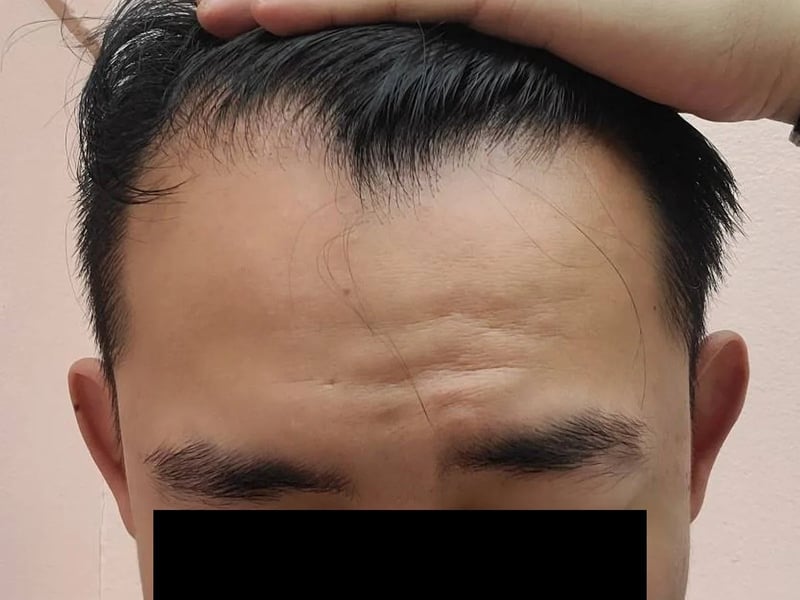
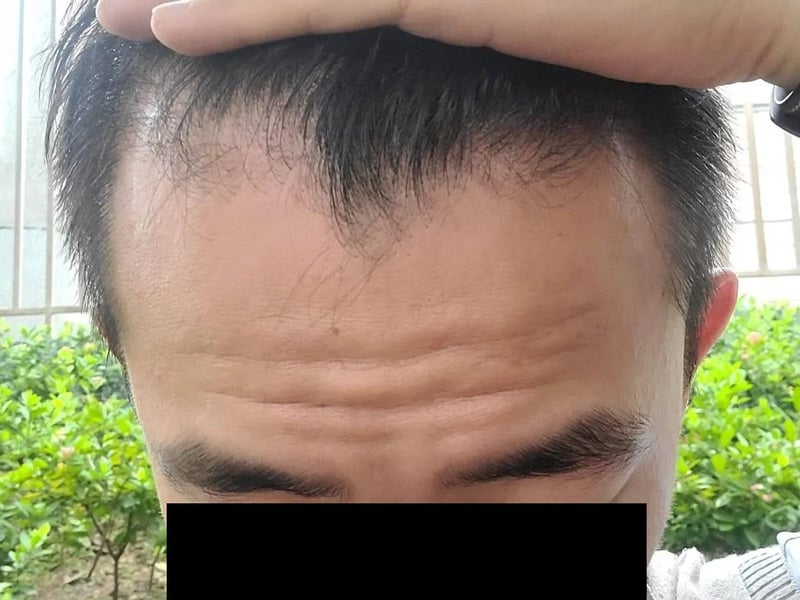
A man came to Dr. Wen-Yi Wu for a hair transplant assessment because his frontal hairline had receded, his temple corners were high, and the hair at the front had become fine and sparse. He hoped to rebuild his frontal hairline. At about 3.5 months and about 6 months after surgery, he pushed his hair back by hand and took a front photo showing the forehead; use the slider below to compare the two time points.
This case covers the frontal hairline and both temple corners. The actual technique, treatment area and graft allocation still need to be assessed by the doctor in person, based on the extent of hair loss, hair calibre, donor supply and the risk of future hair loss.
Front View at About 3.5 and 6 Months
This is not a before-and-after comparison but two points in the growth process after the transplant, aligned on the eyebrows and head width. At about 3.5 months there is hair in the centre of the front, but along the hairline and temple corners most of the new hairs are short and fine, and scalp is still visible at the edge. At about 6 months the hairs along the hairline are longer and more numerous, and the outline from the centre to both temple corners is more continuous, though some scalp is still visible at the outermost corners. The eyes have been masked to protect the patient's privacy.
Drag to compare
This is a photo record of a single case and does not mean everyone will achieve the same result. Both photos were taken by the patient, one outdoors against the light and one indoors in front of a wall; the way the hair was pushed back, head angle, camera distance and lighting all differed, so the photos should not be read as a direct density comparison. At 6 months the hair is usually still growing, and the overall result is typically easier to judge at around one year; recovery varies from person to person.
How Does Hair Change Between 3 and 6 Months After a Transplant?
Transplanted hairs often shed within the first one to two months after surgery, and new hairs usually start to appear from around 3 months. At this stage the new hairs tend to be short and fine, so the hairline does not yet look complete. By around 6 months, more hairs have grown longer and thicker and the outline becomes clearer, but most people continue to see growth until about one year. Growth speed varies from person to person; if you have questions about your progress, follow up with the doctor as advised.
Want to know how your own hairline could be planned?
Results vary between individuals and depend on native hair density, hair calibre, donor supply and aftercare. Graft counts reflect each patient's own hair loss at the time and are not a fixed recommendation; your plan requires an in-person assessment by the doctor.