

Is There an Age Limit for a Hair Transplant? Donor Supply Matters More Than Age
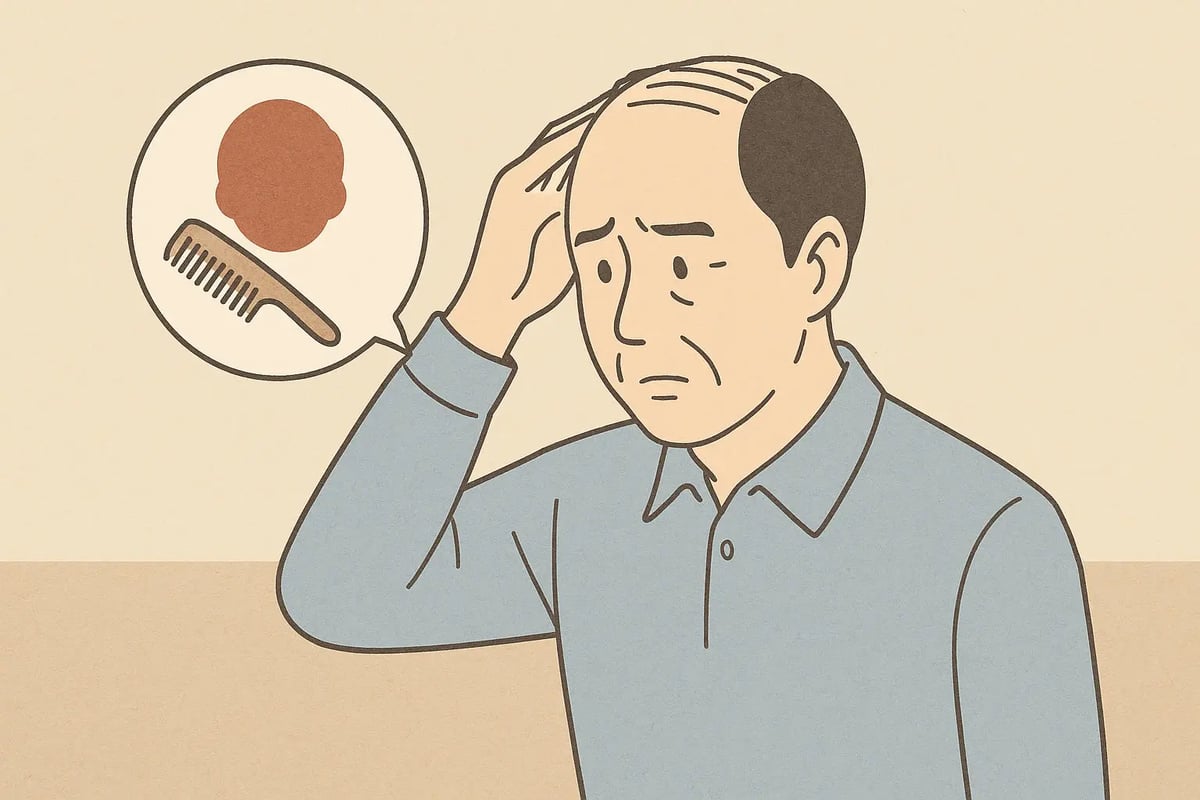
“Am I too old — or too young — for a transplant?” It is one of the most common questions at the clinic. The answer: there is no fixed age limit for a hair transplant.
Key point: Whether you can have a transplant is decided by the follicles, not your age. A doctor mainly assesses donor supply at the back of the scalp, follicle condition, general health, and whether the hair loss is stable. If the donor area is still dense, success is possible even at 60 or 70; conversely, if the donor area is itself sparse, even a younger person may not be suitable. In fact, under-25s need more caution, because their hair loss is still changing.
Is There an Age Limit? The Follicles Decide, Not Your Age
A transplant moves healthy follicles from the back of the scalp to the areas that need them, so donor supply is the single most critical factor:
- If the donor area is still dense with enough follicles, a transplant can succeed even at 60 or 70.
- If the donor area is itself sparse, it may not be suitable even for someone younger.
In other words, whether you can have a transplant is decided by the follicles, not your age.

Beyond Donor Supply, What Else Is Assessed?
General health — although a transplant is minimally invasive under local anaesthesia, overall health still matters:
- Whether cardiovascular disease is stable
- How well diabetes is controlled
- Whether you take anticoagulants
- Whether you can safely have local anaesthesia
As long as health is under control, older patients can also undergo surgery with confidence.
Scalp and skin condition — the doctor will check:
- Whether the scalp is healthy
- Whether there is active skin disease
- Whether there is severe scarring or inflammation
As long as scalp conditions are good, a transplant can generally be planned.
Why Do Younger Patients Need More Caution?
Many people do not realise that younger patients actually need more caution with a transplant. Hair loss under 25 can still change quickly, and transplanting too early may later leave “dense at the front, still shedding behind,” requiring a second procedure. At this age, doctors usually assess how stable the loss is and use a more conservative long-term design before deciding on timing.
Typical Ages for a Transplant in Practice
Below are the situations commonly seen at each age range in clinic; the actual call still needs an individual assessment by a doctor.
| Age range | What is typical |
|---|---|
| 25–60 | The most common and most stable group for transplants. The loss pattern is usually clear and donor supply is generally sufficient, suiting one complete planned transplant. |
| 60–75 | Still very common as long as donor supply is sufficient and health is stable. There are many successful senior cases with natural results. |
| Over 75 | Still feasible if the back of the scalp is healthy, follicle quality is good, and general health is sound; safety must be assessed individually by a doctor. |
The Bottom Line: Not Your Age, but These Three Things
What matters in a transplant is not how old you are, but:
- Are the follicles healthy?
- Is the donor supply sufficient?
- Is your general health safe for surgery?
If the conditions are met, people from young adults to seniors have a chance to restore natural hair volume through a transplant. Whether it actually suits you still needs a professional doctor to examine your follicles, donor area, and health.
Is there an age limit for a hair transplant? +
There is no fixed age limit. Suitability is mainly judged by donor supply, follicle condition, and general health rather than age itself.
Which age group most often has transplants? +
25–60 is the most common and most stable group; 60–75 is also quite common as long as donor supply is sufficient; older patients in good health can also have surgery safely.
Can under-25s have a transplant? +
They can be assessed, but with more caution. If the loss is still changing, transplanting too early can leave uneven density front to back and need a top-up later, so stability is usually observed first.
Can I have a transplant with a chronic illness? +
Cardiovascular disease, diabetes control, anticoagulant use, and whether you can safely have local anaesthesia all need assessing. If the condition is stable, surgery is generally possible — the doctor makes the call.
Related articles
This article has been reviewed and medically approved by Dr. Wen-Yi Wu

Dr. Wen-Yi Wu|Director, Mong Hair Clinic
- ● Fellow of ISHRS (FISHRS)
- ● ABHRS Board-Certified Hair Restoration Surgeon
- ● President of TSHRS (Taiwan Society of Hair Restoration Surgery)