
How to Choose a Hair-Transplant Device? Instruments vs the Doctor's Skill
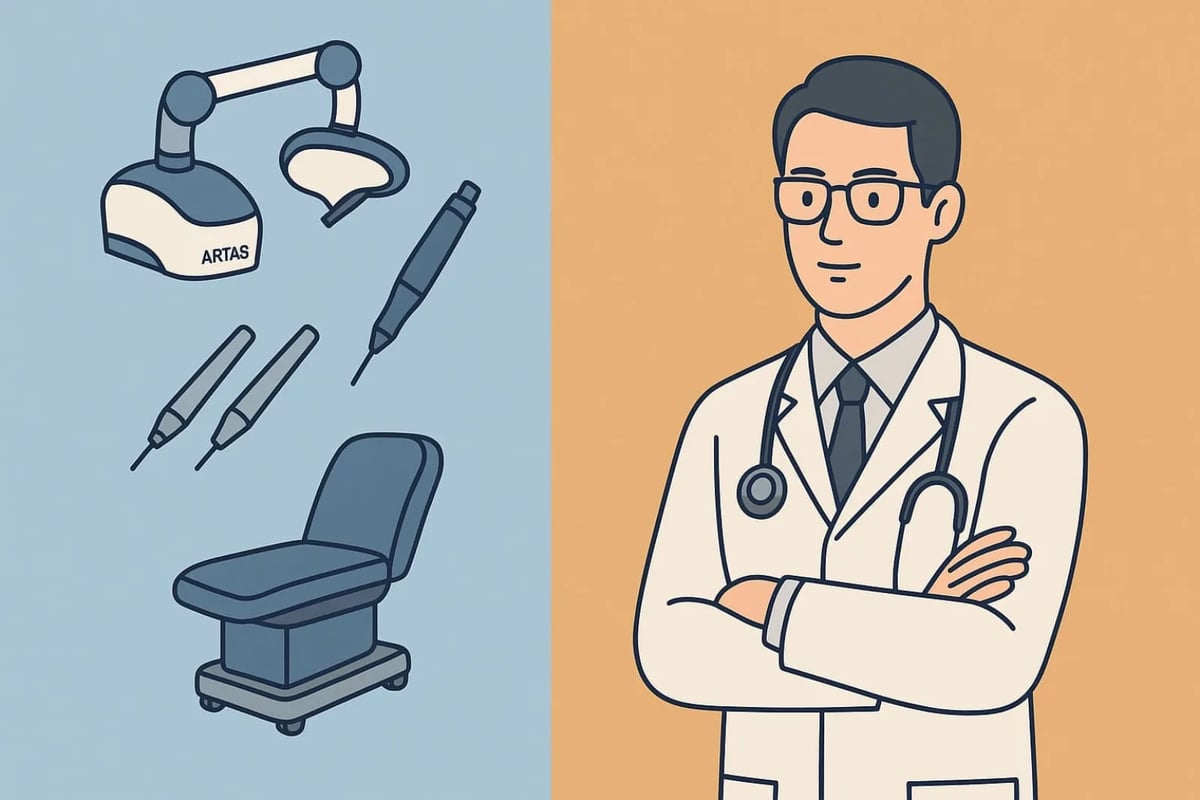
FUE technique has advanced fast, and the instruments you’ll commonly see include ARTAS robotic arms, the WAW system, implanter pens, the Choi pen, Korean-style, and American-style transplants. The array looks dazzling, and it’s easy to assume that picking the “most expensive, newest” device guarantees results.
Key point: In reality, a hair-transplant device is only a tool — what truly decides the outcome is the doctor’s experience and skill. With the same instrument, different doctors can produce very different results. This article uses a comparison table to make the differences clear, then explains why the “doctor’s hands” matter more than the “machine,” and what to look for when choosing a doctor.
So Many Instruments — What Actually Differs?
Common instruments fall into a few groups: ARTAS is a robotic-arm-assisted system that can improve harvesting and implantation precision; the WAW system is a manual mechanical tool emphasising even harvesting and reduced follicle damage; implanter pens / the Choi pen implant follicles directly and control the angle; while Korean- and American-style transplants are differences in surgical style, not simply instruments.
The table below compares them by technique type, convenience, comfort, precision, and recovery time for a quick overview — but remember, these are only a reference; the actual result still depends on how the doctor uses them.
| Instrument | Type | Convenience | Comfort | Precision | Recovery |
|---|---|---|---|---|---|
| ARTAS | Robot-assisted | High | High | High | Short |
| WAW system | Manual mechanical | Medium | Medium | High | Medium |
| Implanter Pen | Manual pen | Medium | High | Medium | Short |
| Choi pen | Manual pen | Medium | High | Medium | Short |
| Korean-style | Surgical style | Low | Medium | Medium | Long |
| American-style | Surgical style | Low | Medium | High | Medium |

A Transplant Is Surgery — the “Doctor’s Hands” Matter More Than the “Machine”
Many assume the machine can complete every step automatically, but in reality any instrument is only an aid — what truly decides follicle survival, density, and naturalness is the doctor’s judgement and feel. During surgery, the direction, density, and angle of every single follicle depend on the doctor’s precise control; with the same instrument, different doctors can produce vastly different results.
A taxi analogy: Going from A to B by taxi, whether the car is domestic or imported, you can arrive safely; the real difference lies in the driver’s skill, knowledge of the roads, and experience. In a transplant: doctor = driver (controls direction, pace, and safety), instrument = vehicle (just a tool to reach the goal), patient = passenger (what matters most is arriving safely and reaching the goal). So the doctor’s expertise, surgical experience, and familiarity with the tools are what count.
When Choosing a Doctor, What Should You Look At?
- Confirm the doctor operates personally — not handing it to an assistant or technician
- Understand the doctor’s surgical volume and case record
- Look at the naturalness and density of past work
- Choose a reputable, internationally certified doctor (e.g. ABHRS-certified, ISHRS Fellow)
In a sentence: don’t fixate on the instrument’s name or brand. What truly affects the result is the doctor’s experience and mastery of the tools — choosing the right doctor is the first step to a successful transplant.
Is ARTAS robotic transplantation really better? +
ARTAS is a "robot-assisted transplant system" that can improve harvesting and implantation precision, but the doctor still sets parameters and monitors the operation. It **is not a fully automatic robot and cannot replace the doctor's judgement and aesthetic design.** What truly affects the result is still the operating doctor's experience and control of detail.
Do WAW, implanter pens, and the Choi pen differ? +
All three are "manual assist instruments," differing mainly in feel and needle design. The WAW system emphasises even harvesting and reduced follicle damage; implanter pens / the Choi pen implant follicles directly and control the angle naturally. But the user's proficiency matters far more than the brand.
Korean-style vs American-style — what's the difference? +
Korean-style tends to emphasise "density and hairline design," American-style values "naturalness and harvest quality." The difference isn't the instrument but the doctor's style and aesthetics. Choose a doctor who designs the hairline personally, rather than going by a national label.
Do the instruments affect follicle survival? +
In a sterile setting, with correct technique and an experienced doctor, follicle survival actually differs little between instruments. What truly affects success is the doctor's command of angle, depth, and direction.
If I want a transplant, what should I prioritise? +
Put the "doctor's experience and reputation" first, and the instrument brand second. When choosing, focus on: whether they're ABHRS-certified or an ISHRS Fellow, whether they operate personally throughout, and whether they offer a pre-op assessment and case portfolio.
Related articles
This article has been reviewed and medically approved by Dr. Wen-Yi Wu

Dr. Wen-Yi Wu|Director, Mong Hair Clinic
- ● Fellow of ISHRS (FISHRS)
- ● ABHRS Board-Certified Hair Restoration Surgeon
- ● President of TSHRS (Taiwan Society of Hair Restoration Surgery)