

Does Hair Fall Out After a Transplant? Shock Loss, Native Hair and Growth Timeline
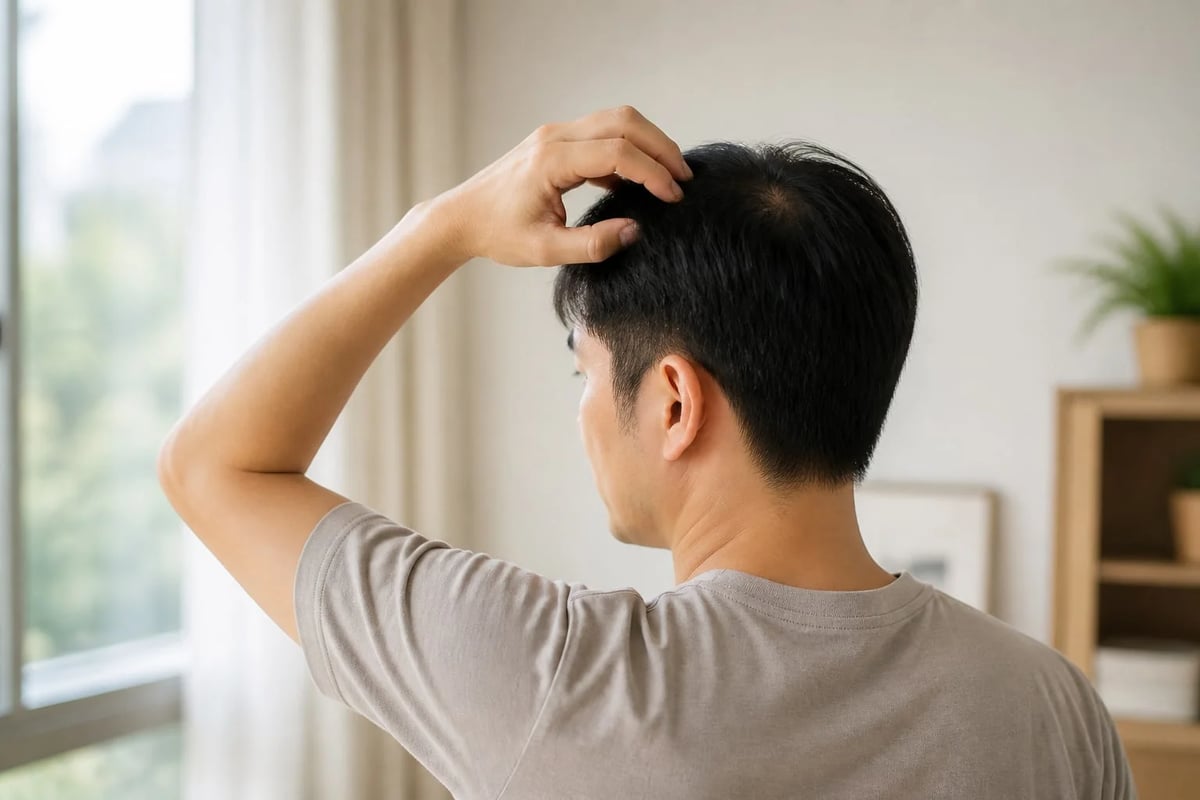
Seeing hair fall after surgery makes many people worry “has it failed?” In fact, what sheds in the short term after a transplant is usually the hair shaft, not the follicle — but not all post-op shedding can be explained as “shock loss” either.
Key point: Around 2–8 weeks after surgery, transplanted shafts or surrounding native hair may shed temporarily; new hair usually appears gradually from month 3–4, with density and calibre needing about 6–12 months of observation — sometimes longer at the crown whorl. Transplanted follicles usually keep the donor area’s relative resistance to male pattern balding, but that is not “never falls out”; native hair can still keep thinning. If pain, redness, discharge, or a spreading bald patch worsens, return for assessment.
For the operation, donor limits, and recovery as a whole, start with our main hair transplant guide. You can also compare each stage against the hair transplant growth timeline.
Is Shedding After a Transplant Normal? Four Situations to Tell Apart
Post-transplant shedding can come from different hairs and different mechanisms. Short-term shaft shedding is often a growth-cycle transition, but steadily worsening native thinning, a bald patch in the donor area, or shedding with inflammation cannot all be explained as “shock loss.”
| Type of shedding | Typical timing and location | What to look for | Next step |
|---|---|---|---|
| Transplanted shaft shedding | Weeks after surgery, in the recipient area | Short shafts come away with scabs or washing; the follicle may still be under the skin | Track regrowth against the timeline |
| Shock loss of nearby native hair | Weeks to months after surgery, around the recipient area | Already-fine hairs shed temporarily after surgical stimulus | Watch recovery and assess native hair |
| Ongoing male pattern balding | Months to years, untransplanted areas thinning | Calibre thins, hairline or crown area widens | Doctor assesses medication and long-term follow-up |
| Abnormal healing or other disease | Any stage, local or diffuse | With redness, heat, pain, discharge, scarring, or no growth for a long time | Return for examination soon; do not self-medicate |
Why Does Shedding Start 2–8 Weeks After a Transplant?
The transplant process moves follicles out of their original position and they must re-establish a local blood supply; some follicles shift early into the resting phase, so the existing shaft sheds first. This is often called post-op telogen shedding or shock loss, but its timing and extent vary between people.
Seeing short hairs attached to small scabs when washing does not mean the whole follicle has been washed away. If it comes with fresh bleeding, visible tissue, severe pain, or you have been scratching hard, photograph it and ask your surgical team.

How Long Until It Grows Back? From 2 Weeks to 12 Months
Post-op growth does not increase at a steady daily rate. New hair often starts fine, short, curly, or out of sync, and only later gains length and calibre; a photo from a single moment cannot represent the final density.
| Time after surgery | What you may see | What to track |
|---|---|---|
| 0–2 weeks | Red dots, scabs, short hairs still visible | Clean as directed; do not scratch or rub |
| 2–8 weeks | Some transplanted shafts and nearby native hair shed | Compare location and symptoms; do not rush to call it a failure |
| Month 3–4 | Some new hair starts to emerge, density uneven | Photograph under fixed lighting and angle |
| Month 5–6 | New hair count, length, and calibre gradually increase | Review visit to check growth distribution and native hair |
| Month 9–12 | Most areas can be assessed for overall appearance | Confirm density, hair flow, donor area, and ongoing management |
| Over 12 months | The crown whorl or slower growers may keep changing | Doctor decides whether to extend observation or investigate further |

Is Transplanted Hair Permanent? And Why Does Native Hair Keep Thinning?
A transplant usually takes follicles from the relatively stable donor area at the back and sides. Under the “donor dominance” concept, transplanted follicles largely keep some biological traits of their original zone, so compared with frontal and crown native hair that is more DHT-sensitive, they usually last longer. But “more resistant” does not mean immune to age, illness, inflammation, medication, nutrition, or miniaturisation of the donor area itself.
Some common misconceptions, more precisely understood:
- “Back-of-scalp follicles are completely unaffected by DHT” → The safe donor area is usually relatively resistant, but individuals and zones still differ.
- “Once transplanted it never falls out” → Shafts still cycle normally; follicles can also be affected by ageing, illness, or other factors.
- “Short-term shedding means the surgery failed” → It is commonly the shaft entering the resting phase; watch whether it regrows.
- “A transplant can stop all male pattern balding” → A transplant redistributes follicles; it does not change the genetic trend of untransplanted native hair.
So if native hair behind the hairline or at the crown keeps miniaturising, a density gap can form and look like “going bald again after a transplant.” Not all post-op shedding comes from male pattern balding either — short-term diffuse shedding should also consider stress, illness, fever, rapid weight change, iron deficiency, thyroid problems, postpartum status, or medication; local redness, flaking, pustules, and scarring need scalp disease ruled out.
If most of the loss is in an untransplanted area, read how doctors assess androgenetic alopecia, then arrange an examination to distinguish ongoing miniaturisation from telogen shedding or another scalp condition.
Must You Take Finasteride or Apply Minoxidil After a Transplant?
Not necessarily — every patient needs an individual assessment. The main goal of medication is usually to manage the untransplanted native hair, not to forcibly stop normal post-op shaft shedding. Whether to use it, when to start, the dose, and the course depend on diagnosis, sex, age, plans to conceive, chronic illness, other medication, and side-effect risk.
Finasteride lowers DHT and is often used for eligible men with male pattern balding, but it may cause sexual, mood, or breast-related discomfort, and pregnant people should not handle broken tablets. Minoxidil may cause scalp irritation, palpitations, increased body hair, or early shedding changes; those with cardiovascular problems especially should ask a doctor first. Medication is not “take it and nothing falls out,” and you should not stop, increase, or buy products of unknown origin on your own — always follow the prescription and the latest package insert.
For individual medication decisions, see the finasteride after hair transplant guide. Washing, sleep, exercise, and scab care are covered in the post-transplant aftercare FAQ.
When to Return, and How to Track Growth Without Misjudging
If it is only gradual shaft shedding in the weeks after surgery with no obvious inflammation, you can usually follow the original review schedule. These situations should not just be watched at home:
- Redness, heat, pain, or purulent discharge that keeps worsening.
- Sudden heavy bleeding, a wound opening, or an abnormality at the FUT suture line.
- A sharply bordered, steadily expanding bald patch in the donor area.
- No sign of growth in the recipient area for a long time, or a clear left-right difference.
- Shedding with fever, marked fatigue, weight change, or other whole-body symptoms.
- Severe allergy, chest pain, breathing difficulty, or marked mood change after medication.

How to track growth without misjudging from the daily mirror:
- Photograph on a fixed day each month; you do not need to compare daily.
- Use the same room, lighting, distance, angle, and camera.
- Keep the same dry/wet state, parting, and hair length.
- Photograph the front, both temples, crown, whorl, and donor area separately.
- Record when shedding increased, redness/itch/pain, illness, and medication changes.
Photos help identify trends but cannot replace a follicle examination. Bring pre-op, post-op, and recent photos to the review, and list washing, scratching, knocks, illness, medication, and when shedding started.
Doctor Video: Can Hair Still Shed After a Transplant?
This article provides general medical education and does not replace an individual consultation. Recovery speed, medication, and review timing should be based on your diagnosis and the surgical team’s instructions.
References
When does shedding start after a transplant, and is it normal? +
Some patients see transplanted shafts or surrounding native hair shed about 2–8 weeks after surgery; timing and extent vary. Without abnormalities such as redness, heat, or pain, follow the review schedule and watch the subsequent growth.
How long until it grows back? +
Some new hair emerges gradually from month 3–4, gaining length and calibre after 5–6 months, with 9–12 months of observation often needed overall; the crown whorl or slower growers may need longer.
Is transplanted hair permanent? +
Transplanted follicles usually keep the donor area's relative resistance to male pattern balding, so they last longer, but permanence cannot be guaranteed. Age, illness, donor quality, and other factors can still have an effect.
Will native hair keep falling out after a transplant? +
It can. A transplant does not change the male-pattern trend of untransplanted native hair, and shock loss or scalp disease can also occur. Judgement depends on the location and timing of the loss and a follicle examination.
Does shedding mean a graft was washed out? +
Usually not. What sheds several weeks after surgery is generally the hair shaft while the follicle may remain under the skin. Fresh bleeding, severe pain, visible tissue, or forceful scratching should be photographed and reported to the surgical team.
When does post-transplant shedding need an urgent review? +
Seek medical review if redness, heat, pain, or discharge keeps worsening; a wound opens; a donor bald patch expands; the recipient area shows no growth for a prolonged period; or medication causes serious symptoms.
Related articles
This article has been reviewed and medically approved by Dr. Wen-Yi Wu

Dr. Wen-Yi Wu|Director, Mong Hair Clinic
- ● Fellow of ISHRS (FISHRS)
- ● ABHRS Board-Certified Hair Restoration Surgeon
- ● President of TSHRS (Taiwan Society of Hair Restoration Surgery)