

Does Male Pattern Baldness Say Anything About Intelligence or Health?
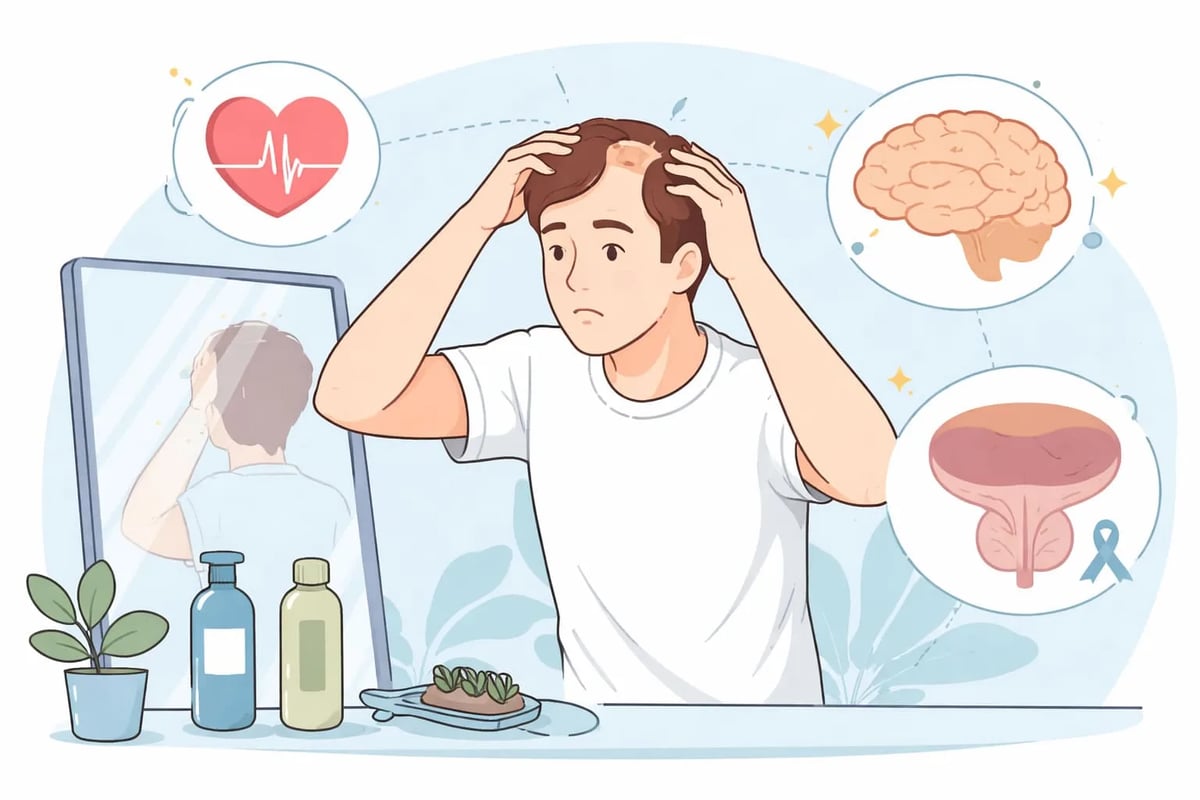
“Bald men are smarter” is a joke, not a medical conclusion. Nor can a receding hairline tell you whether you have heart disease. Male pattern hair loss mainly involves inherited follicle sensitivity to androgens. Some studies have found associations with other conditions, but association is not causation or an individual diagnosis.
The practical takeaway: Review blood pressure, cholesterol, blood glucose, smoking and family history rather than trying to read your health from your hairline. Sudden chest pain, shortness of breath or a cold sweat needs urgent medical attention.
Does male pattern hair loss reflect intelligence?
There is no reliable basis for predicting IQ, memory or work ability from hair density. In androgenetic alopecia, follicles gradually miniaturise; cognitive ability is a separate matter. The American Academy of Dermatology explains that male pattern hair loss can start young and usually progresses gradually. A receding hairline deserves a proper hair-loss assessment, not assumptions about intelligence.
What is the link with cardiovascular disease?
A systematic review and meta-analysis found a statistical association between vertex baldness and coronary heart disease, more apparent than with frontal recession alone. However, study design, age, hair-loss classification and other risk factors vary. The finding does not establish that baldness causes coronary disease or replace cardiovascular assessment.

If you have high blood pressure, diabetes, abnormal lipids, smoke, or have a family history of heart disease, discuss appropriate evaluation with a primary-care clinician. Seek urgent care for chest pain, breathlessness or a cold sweat.
What about metabolic syndrome?
Some observational studies report that abdominal obesity and abnormal blood pressure, glucose or lipids occur more often alongside male pattern hair loss. A meta-analysis of 19 studies reported an association while calling for higher-quality evidence. Age and lifestyle may confound the result. The extent of someone’s hair loss cannot predict their laboratory results.

Does baldness indicate prostate cancer?
No. An updated meta-analysis reported a small statistical association for combined frontal-and-vertex patterns and overall prostate cancer risk. Definitions and study populations differed, limiting individual use. Whether PSA testing is appropriate depends on age, family history and personal circumstances; discuss this with a urologist.
If you take finasteride, tell your clinician before a PSA test because it can affect interpretation. See our finasteride, prostate cancer and PSA guide. Medication-related PSA interpretation is not the same as estimating risk from a hairline.
What should you actually do if your hair is thinning?
- Confirm the hair-loss pattern. Gradual frontal or crown thinning may suggest androgenetic alopecia. Sudden shedding, round patches, a painful scalp or systemic symptoms need assessment for other causes. Read our male pattern baldness assessment guide.
- Assess health on its own merits. A doctor can use your history, blood pressure and appropriate tests to evaluate cardiovascular and metabolic risks. Hair treatment is not treatment for these conditions.
- Plan hair treatment for the long term. If native follicles remain but are thinning, preserving them may come first. Established gaps may call for a discussion of hair transplantation. Transplantation redistributes finite donor follicles; it does not halt future loss of non-transplanted hair.
| Question | Can hair appearance answer it? | Better next step |
|---|---|---|
| Is this androgenetic alopecia? | Only a clue | Examine pattern, scalp and history |
| Is this person more intelligent? | No | Do not judge cognition by hair |
| Is there cardiovascular or metabolic disease? | No | Assess history, blood pressure and tests |
| Is prostate screening needed? | No | Discuss age and family history with a urologist |
At Taiwan Hair Clinic, Dr Wen-Yi Wu directly assesses the pattern of loss, native hair and donor supply when planning a transplant, including likely future thinning. Other health concerns should be evaluated by the relevant clinician.
This article is general medical education, not individual diagnosis or screening advice.
Are balding men more intelligent? +
No reliable evidence shows that hair density predicts IQ, memory or ability. Male pattern hair loss and cognitive ability are separate issues.
Does crown baldness mean I have heart disease? +
No. Some studies find a population-level association, but appearance cannot diagnose coronary disease. Blood pressure, lipids, diabetes, smoking and family history matter more.
Should I test my blood sugar and cholesterol because I am balding young? +
Hair loss alone does not dictate testing. Discuss routine checks with a doctor based on your age, weight, blood pressure and personal or family history.
Does male pattern baldness indicate prostate cancer? +
No. Some studies report small associations for particular patterns, but they cannot predict individual cancer risk or determine screening.
Should I see a doctor or go straight to a hair transplant? +
First establish the cause and assess existing follicles. Treatment may help preserve native hair; transplantation can be considered for established gaps.
Do I still need routine health checks after a hair transplant? +
Yes. Transplantation changes hair distribution, not cardiovascular, metabolic or cancer risk.
Related articles
This article has been reviewed and medically approved by Dr. Wen-Yi Wu

Dr. Wen-Yi Wu|Director, Mong Hair Clinic
- ● Fellow of ISHRS (FISHRS)
- ● ABHRS Board-Certified Hair Restoration Surgeon
- ● President of TSHRS (Taiwan Society of Hair Restoration Surgery)