
Male Frontal Hair Transplant Case | Forehead About 6 to 13 Months After Surgery
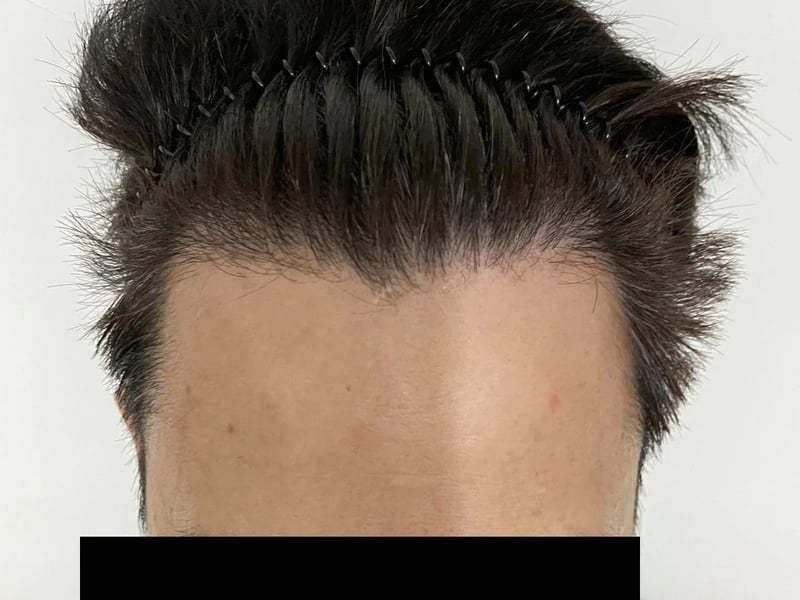
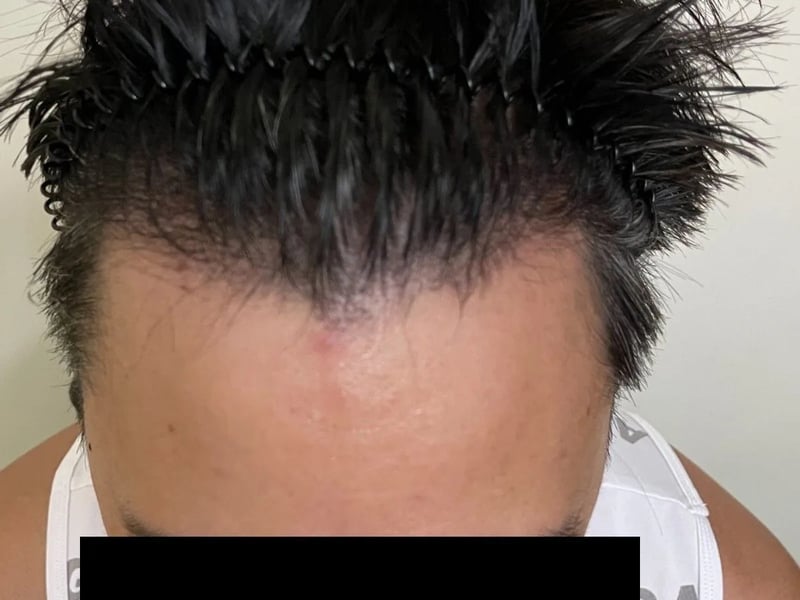
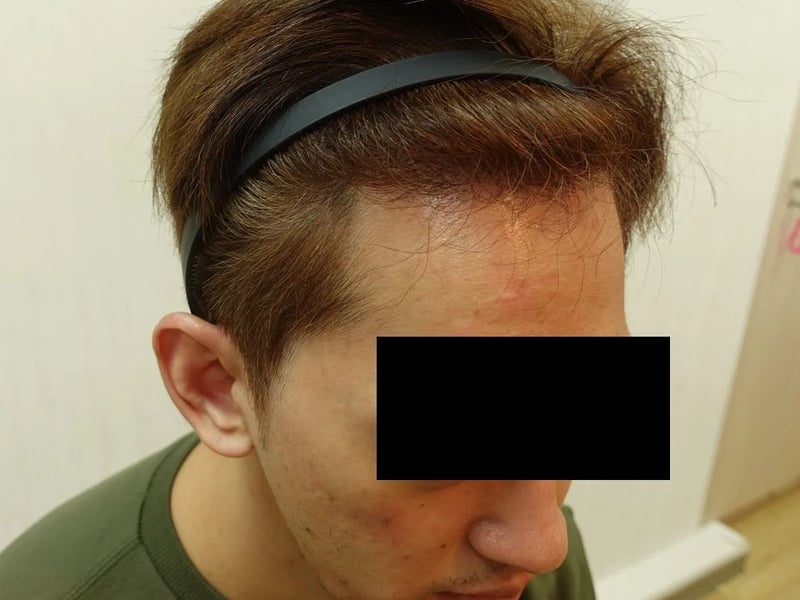
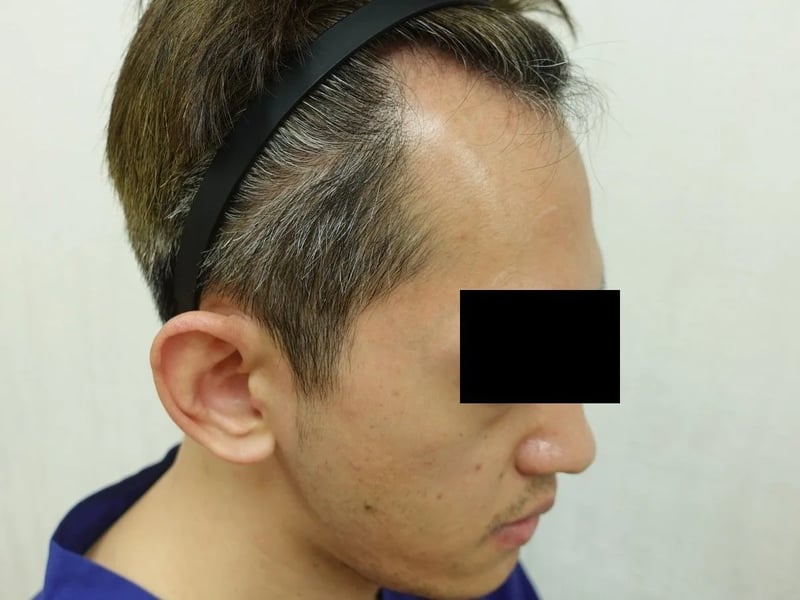
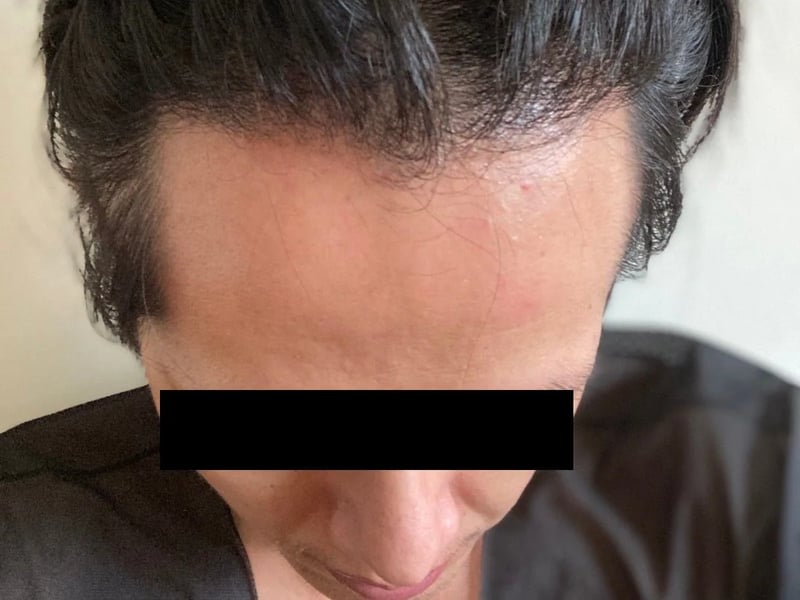
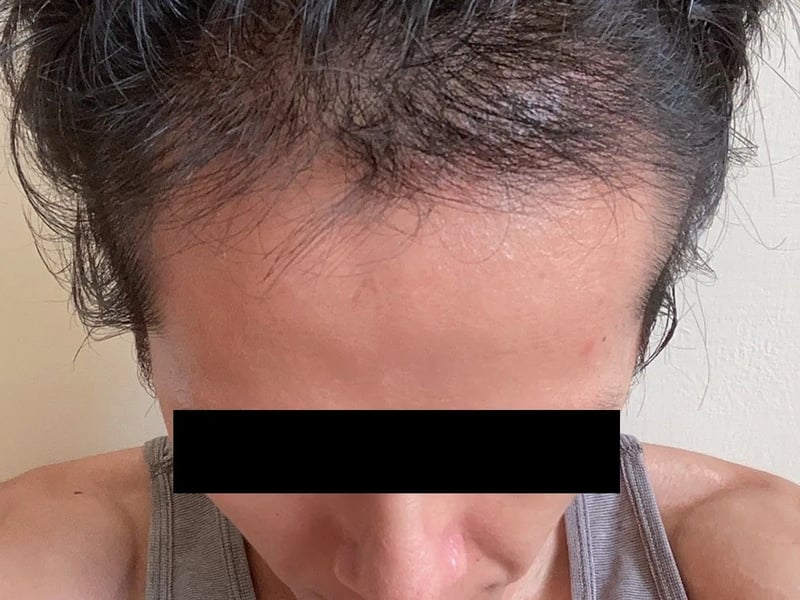
A man in his 30s came to Dr. Wen-Yi Wu for a hair transplant assessment because his frontal hairline was receding and the hair across the middle of his forehead and both temples was thin. He hoped to reduce how much scalp showed at the front. About 6 months and about 13 months after surgery, the hair was held back and the forehead was photographed with the head tilted down; use the slider below to compare the two points.
This case uses a head-down forehead view to show the hairline, the middle of the forehead and both temples. The actual technique, treatment area and graft allocation still need to be assessed by the doctor in person, based on the extent of hair loss, hair calibre, donor supply and the risk of future hair loss.
Forehead at About 6 and 13 Months
These images were taken about 6 months and about 13 months after surgery; they are not a before-and-after comparison. In both sessions the hair was held back and the head tilted down so the hairline could be seen. The photos were taken by the patient: at about 6 months the hair was wetter and the head tilted further down, and the lighting, background and hair length also differ, all of which affect how visible the scalp is. The eyes have been masked to protect the patient's privacy.
Drag to compare
This is a photo record of a single case and does not mean everyone will achieve the same result. Transplanted hair usually grows in gradually over several months to more than a year, and recovery speed varies; hair length, dampness, head angle, camera distance and lighting were not the same at the two points, which affects how the hairline and scalp appear.
How Does the Forehead Change Around One Year After a Transplant?
Around six months after surgery, hair in the transplanted area is often still fine and short, and more scalp may show along the hairline and mid-forehead; as the hair keeps growing longer and thicker, coverage usually builds, and the overall result is better assessed around one year. If native hair is still thinning, sparse areas further back can affect the overall look, so follow-up visits review growth and whether medication or further planning is needed.
Want to know how your own forehead could be planned?
Results vary between individuals and depend on native hair density, hair calibre, donor supply and aftercare. Graft counts reflect each patient's own hair loss at the time and are not a fixed recommendation; your plan requires an in-person assessment by the doctor.