

Do You Need Finasteride After a Hair Transplant? Native Hair, Stopping, and Side Effects
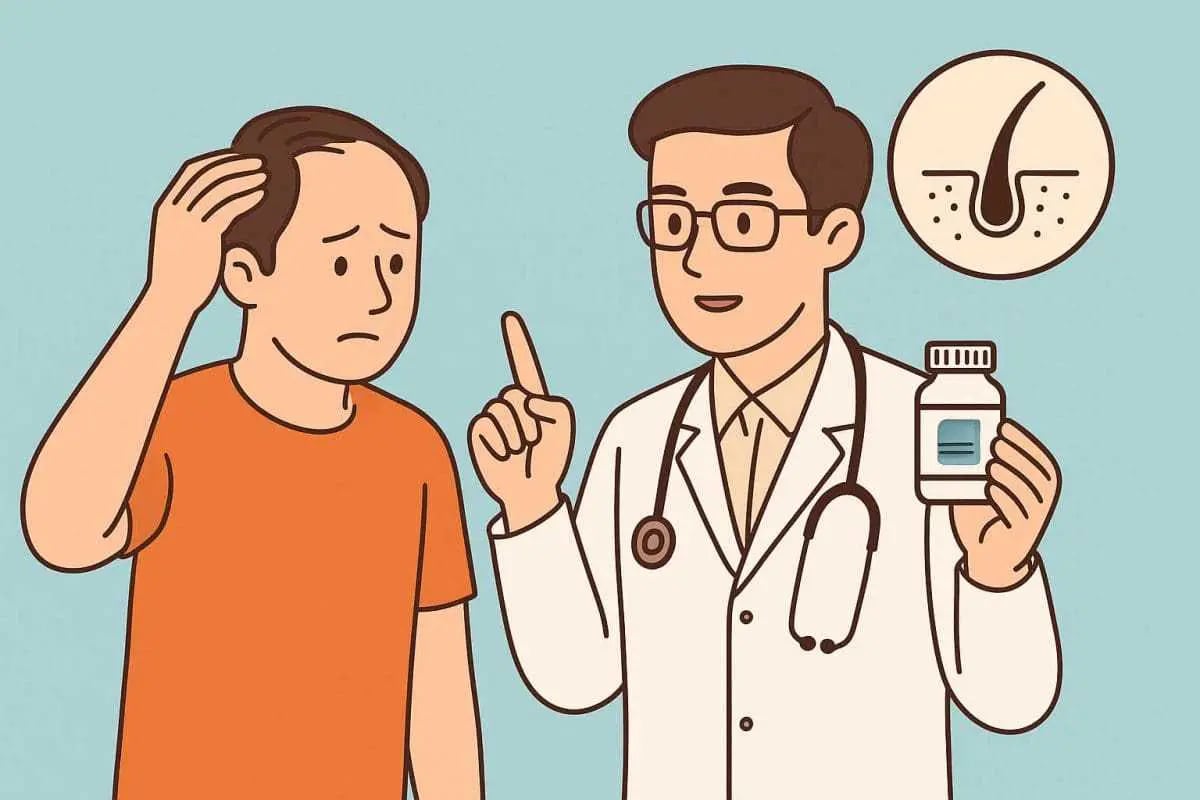
“Is a hair transplant a once-and-done solution, or do I still need medicine?” The answer is not a universal yes or no. A hair transplant moves follicles that are relatively resistant to DHT, but surgery does not stop male pattern hair loss in non-transplanted native hair.
Key point: Male pattern balding is mainly driven by DHT (dihydrotestosterone) shrinking follicles. Finasteride suppresses DHT to slow native-hair loss and protect the transplant result. Whether you need it after a transplant, the dose, and when to stop should all be prescribed and assessed by a doctor — this is a prescription drug and should not be bought or dosed on your own. Note: women who are pregnant or planning pregnancy must not take it or handle broken tablets.
What Is Finasteride, and Why Does It Improve Male Pattern Baldness?
Finasteride was originally used to treat an enlarged prostate; it was later found to suppress DHT (dihydrotestosterone), the main driver of male pattern baldness. Too much DHT gradually shrinks follicles, making hair finer and sparser. Lowering DHT can generally: slow shedding, prevent further progression, give miniaturising fine hairs a chance to thicken and lengthen again, and keep the transplant result more stable. The drug has been on the market for over 20 years and is one of the core treatments for male pattern baldness — but whether it suits you must be assessed by a doctor.
Do You Have to Take Finasteride After a Transplant?
A transplant uses relatively DHT-resistant follicles, but non-transplanted native hair can keep miniaturising. Years later, this may leave transplanted hair in place but declining density around it. The American Academy of Dermatology notes that thinning can continue after surgery and medicine may be recommended to slow new loss. For the longer-term pattern, see whether hair can thin again after a transplant. Whether to take finasteride and when to start still requires an individual assessment of age, diagnosis, health, and plans to conceive.

How Is Finasteride Taken, and What Dose?
A common dose is Finasteride 1 mg once daily, taken at a fixed time for steadier DHT control; generic versions with equivalent effect are available. Important: this is a prescription drug — the dose, form, and use must be prescribed by a doctor. Do not buy it, split tablets, or adjust the dose on your own. Discuss with your doctor before starting or stopping.
Side Effects? Does It Affect Sexual Function or Fertility?
Finasteride can cause reduced libido, erectile dysfunction, and ejaculation problems. Regulators have also received reports of sexual symptoms persisting after treatment stopped, so recovery should not be presented as guaranteed. The UK MHRA reiterated in 2026 that finasteride is associated with depression, suicidal ideation, and sexual dysfunction that may persist after discontinuation. Anyone taking 1 mg for hair loss who develops depression or suicidal thoughts should stop and seek medical advice promptly. Tell the prescriber about any psychiatric history before starting. See the full finasteride side-effects guide.
Fertility and pregnancy (important):
- Reduced semen quality or sperm count has been reported in a small number of men and usually improves after stopping. If you are trying to conceive, have infertility, or have an abnormal semen result, discuss the decision rather than stopping automatically.
- Women who are pregnant or planning pregnancy must not take it and must not handle broken/crushed tablets, to avoid affecting the genital development of a male fetus.
| Item | Key point |
|---|---|
| Sexual side effects | Reduced libido, erectile or ejaculation problems; persistent symptoms have been reported after stopping |
| Mood warning | Watch for low mood, depression, or suicidal thoughts and seek prompt medical help |
| Male fertility | Semen quality may fall in a small number of men; conception or abnormal testing needs individual review |
| Pregnant / planning women | Must not take it or handle broken tablets (affects male-fetus development) |
| PSA (prostate marker) | Lowers PSA; report the medicine, dose, and duration before testing rather than applying a correction factor yourself |
| Blood donation | Rules vary; the American Red Cross requires one month after the last dose, so check locally |
How should the post-transplant decision be made?
First confirm the diagnosis, then document density, follicle miniaturisation, family history, previous adverse effects, and treatment goals. The discussion should balance the expected benefit of preserving native hair against risks that matter to the individual. Medication is not the only option; finasteride, minoxidil, observation, or another plan may be appropriate. Transplant design should also account for future loss, so review Dr Wen-Yi Wu’s hair restoration credentials.
Finasteride lowers PSA. Tell the clinician the medicine, dose, and duration before testing; do not apply a single correction factor yourself. Read more about finasteride, prostate cancer risk, and PSA changes. For washing, sleep, exercise, and scab care, use the post-transplant aftercare guide.
References
- American Academy of Dermatology: Hair transplant and medicines
- FDA: PROPECIA (finasteride) prescribing information
- MHRA: 2026 updated safety warnings for finasteride
- NHS: Finasteride, fertility and pregnancy
- American Red Cross: Blood donor medication eligibility
This article provides general medical information and does not replace an individual diagnosis or prescription. Consult your doctor before starting, stopping, or changing finasteride.
What happens if I do not take Finasteride after a transplant? +
Transplant-area follicles are more DHT-resistant, but native hair keeps thinning with male pattern balding, which can cause uneven, patchy volume. Whether you need medication is assessed by a doctor.
How long do I take Finasteride? +
Male pattern balding is a long-term condition, usually needing long-term, regular use to maintain the effect; after stopping, DHT rises and native hair may shed again. The actual course is decided by a doctor — do not stop or increase on your own.
Are the side effects reversible? +
Possible effects include reduced libido, erectile or ejaculation problems. Safety warnings also cover depression and suicidal thoughts; persistent sexual symptoms have been reported after stopping. Seek prompt medical help for marked mood changes or suicidal thoughts.
Do men need to stop Finasteride when trying to conceive? +
Do not stop automatically. Reduced semen quality has been reported in a small number of men and usually improves after stopping. If you are trying to conceive, have infertility, or have an abnormal semen test, discuss the decision with your prescriber or a urologist.
Should I tell my doctor I take Finasteride during a check-up? +
Yes. Finasteride lowers PSA, so tell your clinician before prostate testing. Donation rules vary; the American Red Cross requires a one-month wait after the last dose, so confirm the current rule with your local blood service.
Related articles
This article has been reviewed and medically approved by Dr. Wen-Yi Wu

Dr. Wen-Yi Wu|Director, Mong Hair Clinic
- ● Fellow of ISHRS (FISHRS)
- ● ABHRS Board-Certified Hair Restoration Surgeon
- ● President of TSHRS (Taiwan Society of Hair Restoration Surgery)