
Sun Exposure After a Hair Transplant: Hats, Sunscreen and Outdoor Plans
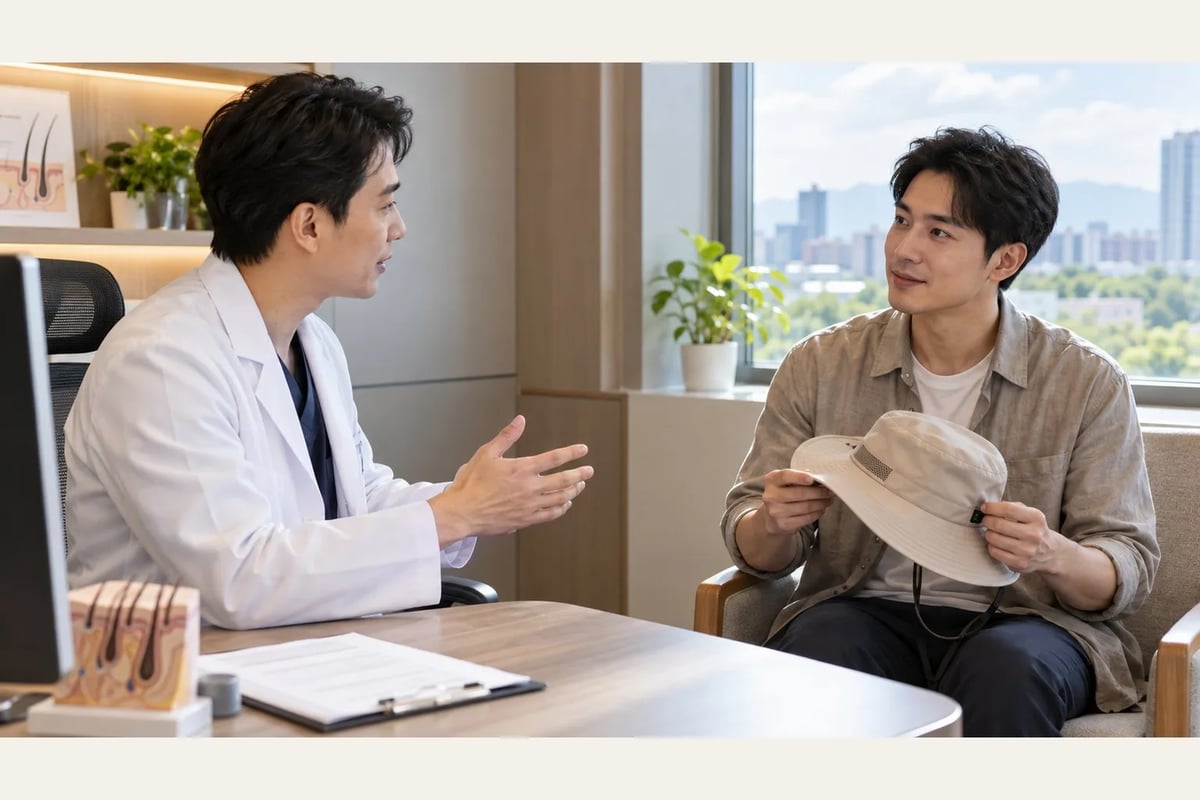
You do not have to stay indoors completely after a hair transplant. However, while recipient and donor sites have wounds or scabs, protect the scalp from prolonged direct sun. A hat or sunscreen is not automatically safe for newly operated skin.
In brief: Early on, adjust your plans, seek shade and limit direct exposure. Only wear a hat if your surgeon confirms that putting it on and taking it off will not rub the graft area. Wait until wounds have healed before discussing scalp sunscreen. There is no universal clearance date.
Can I go outside after a hair transplant?
Essential short trips differ from a full day of outdoor work or travel. Avoid prolonged strong sun while the scalp is healing. If you already have outdoor plans, mention them during your hair transplant assessment so recovery can be planned around them.

Why do both recipient and donor sites need protection?
The recipient area contains newly placed graft sites; the donor area has extraction wounds, while FUT also leaves a linear wound. A comfortable-looking scalp is not necessarily fully healed. Protecting short-term wounds is different from preventing sunburn on an exposed scalp later. See our aftercare guide for washing and scab care.
| Scalp condition | Priority | Do not do on your own |
|---|---|---|
| Wounds, bleeding or scabs remain | Change outdoor timing, use shade and follow surgical advice | Rub sunscreen into wounds or let a hat catch grafts |
| Healed without obvious irritation | Ask about suitable hats and scalp sun protection | Assume a healed appearance prevents sunburn |
| Increasing redness, pain, blisters or discharge | Stop sun exposure and contact the team | Pick scabs or try irritating products |
Can a hat shield my scalp from the sun?
A clean, loose hat may help, but its brim, lining and removal can still contact the grafts. Have your surgeon check the fit and how you put it on; do not repeatedly test it at home. A protective helmet is different: it must fit properly. Being cleared for a loose hat does not clear you for a helmet, and you should never ride without appropriate protection. Read our helmet and travel guidance.
When can I use scalp sunscreen?
Do not apply sunscreen to recipient or donor areas while there are open wounds, oozing or scabs. Spreading and reapplying a product can itself rub the scalp. Once the skin has healed without broken areas or significant irritation, ask your surgeon when and how to begin. For generally exposed, healed scalp, broad-spectrum SPF 30 or higher and reapplication outdoors are standard sun-protection measures; they are not instructions for a fresh surgical wound. Stop a product that stings or causes a rash and seek advice.

How should I plan outdoor work or travel?
Before surgery, list essential travel dates, hours in the sun and any required headgear. If strong sun cannot be avoided after surgery, discuss shorter shifts, different duties or shaded routes. Do not rely on a hat that rubs healing skin. Being able to go out briefly also does not mean you are ready to run or swim; see exercise after transplantation and swimming and hot springs.
What if my scalp becomes red or sunburned?
Move out of direct sun and avoid scratching or rubbing. Contact your surgical team promptly for significant pain, blisters, broken skin, bleeding or worsening symptoms; do not try a new ointment or sunscreen on the wounds. Spreading redness, pus-like discharge or fever needs assessment for other postoperative problems. See also bleeding warning signs.
Dr. Wu’s note: I ask about outdoor work, riding and travel during the initial consultation. Early on, avoiding prolonged sun and hat friction matters more than rushing to apply sunscreen. After both areas heal, we can discuss protection appropriate to your scalp rather than giving everyone the same date.
Medical references
- AAD: wound care
- AAD: scalp sun protection
- AAD: sunscreen FAQs
- ISHRS: FUE and recovery
- Expert consensus on hair transplant care
This is general medical information, not a substitute for your surgeon’s instructions. Contact your surgical team for blisters, broken skin, bleeding, discharge or worsening redness and pain.
Can I go outside the day after a hair transplant? +
Essential trips may be possible, but avoid prolonged direct sun, heavy sweating and anything that rubs the graft area. Follow your surgeon's individual instructions.
Is a loose hat automatically safe for grafts? +
No. Its brim, lining and removal can still touch the recipient area. Ask your surgeon to assess the hat and the surgical area.
Can I apply sunscreen to newly transplanted skin? +
Do not apply it yourself while open wounds, oozing or scabs remain. Discuss timing and technique with your surgeon after the scalp has healed.
Do FUE and FUT require the same sun precautions? +
Both require care, but the donor wounds and hat contact points differ. The procedure name alone does not determine a safe date.
Does a red scalp mean all grafts are lost? +
Redness alone cannot establish the outcome. If pain worsens or you develop blisters, broken skin or bleeding, contact the surgical team.
What should I plan before returning to outdoor work? +
Tell your surgeon your work dates, hours outdoors and required headgear before surgery. Discuss shade, altered duties or leave, then review healing afterward.
Related articles
This article has been reviewed and medically approved by Dr. Wen-Yi Wu

Dr. Wen-Yi Wu|Director, Mong Hair Clinic
- ● Fellow of ISHRS (FISHRS)
- ● ABHRS Board-Certified Hair Restoration Surgeon
- ● President of TSHRS (Taiwan Society of Hair Restoration Surgery)