
Can You Fly After a Hair Transplant? Planning Your Return Trip
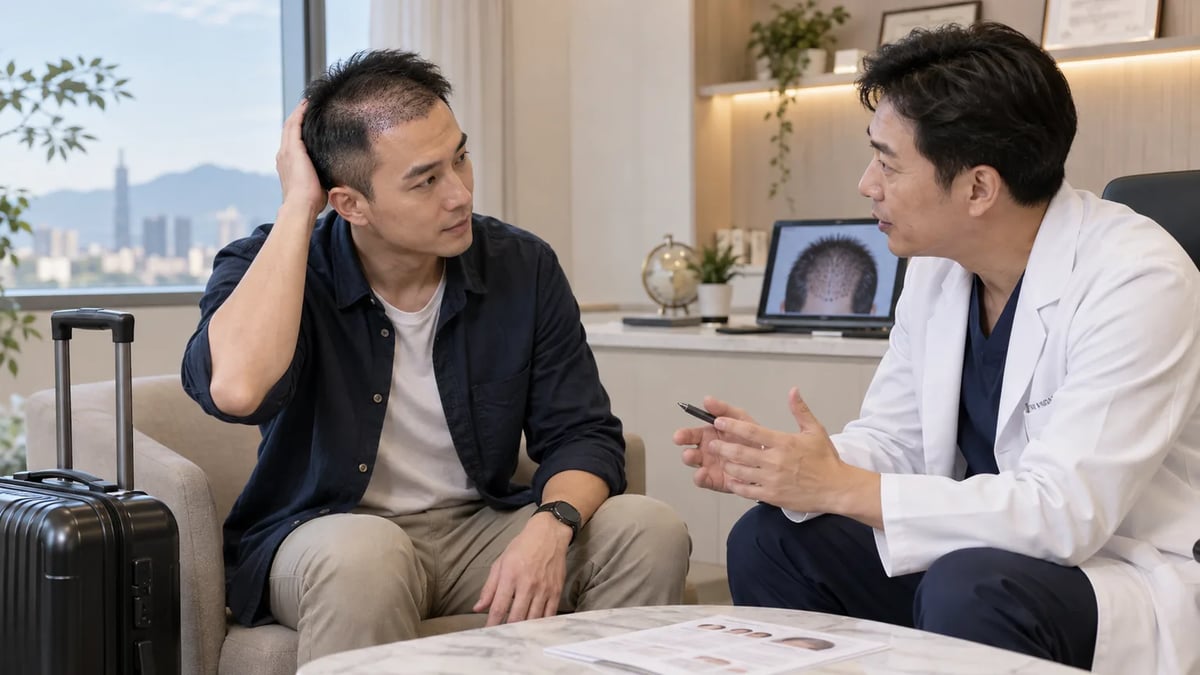
Flying after a hair transplant may be possible, but there is no universal “safe day” to book your return flight. Your surgeon should first assess bleeding, swelling, wound care, and follow-up. You also need a realistic way to protect the newly treated scalp during travel.
In brief: Arrange the first postoperative check and cleaning plan before booking an inflexible ticket. At the airport, protect the graft area from hats, luggage, and seatbacks. Persistent bleeding, fever, worsening pain, or unusual swelling needs medical review before you board. Personal risks on a long journey need separate consideration.
How soon after a hair transplant can I fly?
There is no fixed waiting period that fits every patient. FUE and FUT leave different donor wounds, and graft area, sedation, postoperative symptoms, and flight length vary. The UK NHS hair transplant guidance advises particular care to protect grafts during the first two weeks and following your surgeon’s instructions. This does not mean that everyone must avoid flying for two weeks; it means a person who can travel still needs to care for a healing scalp.
If you are travelling to Taiwan for hair transplantation, tell the surgeon how long you can stay and when you must return. Leave room for rest and any required early follow-up rather than booking a non-changeable dawn flight immediately after surgery. Our surgery-day schedule can help you plan the first part of the trip.
What should the surgeon check before departure?
The recipient area should be checked for persistent bleeding or unusual discharge, the donor wound for stability, and your general ability to move around and carry out cleaning instructions. Ask how and when to contact the surgical team after returning home. See our aftercare guide and information on forehead swelling, but use an examination—not an article—to decide whether to fly.

| Before departure | More compatible with the planned trip | Call your surgeon first |
|---|---|---|
| Scalp and donor area | Care is manageable; no ongoing bleeding | Ongoing bleeding, discharge, increasing redness or pain |
| General condition | Alert and able to care for yourself | Fever, dizziness, marked illness, or incomplete recovery from sedation |
| Follow-up | Required check done; contact plan understood | No clear aftercare or way to reach the team |
How can I protect grafts at the airport and in the cabin?
Lifting luggage, squeezing into a narrow row, leaning against the seat, or wearing a tight hat may rub or knock the treated area. Ask a companion to help with bags and check that the headrest does not press on the operated site. Only wear a hat or use a spray, dressing, or cleansing product as directed by your surgeon. Check airline and security rules for liquids separately.

If bleeding starts, do not scrub the scalp or pick off crusts at the airport. Read our bleeding warning signs and contact the surgical team promptly.
What changes on a long or connecting flight?
Long periods of sitting add a separate, individual health consideration. The US CDC travel guidance on blood clots advises discussing travel lasting more than four hours, recent surgery, prior clots, and other risk factors with a clinician. This general advice cannot be turned into a clot-risk estimate for every hair transplant patient, nor is it a reason to take preventive medicine without assessment. Tell both your surgeon and usual doctor if you have a long journey, limited mobility, or a clotting history.
The NHS advice on cosmetic surgery abroad also emphasizes recovery time, follow-up, and a plan for complications. Flight intervals quoted for other operations should not be applied to hair transplantation.
When should I postpone flying and seek care?
Get checked before departure if bleeding will not settle, pain worsens quickly, fever develops, redness spreads, or there is unusual wound discharge. Chest pain, breathing difficulty, or significant swelling and pain in one calf calls for urgent care. A non-refundable ticket is not a medical reason to board.
If symptoms develop after you return, keep the operation date, procedure details, written aftercare instructions, and team contact information for a local clinician. Our guide to preoperative blood tests and assessment explains why general health matters before surgery as well.
How should overseas patients plan the return journey?
At the consultation, share your departure city, flight duration, connections, companion arrangements, and available days in Taiwan. Confirm who performs the postoperative check, how to clean your scalp en route, and whom to call if you need to change flights or seek care at home.
| Ask before surgery | Why it matters |
|---|---|
| When will the surgeon check me again? | To assess the wound, care plan, and proposed return |
| How will I clean and protect the scalp while travelling? | To avoid improvising with hats, dressings, or washing |
| Who can I contact after returning home? | To make follow-up and complications actionable |
Dr. Wu’s perspective: I assess the pattern of hair loss, donor area, and recipient area before planning surgery and travel with you. Consultations and surgical planning are handled directly by the doctor. A flight schedule should never replace a necessary postoperative check; the plan must include both the scalp today and follow-up after you go home.
This is general health information, not an individual diagnosis or an airline policy. Your surgeon’s assessment determines when travelling is appropriate for you.
Can I fly the day after a hair transplant? +
The date alone cannot answer this. Your surgeon needs to assess bleeding, swelling, mobility, and the plan for your first wash and follow-up. Discuss flexible tickets before surgery if your return is soon.
Will cabin pressure dislodge transplanted grafts? +
There is insufficient evidence to judge graft loss from cabin pressure alone. Preventing friction and knocks and following your surgeon’s instructions are more practical priorities.
Can I wear a hat at the airport? +
Ask your surgeon about your particular graft sites and wounds. Do not put on a tight hat merely to conceal the scalp; its edge may rub the recipient area.
Can I lift my carry-on into the overhead bin? +
Avoid forcing a heavy bag overhead or letting it strike your scalp. Consider checked baggage or help from a companion; follow your individual activity restrictions.
Do I need medicine to prevent clots on a long flight? +
Do not start medication on your own. A history of clots, recent surgery, or other risk factors warrants an individual medical assessment before departure.
What if redness or pain increases after I return home? +
Contact the surgical team and seek medical care, providing the operation date, technique, and symptoms. Chest pain, breathing difficulty, or marked one-sided calf swelling needs urgent assessment.
Related articles
This article has been reviewed and medically approved by Dr. Wen-Yi Wu

Dr. Wen-Yi Wu|Director, Mong Hair Clinic
- ● Fellow of ISHRS (FISHRS)
- ● ABHRS Board-Certified Hair Restoration Surgeon
- ● President of TSHRS (Taiwan Society of Hair Restoration Surgery)