

Pimples After a Hair Transplant: Are They Normal and When Should You See Your Surgeon?
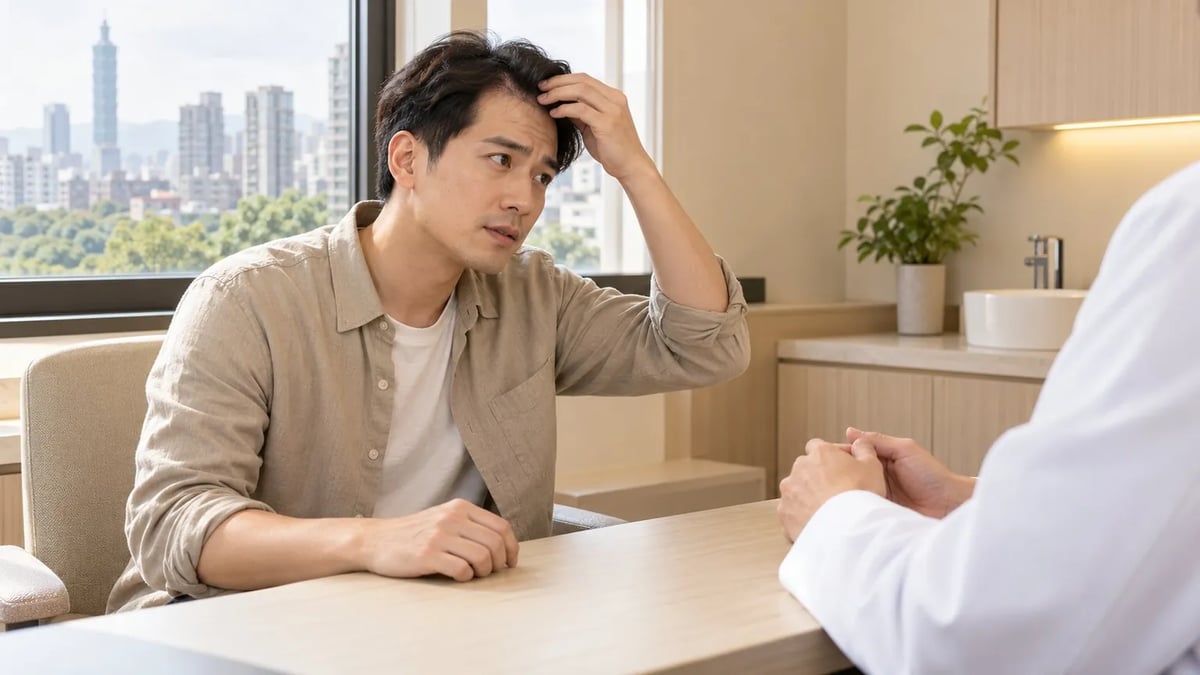
One to two months after a hair transplant, a few small red bumps that look like acne may appear on the scalp. Most are mild folliculitis as new hairs push through the skin, and they usually do not harm the grafts. The spots that need a review are those becoming more swollen or painful, discharging pus, or spreading.
Patients often ask me, “Is this an infection? Will it ruin the new hair?” I understand the worry. Below I follow the order I actually use at a follow-up visit.
Key points: Pimples are common once new hair starts to grow. They are usually small, scattered, not very painful and settle within days. Do not squeeze or pick them; keep cleansing gentle. If you notice marked redness, heat or pain, pus, a spot turning into a firm lump, spreading, or fever, return early rather than using medication on your own.
Are pimples after a hair transplant normal?
Mostly, yes. Transplanted follicles go through a resting phase before new hairs grow back from beneath the skin. As a hair breaks through, it may get trapped, grow at an angle or irritate the surrounding skin, forming a small red spot or whitehead. It is more a by-product of hair growth than a sign that surgery went wrong. Timing and number vary with hair thickness, oiliness and the scalp itself.
When do they usually appear?
Most often between one and four months after surgery, when new hairs begin to emerge; some people see them later because follicles do not all grow at once. What you see in the first week or two is usually scabbing, ooze or the wounds themselves, not follicular pimples. If you are also concerned about early bleeding, see bleeding risk after a hair transplant. For when to expect new hair, compare the hair transplant growth timeline.

How do I tell a usual pimple from inflammation that needs review?
I look at size, pain, extent, duration and any whole-body symptoms. Use the table as a guide, but a doctor’s examination is what counts.
| What to check | More like a usual post-op spot | Return early |
|---|---|---|
| Appearance | Small red spots or whiteheads, scattered | Clearly swollen, a firm lump or getting bigger |
| Pain | Little pain, or mild itch | Very tender, throbbing, warm skin around it |
| Extent | Occasional, not merging | Spreading area by area, or many clustered |
| Discharge | None, or a small whitehead | Ongoing pus or odour |
| Duration | Settles within days | Still there after one to two weeks, or recurring in one place |
| General health | No symptoms | Fever, fatigue, tender neck lymph nodes |
The donor area can be affected too, near FUE extraction sites or a FUT suture line; judge it the same way.
Can pimples affect graft survival?
Occasional mild spots generally do not affect overall growth. What concerns me more is inflammation that is extensive, prolonged or keeps returning in one area, so I would rather see you early. Shedding and thinning in the first months is usually resting-phase shedding, not caused by pimples. If that worries you, see will hair fall out again after a hair transplant?
Can I squeeze them?
No, and do not pick them with nails or needles. Squeezing pushes inflammation deeper and brings bacteria from your hands; a spot that would have settled in days may stay swollen longer or leave a mark. If a whitehead opens on its own, clean it gently. If you see a hair curled under the skin, leave it for your doctor at the follow-up.
How should I care for my scalp during this time?
- Gentle, regular cleansing: wash as instructed after surgery with water that is not too hot, use your fingertips lightly, and dry the scalp afterwards.
- Reduce heat and friction: long hours in a hat or helmet keep the scalp hot and humid; wash hat linings and pillowcases often.
- No self-medication: acne creams or harsh exfoliants recommended online may not suit a newly transplanted scalp; your doctor decides if treatment is needed.
See also the hair transplant aftercare guide.

What happens at a follow-up visit?
I check the location and number of spots, feel for lumps, and ask how long they have been there and whether you treated them yourself. I also review how the new hair is growing. Most cases only need adjusted cleansing and observation. A hair trapped under the skin may be gently released in clinic, and medication is considered only when inflammation is more obvious. Management differs from person to person, so please do not judge from photos online.

I get scalp pimples easily. Can I still have a hair transplant?
You can be assessed, but the current state of the scalp comes first. If folliculitis, seborrhoea or inflammation keeps recurring, I usually suggest stabilising the scalp before discussing surgery timing. This makes aftercare easier and helps distinguish spots caused by new hair from a flare of the original problem. If you also wonder whether scalp pimples cause hair loss, see does scalp folliculitis cause hair loss? To learn whether surgery suits you, read about hair transplant assessment.
Dr. Wu’s perspective: Don’t panic, and don’t squeeze
I see a few pimples after a hair transplant very often at follow-ups. Most of the time I ask you to relax, keep cleansing as before and give it a few days. But if spots become more swollen or painful, or will not settle, do not wait for your next scheduled visit—send us a photo so I can see you sooner. If you have not had surgery yet and your scalp breaks out easily, please tell me at the assessment; I will factor your scalp condition into the timing.
References
- American Academy of Dermatology (AAD): Folliculitis
- International Society of Hair Restoration Surgery (ISHRS): Patients
- NHS: Hair transplant
- Kerure AS, Patwardhan N. Complications in Hair Transplantation. Journal of Cutaneous and Aesthetic Surgery. 2018;11(4):182–189.
This is general health information, not an individual diagnosis. Follow your surgeon’s assessment regarding your scalp and any medication.
Do pimples after a hair transplant mean infection? +
Usually not. A few small spots are often mild inflammation as new hairs grow. Marked redness, heat, pain, pus or fever needs a prompt review by your doctor.
How long do pimples last after a hair transplant? +
A single spot usually settles within a few days. They may come and go for several months as new hairs emerge, and this varies widely between people.
Can pimples appear in the donor area too? +
Yes. Small spots can appear near extraction sites or the suture line. Watch them the same way, and return if swelling or pain persists.
Will hair still grow where a pimple appeared? +
Occasional mild spots usually do not affect growth there. Widespread or recurring inflammation should be reviewed early by your doctor.
Can I use acne cream on my own? +
This is not recommended. A newly transplanted scalp is sensitive; have it checked first so your doctor can decide whether any treatment is needed.
Can I keep washing my hair while I have pimples? +
Yes. Wash gently as instructed after surgery, avoid scratching or scrubbing, and dry the scalp afterwards.
Related articles
This article has been reviewed and medically approved by Dr. Wen-Yi Wu

Dr. Wen-Yi Wu|Director, Mong Hair Clinic
- ● Fellow of ISHRS (FISHRS)
- ● ABHRS Board-Certified Hair Restoration Surgeon
- ● President of TSHRS (Taiwan Society of Hair Restoration Surgery)