
Does a Hair Transplant Cause Heavy Bleeding? Risks, Medicines and Aftercare
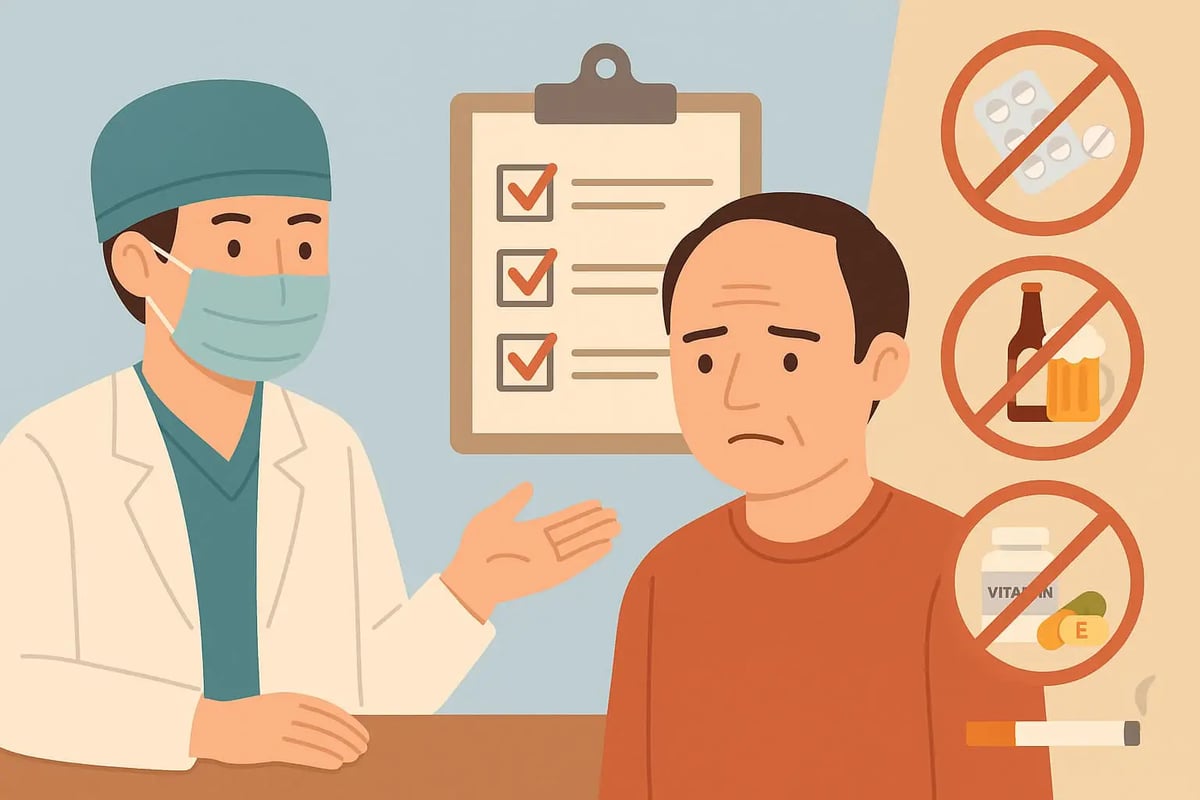
Many people considering a hair transplant worry that the procedure will cause heavy bleeding. Follicular extraction and implantation create tiny superficial wounds, so a small amount of oozing is expected. This is different from major blood loss.
Key point: a hair transplant is not bloodless, but most bleeding can be controlled. If you take aspirin, clopidogrel, an anticoagulant, an NSAID or supplements, do not stop them on your own. The transplant surgeon and the original prescriber should make an individual plan based on the medicine, condition and procedural risk.
Why does a hair transplant bleed?
FUE creates small extraction sites in the donor area, while the recipient area needs tiny openings for graft placement. Both areas may ooze. The team uses local anaesthesia, careful technique, pressure and ongoing observation to control bleeding.
The NHS hair-transplant guide lists bleeding as a possible surgical risk while noting that hair transplantation is generally safe. Individual risks should still be discussed with the operating doctor. See also our hair-transplant safety guide.
What can increase bleeding or healing risk?
| Pre-op factor | Possible effect | Safer approach |
|---|---|---|
| Aspirin, clopidogrel, warfarin or other anticoagulants | May increase bleeding | List the drug and dose; let both doctors decide whether and when to adjust it |
| Ibuprofen, naproxen and other NSAIDs | Some affect platelet function or bleeding | Report the last dose and frequency; do not use a universal stop interval |
| Vitamin E, fish oil and other supplements | Some ingredients may affect clotting | Bring the container or ingredient list for review |
| Alcohol | May affect vessels, blood pressure and coagulation | Follow the clinic’s pre-op instruction and disclose heavy use |
| Smoking | Associated with delayed healing and infection | Stop as early as possible and discuss support with the doctor |

Can I stop aspirin or an anticoagulant myself?
No. Different medicines have different durations of action, indications and risks after interruption. Unsupervised stopping can be dangerous for people with a previous heart attack, stroke, arrhythmia, vascular stent or thrombosis.
The US FDA advises people taking aspirin on a clinician’s recommendation not to stop before discussing it. Give the surgical team a complete medicine list and let the relevant clinicians agree on a plan. Our consultation checklist explains what else to prepare.
How long should NSAIDs and supplements be stopped?
NSAIDs differ in half-life and platelet effect, so “stop one day before” is not a safe rule for every product. Vitamin E, fish oil, ginkgo, ginseng and combination supplements also vary in formulation and dose.
MedlinePlus preoperative guidance recommends disclosing all prescription medicines, over-the-counter products, vitamins and herbs. The surgical team should decide what needs pausing and for how long.
What about alcohol and smoking?
Alcohol can affect blood vessels, blood pressure and coagulation, so follow the clinic’s instruction on when to stop. Disclose regular heavy drinking or withdrawal symptoms.
Smoking affects circulation and healing. The CDC surgical-site guidance advises patients to quit because smokers develop more infections. Read our pre-transplant smoking guide and discuss a practical plan.
What should I do about bleeding after surgery?
For minor early oozing, follow the clinic’s aftercare instructions and apply gentle, continuous pressure with clean gauze. Do not repeatedly lift the gauze, scratch the scalp or rub the grafts.
Contact the surgical clinic immediately if bleeding continues despite pressure, dressings soak rapidly, or you develop dizziness, marked swelling, severe pain or another unexpected symptom. Seek urgent medical care if symptoms are severe. See the hair-transplant aftercare guide.
What must I disclose before surgery?
- Every prescription medicine, painkiller and supplement, including dose and frequency.
- A history of unusual bleeding, easy bruising, clotting problems or surgical bleeding.
- Cardiovascular disease, stroke, thrombosis, liver disease, hypertension or other chronic illness.
- Allergies, previous anaesthetic reactions, alcohol use and smoking.
Most people do not need to fear major bleeding, but a safe plan depends on an honest history and individual medical assessment. This article is general education and cannot replace advice from your own clinicians.
Does a hair transplant cause heavy bleeding? +
Extraction and implantation create tiny wounds, so some oozing can occur. Most bleeding is controlled by the surgical team, but medicines, medical conditions and blood pressure still need individual assessment.
How many days before surgery should I stop aspirin? +
There is no single answer for everyone. Do not stop aspirin yourself. The transplant surgeon and the clinician who prescribed it should weigh the reason for treatment against bleeding and clotting risks.
Can I take ibuprofen before a hair transplant? +
Ibuprofen is an NSAID and may affect bleeding risk. Tell the clinic when and how much you took so the doctor can advise whether it should be paused and what alternatives are suitable.
Should fish oil or vitamin E be stopped? +
Some supplements may affect clotting, but formulations and doses vary. Bring the packaging or ingredient list for medical review rather than applying a fixed stop date yourself.
What should I do if the scalp oozes after surgery? +
Follow the clinic's instructions and apply gentle, continuous pressure with clean gauze. Contact the clinic urgently if bleeding does not stop, dressings soak rapidly, or you develop dizziness, severe pain or marked swelling.
Does smoking affect hair-transplant recovery? +
Yes. Smoking is associated with poorer wound healing and a higher risk of surgical-site infection. It is best to stop as early as possible and discuss a cessation plan before surgery.
Related articles
This article has been reviewed and medically approved by Dr. Wen-Yi Wu

Dr. Wen-Yi Wu|Director, Mong Hair Clinic
- ● Fellow of ISHRS (FISHRS)
- ● ABHRS Board-Certified Hair Restoration Surgeon
- ● President of TSHRS (Taiwan Society of Hair Restoration Surgery)