

What Should You Ask Before a Hair Transplant? Assessment and Preparation
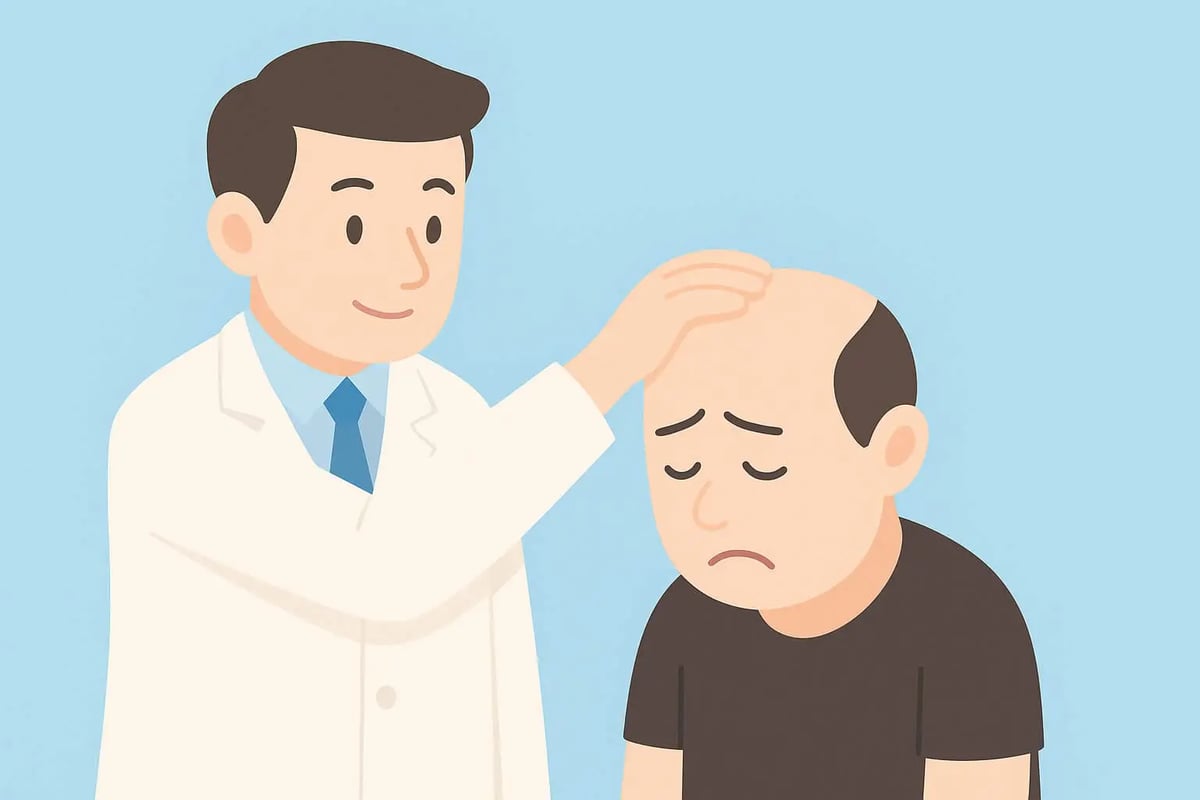
Heading into a hair transplant consultation, many people open with “how many grafts, how much?” But a complete assessment first works out the cause of the loss and the donor and recipient conditions, and only then discusses grafts, technique, and cost.
Key point: Suitability for a transplant usually needs a clear loss diagnosis, a sufficient and relatively stable donor area, a recipient area that can accept grafts, and reasonable expectations. Graft count is estimated together from recipient area, planned density, and follicle condition — not “the more the better.” At the consultation, confirm what the doctor personally assesses and performs, the surgical risks, a full quote, and post-op follow-up; the actual plan must come from an in-person examination by a professional doctor.
What Does a Hair Transplant Assessment Cover? Not Just the Bald Area
A transplant redistributes your own follicles; it does not increase the total number. The doctor must confirm together “why the hair is falling, where hair can be harvested, where it needs to be placed, and whether it will keep thinning in future” before judging feasibility and how to allocate follicles.
| Assessment item | What the doctor confirms | The decision it affects |
|---|---|---|
| Loss diagnosis | Male-pattern, female-pattern, telogen, alopecia areata, traction or inflammatory loss | Treat the underlying disease first, or proceed to surgical planning |
| Donor area | Back and side density, calibre, miniaturisation ratio, scalp laxity, and past harvesting | Grafts safe to harvest, FUE or FUT, room for future surgery |
| Recipient area | Hairline, temples, forehead, crown or scar area, native hair and blood supply | Target density, hair-flow direction, follicle allocation |
| Loss stability | Photo changes, age, family history, and current treatment | Whether to observe or stabilise native hair first |
| Health conditions | Chronic illness, clotting, allergies, medication, smoking, and scalp infection | Timing, anaesthesia, and pre-op preparation |
| Expectations and budget | Desired hairline, density, hairstyle, recovery period, and acceptable cost | Design scope, staging, and alternatives |
Who Is Suitable for a Transplant, and When Should You Wait?
Generally, people whose cause of loss is clarified, whose donor area has enough healthy follicles, whose recipient area still supports growth, and who understand the surgery’s limits are better suited to discuss a transplant further. Cases that usually suit planning:
- The pattern and extent of male- or female-pattern loss is confirmed by a doctor.
- Donor density, calibre, and stability at the back and sides are sufficient.
- The scalp has no active infection, severe inflammation, or uncontrolled skin disease.
- You accept that the donor is limited, density has a ceiling, and native hair still needs long-term follow-up.
But “can be assessed” does not mean surgery is right now. Sudden heavy shedding, active alopecia areata or inflammatory loss, scalp infection, widespread donor miniaturisation, rapidly progressing loss, uncontrolled chronic illness, or wanting a too-low hairline and too-high density from limited follicles usually mean treating the cause or adjusting the plan first. Age is not a single threshold, but younger people whose loss pattern is not yet stable need a more conservative estimate of the future extent.

What Are the Steps in a Hair Transplant Consultation?
Flows differ between clinics, but a full consultation should diagnose first, then measure and design, and only then discuss grafts, technique, and cost. A quote from a single photo cannot fully judge follicle density, calibre, scalp laxity, or the safe harvest range. Four common steps:
- Step 1 | History, loss history, and medication: The doctor asks when loss started, its speed, family history, past treatment, chronic illness, allergies, anaesthesia experience, smoking, and medication. Anticoagulants, painkillers, and supplements can affect surgery, but do not stop them yourself — the prescribing and operating doctors decide together.
- Step 2 | Scalp, donor, and recipient exam: Checks loss distribution, follicle calibre, scalp inflammation, back density, and the safe harvest range; blood tests, dermoscopy, or other tests may be arranged if needed.
- Step 3 | Hairline and density design: Combines face proportion, age, native hair direction, future loss, and donor supply. Design is not about drawing the hairline as low as possible, but using limited follicles to balance naturalness, coverage, and long-term continuity.
- Step 4 | Technique, grafts, cost, and follow-up: Once feasible, compares FUE, FUT, or a combined approach, and explains estimated grafts, team roles, anaesthesia, surgery time, recovery, risks, quote items, and the review plan. Take time after the consultation to digest the information — no need to decide in a hurry while it is incomplete.
How Are Grafts Estimated, and Why Isn’t More Always Better?
A “graft” is a follicular unit, not a hair count; one graft may hold 1 to several hairs. Roughly, it is recipient area times planned density, then adjusted for native-hair density, calibre, curl, hair colour versus scalp contrast, hair flow, and donor supply — so the same area does not give everyone the same number. The front of the hairline often needs more single-hair follicles for softness, with natural follicle groupings placed behind.
Why doesn’t a high graft count mean a better plan? Density in one session is limited by recipient blood supply, existing follicles, surgery time, and team execution; donor harvesting must also avoid visible thinning or scarring. Chasing numbers alone can raise the risk of over-harvesting, wasted follicles, uneven density, or a lack of repair resources later. Factors affecting graft count include: recipient area, native-hair density, calibre and curl, hair colour versus scalp contrast, safe donor harvest amount, and reserves for future loss.
How to Choose FUE vs FUT? What to Compare at the Consultation
FUE removes follicles one graft at a time, while FUT takes a strip of scalp with follicles and then separates the units. Both are current harvesting methods, each with its own scar type, shaving needs, recovery feel, and donor-use considerations — you cannot sum them up as just “new vs old” or “scar vs no scar.” The choice is affected by hairstyle preference, donor density, scalp laxity, grafts needed, past surgery, and whether future harvesting may be needed.
| Comparison | FUE (graft-by-graft) | FUT (strip) |
|---|---|---|
| Harvest method | Removes follicular units one by one with a device | Takes a strip, then separates follicles under magnification |
| Scar type | Multiple dot scars; over-harvesting can still look thin | A linear scar, width affected by healing and scalp tension |
| Shaving needs | May need a larger area shaved short, per technique and count | Donor often coverable by surrounding hair, still case-by-case |
| Donor consideration | Must control distribution and safe harvest amount | Can concentrate follicles within the strip, but scalp laxity matters |
| Who it suits | Prefers short hair, accepts dot scars, suitable donor | Needs more grafts, accepts a linear scar, suitable scalp |
| Shared limits | Both may involve bleeding, infection, numbness, scarring, folliculitis, temporary shedding, or density below expectation | Both need a doctor’s assessment and explanation |
Should You Ask About Anaesthesia, Medication, and Aftercare Before Surgery?
Yes. A hair transplant is usually done under local anaesthesia, but it is still surgery. Before discussing only grafts and price, clarify who performs each surgical step, the anaesthesia and pain-control plan, how current medicines are handled, and whom to contact after surgery. Not everyone needs the same blood tests; the doctor chooses them according to medical history, medication, anaesthesia, and procedural risk. See why blood tests may be needed before a transplant and bleeding risk and medication assessment.
| Pre-op topic | What to clarify |
|---|---|
| Surgical roles | Which steps does the doctor personally perform, and what does each team member do? |
| Anaesthesia and pain | Which local anaesthetic is used? Will you be awake? How are allergies or past anaesthetic reactions handled? |
| Medicines and supplements | How should prescriptions, painkillers, anticoagulants, and supplements be handled? Do not stop them yourself. |
| Tests | Are blood tests or other checks needed, and which history or risk makes them necessary? |
| Smoking and alcohol | How long should you avoid them before and after surgery, based on your own plan? |
| Aftercare support | How do you wash, when is review, who answers out of hours, and what should you do for persistent bleeding, fever, or worsening pain? |
Aftercare instructions should be clear before the procedure; read the Common Hair Transplant Myths: Pain, Naturalness and Pre-Surgery Assessment.
How to Read the Cost, Prepare, and What to Ask
Hair transplant cost is often estimated from graft count, and can also be affected by technique, difficulty, recipient location, whether it is scar repair, team setup, and post-op care. A per-graft price online without a clear list of what it includes is not suitable for comparing total cost directly. On the quote, confirm: the pricing unit (grafts / hairs / fixed package), how it is billed if estimated and actual grafts differ, which steps the doctor personally handles, whether anaesthesia, drugs, consumables, and reviews are included, how scope or cost adjusts if donor supply is found insufficient mid-surgery, and whether discounts or countdowns pressure you to pay on the spot.
Before the consultation, prepare fixed-angle photos from the past 1–3 years, family loss history, current medication and supplements, allergies and chronic illness, and any past scalp treatment or transplant records. 10 questions worth asking clearly:
- What is my loss diagnosis? Is it still progressing?
- Why am I currently suitable or not, and are there alternatives?
- How are donor density, calibre, and safe harvest amount assessed?
- What is the basis for the suggested hairline, recipient area, and estimated grafts?
- Why FUE, FUT, combined, or staged?
- Which steps does the doctor, and which do team members, perform?
- What are the possible risks, scar type, and recovery time?
- Do any of my medicines or supplements need changing, and which doctor should decide?
- What does the full cost include, and how are graft-count changes handled?
- How do I make contact after surgery, when is the review, and which symptoms need immediate attention?
If the consultation only pushes promotions and high graft counts, with no doctor diagnosis, donor check, risk, or long-term plan, hold off on deciding. A transplant is surgery — transparent information and professional assessment matter more than a quick booking.
How do I know if I'm suitable for a transplant? +
It depends on the cause of loss, healthy donor follicles, recipient condition, loss stability, health, and expectations. A sufficient donor and a clear diagnosis suit further planning; the actual call still needs an in-person assessment by a professional doctor.
Can a doctor quote from photos alone? +
Photos can give a first idea of the hairline, crown, and back range, but cannot fully judge calibre, follicle miniaturisation, scalp inflammation, laxity, or safe harvest amount. Formal planning usually still needs an in-person exam.
Are more grafts always better? +
No. Graft count is estimated together from recipient area, planned density, and follicle condition. Chasing a high count can cause over-harvesting, uneven density, or a lack of repair resources later — which is worse, not better.
What matters most at the consultation? +
Confirm that the doctor personally assesses and leads the surgery, that there is a full diagnosis and donor check, clear risk and scar explanation, transparent quote items, and post-op contact and review — don't just compare per-graft prices.
Can I stop my medication myself before a transplant? +
No. Give the clinic a complete list of prescriptions, over-the-counter medicines, and supplements. The operating doctor and original prescriber should decide together whether anything needs changing based on bleeding and disease risk.
What should I bring to a hair transplant consultation? +
Bring fixed-angle photos from the past 1–3 years, a medication and supplement list, details of medical conditions and allergies, and records of past scalp treatment, blood tests, or transplants.
Related articles
This article has been reviewed and medically approved by Dr. Wen-Yi Wu

Dr. Wen-Yi Wu|Director, Mong Hair Clinic
- ● Fellow of ISHRS (FISHRS)
- ● ABHRS Board-Certified Hair Restoration Surgeon
- ● President of TSHRS (Taiwan Society of Hair Restoration Surgery)