

What Hair Conditions Are Assessed Before a Hair Transplant? Hair Loss Pattern, Donor Area and Hair Quality
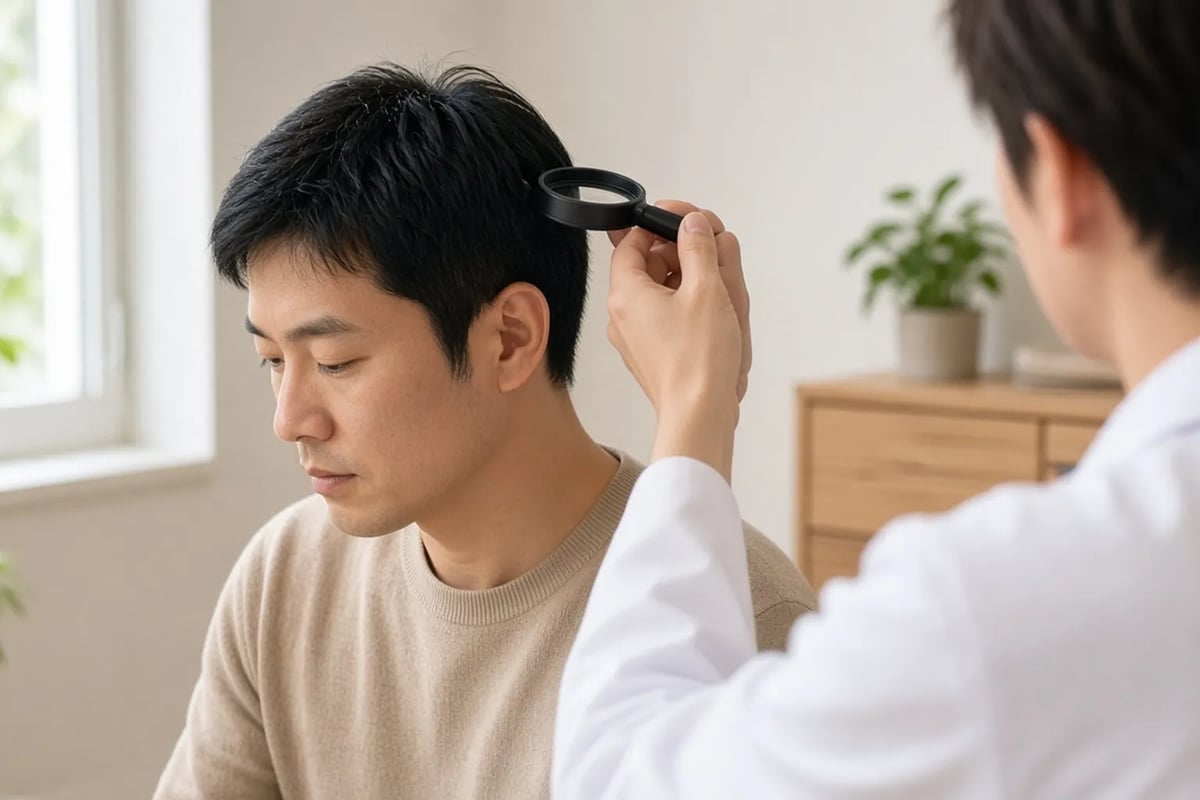
Many people start the consultation by asking how much a hair transplant costs. In my view, the first question should be whether your hair condition is suitable for a transplant at all. Two people with the same receding hairline can be very different: one has stable hair loss and a dense donor area, while the other has temporary shedding that will improve once the cause is treated. Here are the hair conditions I always check during a hair transplant assessment.
Key points: Before a hair transplant I look at five things in order: the cause of hair loss and whether it is stable, the extent and pattern of thinning, the density and follicle quality of the donor area at the back of the head, hair quality (thickness, curl, and the contrast between hair and skin colour), and scalp health. These decide whether a transplant is possible, how many grafts are needed and how to design it. Assess first, then talk about grafts and cost.
Why assess your hair condition before a hair transplant?
A hair transplant moves follicles from the back of the head, which is less affected by pattern hair loss, to thinning areas. It can restore areas that have already been lost for a clear reason, but it cannot fix hair loss that is still changing.
So during an assessment I do not just measure the bald area. I first confirm the cause and trend of the hair loss, then check whether the donor area is sufficient. A thorough assessment is what makes graft numbers, hairline design and cost estimates meaningful.
How do I judge the cause and stability of hair loss?
Thinning hair can have very different causes. I look at when it started, how fast it is progressing, family history and recent changes in health to work out which type it is:

| Type of hair loss | Common features | Assessment direction |
|---|---|---|
| Pattern hair loss | Gradual thinning at the front, temples or crown, often with a family history | Once stable, a transplant can be assessed based on donor supply |
| Telogen effluvium | Heavy shedding some time after stress, illness, childbirth or dieting | Usually temporary; treat the cause first, a transplant is rarely needed |
| Alopecia areata | Round patches with clear edges that may recur | Immune-related; a transplant is generally not the first choice |
| Scarring alopecia | Scalp inflammation leaves scars where follicles are lost | The condition must be stable before individual assessment |
| Traction alopecia | Thinning at the hairline sides from tight hairstyles | Change hairstyle habits first, then consider whether grafts are needed |
If hair loss is still changing quickly, I usually suggest monitoring it and stabilising the existing hair before deciding on the transplant area, so that a new hairline does not end up disconnected from the hair behind it years later.
How do the extent and pattern of hair loss affect planning?
The extent of hair loss determines how much area needs grafts, and the pattern decides the priorities. The front hairline shapes facial proportions, while the crown usually needs more grafts because the hair grows in a spiral.
I record the front, mid-scalp and crown separately and discuss which area matters most to you. When donor supply is limited, I usually recommend restoring the front and mid-scalp first so the overall look is natural, then planning the crown if needed.
Is the donor area enough? Assessing density at the back of the head
The donor area is the most important “savings account” in a hair transplant. I use magnification to check follicle density at the back and sides, how many hairs each follicular unit has, and whether this area also shows signs of thinning.

- Good density with mostly two- to three-hair units: more follicles available and more design flexibility.
- Lower density or a narrow donor zone: grafts must be allocated conservatively, focusing on key areas.
- Thinning in the donor area itself: harvesting must be more cautious to avoid a see-through look afterwards.
Follicles taken from the donor area do not grow back, so I do not over-harvest to fill everything at once. I plan with possible future needs in mind.
If you are also worried about how many grafts your donor area can provide, you may want to read How Many Grafts Do You Need? The Formula, Density, and Donor Supply.
Why do hair quality, colour and scalp condition matter?
The same number of grafts can look very different on different hair. Thicker, slightly wavy hair usually covers better; fine, soft hair with dark hair on fair skin shows more contrast and needs a more careful density design.

The scalp itself also needs to be healthy. If there is seborrhoeic dermatitis, folliculitis or psoriasis, I recommend getting it under control first. A tight scalp or old scars also affects the choice of harvesting method.
If you are also worried about whether you can have a transplant with an inflamed scalp, you may want to read Can You Have a Hair Transplant With Seborrhoeic Dermatitis? Scalp Stability and Timing.
Which hair conditions should be treated before a transplant?
In the following situations I usually recommend treating or monitoring first, then coming back for a hair transplant assessment:
- Sudden heavy shedding recently, which may be telogen effluvium.
- The cause of hair loss is unclear, or an immune-related or scarring condition is suspected.
- Obvious scalp inflammation, infection or flaking.
- Young age with hair loss still progressing quickly and an unsettled hairline pattern.
- Clearly insufficient donor density to achieve the expected coverage.
Postponing does not mean you can never have a transplant. It means doing the surgery at a better time, so the result is more likely to last.
How is a hair transplant assessment carried out in the clinic?
At a first assessment I take a history of your hair loss, family history, medical conditions and medicines, then examine the front, crown and back of the head under magnification, arranging blood tests or other checks if needed to find the cause.
Only after confirming suitability do we move on to hairline design, graft estimates by area, the choice between FUE and FUT and recovery time, and finally cost. With the right order, the quote you receive is a plan that truly fits your hair condition.
If you are also worried about what is covered on the day of the assessment, you may want to read What Should You Ask Before a Hair Transplant? Assessment and Preparation.
A note from the doctor
A hair transplant is not better the earlier you do it. It should be done when the cause is clear, the pattern is stable and the donor area is sufficient.
During the assessment I explain your hair condition point by point, including the suitable area, possible limits and anything that needs treating first.
Understand your hair first, then talk about grafts and cost. That way, the decision you make truly fits you.
This article is general medical information and does not replace an individual diagnosis.
Medical references
Do I need a hair condition assessment before a transplant? +
Yes. The cause and stability of hair loss, donor density and scalp condition all decide whether a transplant is possible, how many grafts and how to design it.
Does telogen effluvium need a hair transplant? +
Most telogen effluvium is temporary. Finding and treating causes such as stress, illness or nutrition usually means no transplant is needed.
Can I have a transplant if my donor density is low? +
It needs individual assessment. Based on your follicles, I prioritise the area that matters most to you or discuss other options.
Will a transplant work less well on fine hair? +
Fine hair gives less coverage, so it needs more careful density and angle design. I explain realistic expectations during the assessment.
Can I have a transplant while I am young? +
When you are young and hair loss is still progressing quickly, I usually recommend monitoring and stabilising your hair before deciding on the hairline and area.
Do I have to have surgery right after the assessment? +
No. The assessment helps you understand your hair condition and options. You can take the plan home and decide later whether and when to go ahead.
Related articles
This article has been reviewed and medically approved by Dr. Wen-Yi Wu

Dr. Wen-Yi Wu|Director, Mong Hair Clinic
- ● Fellow of ISHRS (FISHRS)
- ● ABHRS Board-Certified Hair Restoration Surgeon
- ● President of TSHRS (Taiwan Society of Hair Restoration Surgery)