

Do You Need Scalp or Hair-Growth Treatment Before a Hair Transplant?
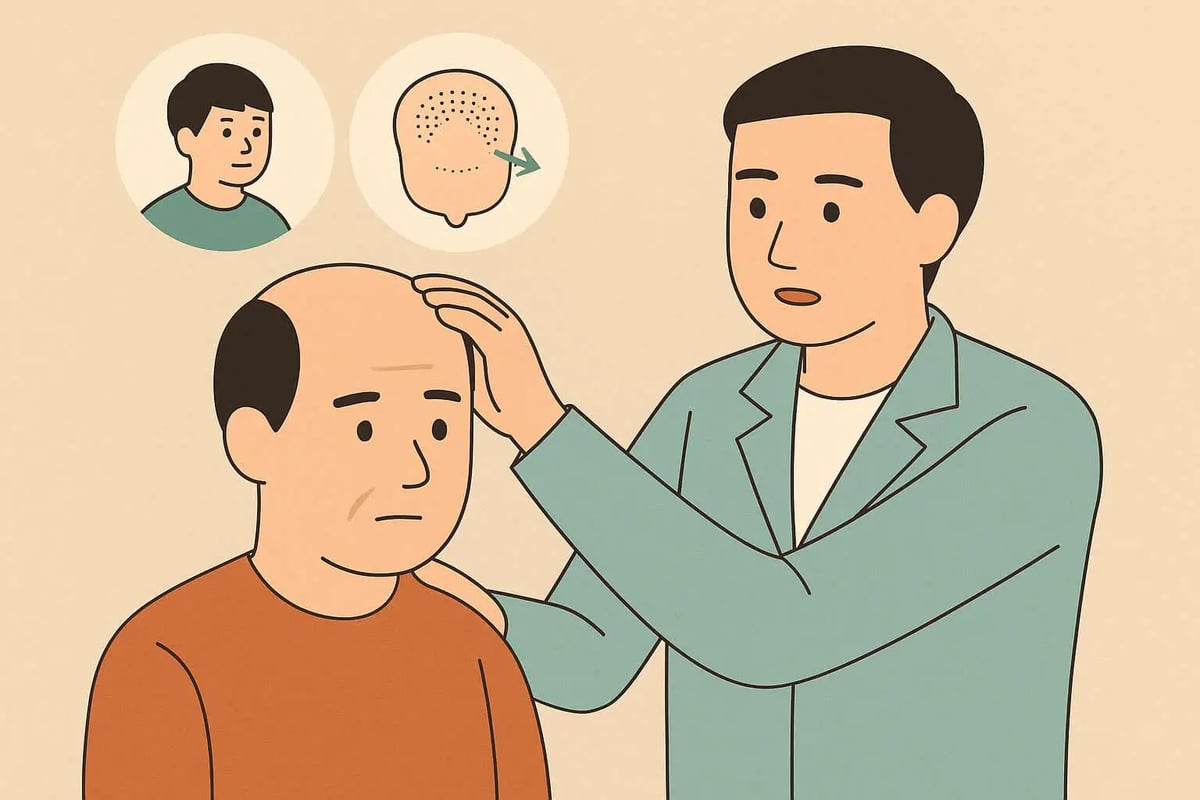
Most patients do not need to purchase an additional hair-growth treatment or scalp-care package before a hair transplant. What matters is confirming the diagnosis, scalp health, donor-hair supply and whether the native hair is still changing rapidly.
Key point: PRP injections, laser caps and scalp rollers are not approved by Taiwan’s health authority as mandatory preparation before a hair transplant or as substitutes for transplantation. They are not recommended for those purposes. Active infection, significant inflammation, wounds or an unclear diagnosis should instead receive appropriate medical assessment and treatment.
Is hair-growth treatment mandatory before a hair transplant?
No. When the diagnosis is clear, the scalp is stable and the donor area is adequate, injections, light therapy or special scalp-care sessions are usually not prerequisites for surgery.
A transplant moves follicles from a donor area to the area being treated, but it does not stop other native hairs from continuing to thin. The decision to observe, use medication or schedule surgery therefore depends on the overall diagnosis and long-term plan, not on how many add-on treatments a patient has purchased. See the hair-transplant suitability and donor assessment guide.
Which scalp conditions should be treated first?
Redness, pain, discharge, pus, heavy scaling, persistent itching or an unhealed wound should be assessed before surgery. Active infection or inflammation can complicate wound care and make it harder to evaluate the skin and follicles accurately.
Sudden patchy hair loss, rapid shedding or hair loss affecting the eyebrows or other body areas should not automatically be labelled as pattern hair loss. Blood tests, dermoscopy or a scalp biopsy may be appropriate in selected cases.
| Preoperative finding | Usual next step | Is this a hair-growth package? |
|---|---|---|
| Stable scalp and clear diagnosis | Plan the transplant around donor supply and future hair loss | Usually no |
| Infection, folliculitis or an open wound | Treat and confirm stability before scheduling | Medical treatment, not a growth package |
| Marked redness, itching, pain or scaling | Diagnose and control the inflammation | Scalp-disease management |
| Unclear or rapidly changing hair loss | Complete diagnosis and follow-up first | A single procedure cannot replace diagnosis |
What does the doctor assess before surgery?
Assessment includes the duration and pace of hair loss, family history, previous treatments, current medicines, scalp condition, hair distribution, donor density, hair calibre, scalp laxity and existing scars.
Patients should disclose chronic conditions, bleeding risk, allergies, smoking, alcohol use, medication and supplements. Depending on individual risk, the clinic may arrange pre-transplant blood tests.
Are PRP, laser caps and scalp rollers necessary preparation?
No. PRP injections, laser caps and scalp rollers are not approved by Taiwan’s health authority as mandatory preparation before a hair transplant or as substitutes for transplantation. Whether a device or product holds another type of licence is a different question from whether it may be promoted for these specific purposes.
For improving graft survival, guaranteeing the final transplant result or replacing surgery, the evidence is not sufficiently consistent. Responses also vary between individuals, so these procedures are not recommended as pre-transplant preparation or alternative treatments.
Some studies have examined PRP, low-level light therapy or microneedling in selected hair-loss settings. That does not establish that they are required before transplantation, and they cannot replace diagnosis, donor assessment or surgical planning.
| Option | Position before transplantation | Important limitation |
|---|---|---|
| PRP | Not recommended as required preparation or a substitute | Not approved for these uses; protocols and evidence vary |
| Laser cap / low-level light | Not recommended as required preparation or a substitute | Not approved for these uses; devices and evidence vary |
| Microneedling / scalp roller | Not recommended as required preparation or a substitute | Incorrect use may cause irritation, bleeding or infection |
| Routine gentle cleansing | Appropriate for comfort and cleanliness | Avoid harsh products and scratching |
Should medicines or scalp products be stopped?
Do not stop prescribed treatment on your own. Provide the team with a complete list of oral medicines, topical hair-loss products, anticoagulants, antiplatelet medicines and supplements that may affect bleeding. The prescribing doctor and surgeon should decide whether any adjustment is needed.
Topical products may irritate the scalp, and timing differs by formulation, skin response and clinic protocol. Follow written instructions from the surgical team rather than copying another patient’s schedule.
How can I prepare during the week before surgery?
- Complete requested tests and prepare a list of conditions, allergies, medicines and supplements.
- Report fever, scalp infection, wounds or new illness promptly.
- Continue gentle cleansing; avoid last-minute exfoliation, dyeing, perming, aggressive massage or microneedling.
- Arrange transport, leave from work, meals and postoperative support, and review the procedure, anaesthesia and recovery timeline.
The most useful preparation is not another procedure. It is giving the doctor complete information, stabilising scalp disease and confirming that the goals fit the available donor supply.
Medical references
- American Academy of Dermatology: Hair loss diagnosis and treatment
- American Academy of Dermatology: Hair transplant candidate evaluation
- NHS: Hair transplant procedure, recovery and risks
- PubMed: Microneedling combined therapy for androgenetic alopecia
This article provides general medical education and does not replace an in-person examination or individual medical advice. A qualified doctor should determine whether scalp treatment, medication adjustment or transplantation is appropriate.
Must I undergo hair-growth treatment before a hair transplant? +
Usually not. PRP injections, laser caps and scalp rollers are not approved by Taiwan's health authority as mandatory preparation before transplantation or as substitute treatments. Infection, active inflammation, wounds or an unclear diagnosis should be medically assessed first.
Can I have a transplant if I have seborrheic dermatitis? +
It is not automatically excluded, but active redness, itching, scaling or inflammation should be assessed and controlled first. Timing depends on scalp stability and wound-healing risk.
Does PRP before surgery improve graft survival? +
There is insufficient consistent clinical evidence that PRP improves graft survival for all patients. It is not approved by Taiwan's health authority as mandatory pre-transplant preparation or as a substitute for transplantation.
Can I use a scalp roller before surgery? +
Self-treatment is not recommended. Incorrect use can cause irritation, bleeding or infection, especially when the scalp is already inflamed, infected or wounded.
Should I stop minoxidil or finasteride before surgery? +
Do not stop medication on your own. Instructions differ according to the medicine, formulation, health history and surgical protocol; follow the prescribing doctor and surgical team's directions.
How should I care for my scalp before surgery? +
Continue gentle routine cleansing and avoid last-minute exfoliation, strong massage, dyeing, perming or irritating products. Report redness, pain, pus, extensive scaling or wounds to the clinic.
Related articles
This article has been reviewed and medically approved by Dr. Wen-Yi Wu

Dr. Wen-Yi Wu|Director, Mong Hair Clinic
- ● Fellow of ISHRS (FISHRS)
- ● ABHRS Board-Certified Hair Restoration Surgeon
- ● President of TSHRS (Taiwan Society of Hair Restoration Surgery)