

Can Scalp Folliculitis Cause Hair Loss? Warning Signs and When to Seek Care
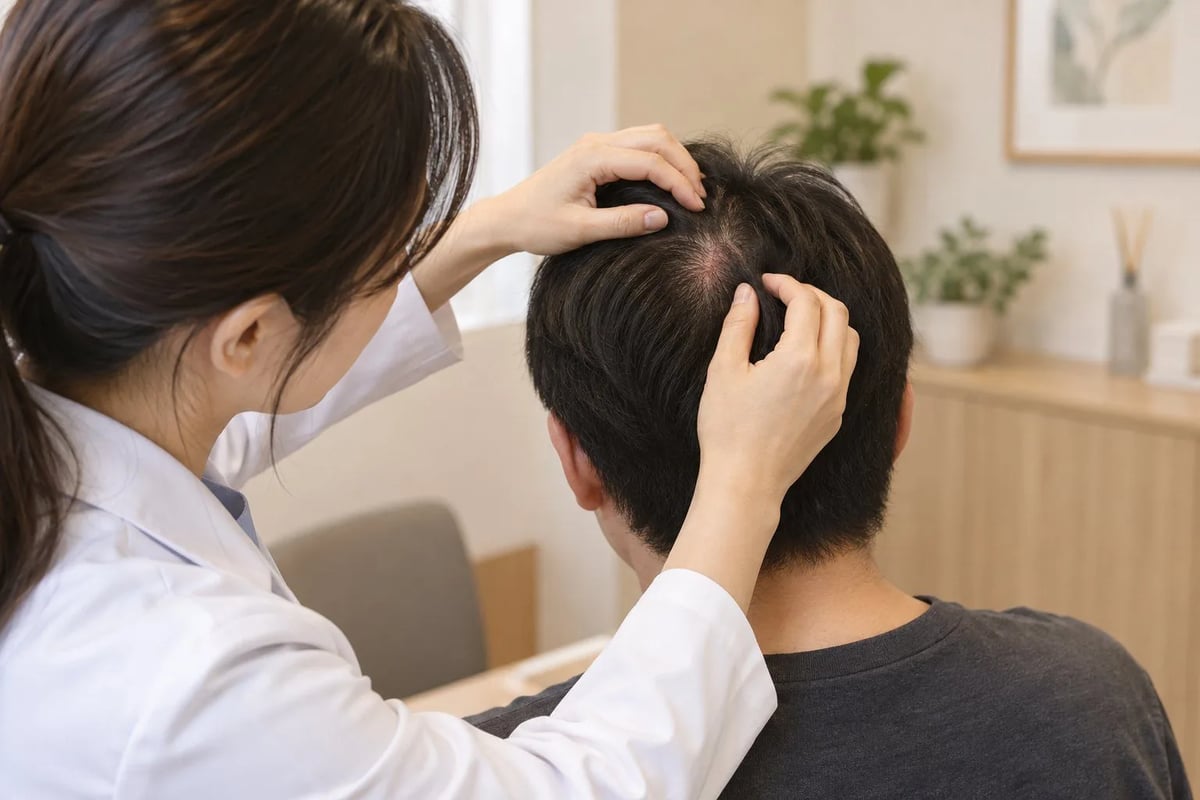
Small pimple-like pustules on the scalp do not automatically mean you will go bald. A brief, mild episode of folliculitis may not cause lasting hair loss. If the same area repeatedly becomes red, painful or crusted, or a patch of hair is thinning, a dermatologist should examine it.
Key points: a scalp “pimple” may be folliculitis or another skin condition. Do not squeeze it or use antibiotics long term on your own. Recurrent or spreading pustules, significant pain, or patchy hair loss call for medical assessment. Only an examination can establish whether follicles are affected and what treatment is appropriate.
Is every scalp pimple folliculitis?
No. Folliculitis is inflammation around a hair follicle. It may look like a small red bump or pustule centred on a hair, with itching, stinging or tenderness. Acne, seborrhoeic dermatitis and fungal infection can look similar, so a photo alone rarely gives a reliable diagnosis.

If you also have marked flaking or increased shedding, read about hair-loss patterns and scalp warning signs, then have your scalp examined.
Can folliculitis cause permanent hair loss?
Mild, short-lived folliculitis is not the same as permanent baldness. Persistent or repeated deeper inflammation can coincide with local hair loss, however, and some forms of scarring alopecia also cause redness, pustules and crusting. These need early recognition. The American Academy of Dermatology includes redness, pus and hair loss among signs worth checking.
| What you notice | What it may suggest | Next step |
|---|---|---|
| A few small pustules without a thinning patch | Possibly more superficial follicular inflammation | Avoid scratching and watch whether it settles |
| Repeated redness, pain or crusts in the same place | Infection or another inflammatory condition needs assessment | Arrange a dermatology visit |
| Pustules plus a thinning patch or shiny-looking skin | Scarring hair loss must be ruled out | Seek care promptly rather than treating it as ordinary acne |
Should you squeeze the bumps or apply medicine yourself?
Do not squeeze, pick or scrub the scalp aggressively. Reduce friction and overheating and wash gently. Whether antibiotics or another medicine are needed depends on the diagnosis; prolonged self-treatment is not advisable. The AAD’s folliculitis guidance notes that some cases improve on their own while others need prescription treatment.

Our scalp-cleansing guide can help with washing habits, but cleansing cannot replace an assessment of recurring pustules.
When should you see a doctor?
- Pustules keep returning, become more numerous or fail to settle in the same area.
- There is significant pain, swelling, drainage, thick crusting or fever.
- Hair is thinning in one patch, a round bald spot develops, or the skin looks scarred.
- After a hair transplant, redness or pustules in the surgical area keep worsening.
A doctor will consider your history and scalp appearance and, when needed, take a sample or arrange tests. If symptoms appear after surgery, contact your surgical team and review the hair-transplant aftercare guide.

Can you have a hair transplant while the scalp is inflamed?
First identify the cause and bring the condition under control. Then you can discuss whether a hair transplant is appropriate. Active scalp disease, the available donor supply and the pattern of hair loss all affect planning. Folliculitis alone neither means that surgery is needed nor rules it out forever.
Doctor’s note
If pustules and hair loss occur together, do not assume they are simply scalp acne or that the follicles have already been permanently damaged. Note where the redness, tenderness, crusting and thinning occur, and ask a dermatologist whether further examination is needed. Hair-loss treatment or transplant planning can follow once the cause is clear and the scalp is stable.
Medical references
Is scalp folliculitis contagious? +
It has several possible causes, so its appearance alone cannot tell you whether it is contagious. If there is pus, avoid sharing towels or combs and see a doctor to identify the cause.
Can scalp folliculitis clear on its own? +
Some mild cases may improve. Do not keep waiting if bumps recur, spread or appear alongside a patch of hair loss.
Is not washing my hair enough the only cause? +
No. Friction, irritation, microorganisms and individual skin conditions may all be involved. Washing more often alone may not resolve it.
Can I use a hair-growth product on an inflamed scalp? +
If the scalp is red, broken or stinging, ask a doctor to review the cause and the products you are using before deciding whether to continue.
Will hair lost with folliculitis grow back? +
That depends on how deep the inflammation is and whether follicles have been damaged. Suspected scarring hair loss needs prompt diagnosis; a photo cannot predict regrowth.
Related articles
This article has been reviewed and medically approved by Dr. Wen-Yi Wu

Dr. Wen-Yi Wu|Director, Mong Hair Clinic
- ● Fellow of ISHRS (FISHRS)
- ● ABHRS Board-Certified Hair Restoration Surgeon
- ● President of TSHRS (Taiwan Society of Hair Restoration Surgery)