

Should You Shampoo Twice? A Scalp-Cleansing Guide
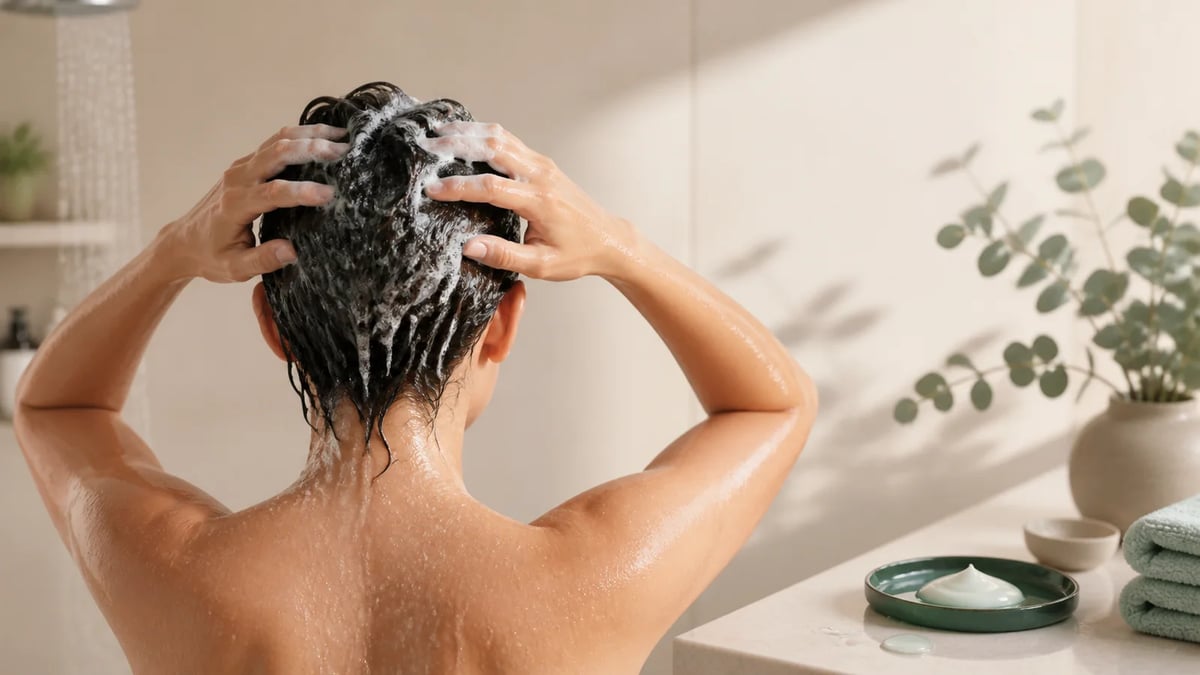
You do not need to shampoo twice as a fixed rule. Two small, gentle washes can be useful when the scalp is distinctly oily, you have sweated heavily, or wax, spray or dry-shampoo residue remains. One wash is usually enough when the scalp is dry, sensitive or already clean and comfortable after rinsing.
The amount of foam in the first wash is not a reliable cleanliness test. What matters is whether oil and residue have been removed without leaving the scalp tight, itchy or sore. More washing does not treat androgenetic alopecia or other causes of hair loss.
Key point: double shampooing is an optional response to oil and product build-up, not a universal requirement. Use a small amount, clean the scalp with fingertips and rinse thoroughly. Persistent redness, itching, scaling, pain or a sudden increase in shedding needs medical assessment.
Why do some people shampoo twice?
The first wash can remove much of the sebum, sweat, dust and styling residue. After rinsing, a smaller second application may be useful if the scalp still feels clearly greasy or coated. Lather also varies with water, oil and formulation, so bubbles alone cannot tell you whether another wash is needed.
The American Academy of Dermatology (AAD) recommends washing according to how quickly the hair and scalp become dirty or oily, and applying shampoo mainly to the scalp rather than rubbing the full hair length. This supports an individual routine rather than a mandatory two-wash rule.
| Stage | Main purpose | Practical point |
|---|---|---|
| First wash | Remove surface oil, sweat and styling residue | Use a small amount, focus on the scalp and rinse fully |
| Second wash, if needed | Address obvious oil or residue that remains | Use less than the first time; stop if the scalp is already clean |
| Conditioner | Reduce dryness and tangling | Match it to hair type, usually concentrating on mid-lengths and ends |
Who might benefit from a second wash?
People with an oily scalp, heavy sweating, prolonged helmet use, or frequent wax, hairspray and dry-shampoo use may find a second gentle wash useful when residue remains. Both applications should be modest; double shampooing should not become two rounds of vigorous scrubbing.
Helmets do not directly cause androgenetic alopecia, although heat, sweat, hygiene and repeated friction can affect comfort or hair breakage. Read more about helmets and hair loss.
If one wash leaves no obvious grease or residue, there is no benefit in chasing more lather. Tightness, stinging or flaking later that day is a better sign that the routine may be too harsh.
Who should avoid routinely shampooing twice?
A dry or sensitive scalp, eczema, scratched skin, or recurrent tightness, burning and fine flaking after washing are reasons not to increase cleansing automatically. Reduce the shampoo amount, use lukewarm water and consider whether the product itself is irritating.
Chemically treated, curly or coarse hair also needs protection from dryness and breakage. Concentrate shampoo on the scalp; the rinsing lather is generally enough for the lengths, followed by a conditioner appropriate for your hair type.

| Scalp or lifestyle situation | First adjustment | Seek assessment if |
|---|---|---|
| Obvious oil or heavy product use | Add a second wash only if residue remains | Inflammation, odour or pustules persist |
| Dry, sensitive or tight after washing | Use one wash and less product | Burning, redness or scaling keeps returning |
| Scratched or broken skin | Avoid irritating products and vigorous rubbing | Pain, discharge or the wound spreads |
| Sudden increase in shedding | Record timing, pattern and other symptoms | It lasts for weeks, becomes patchy or accompanies systemic symptoms |
What is the correct way to shampoo?
Wet the scalp thoroughly with lukewarm water
Fully wet the scalp and hair before spreading shampoo in the palm. Very hot water may make dryness and irritation more noticeable.
Apply shampoo to the scalp and use fingertips, not nails
Massage gently with the pads of the fingers. Do not scratch or scrub for a prolonged period. AAD advice likewise focuses shampoo on the scalp and recommends gentle handling of wet hair.

Rinse completely, then decide whether a second wash is needed
After the first rinse, use oiliness and residue—not foam—as the guide. If a second wash is needed, use less shampoo and rinse the hairline, behind the ears and the back of the scalp thoroughly.
Blot rather than rub
Press gently with a towel instead of rubbing wet hair back and forth. If blow-drying, keep a sensible distance and use low-to-medium heat.
What if I have dandruff or seborrhoeic dermatitis?
Dandruff or seborrhoeic dermatitis does not automatically mean two washes are required. Medicated shampoos contain different active ingredients and have different schedules. Some need to remain on the scalp briefly; use the label or your doctor’s directions rather than adding washes or contact time yourself.
The AAD’s dandruff guidance notes that some products may need five to ten minutes on the scalp, but directions vary. If you plan to use an ordinary shampoo and a medicated shampoo in one session, first confirm that the specific instructions allow it.
Thick crusting, discharge, marked redness, pain or patches of hair loss should not be assumed to result from poor cleansing. These signs need a diagnosis rather than more shampoo.
Do I need two washes when using topical minoxidil?
Topical minoxidil does not make double shampooing mandatory. If you wash before application, choose a mild shampoo, allow the scalp to dry and then follow the product instructions. Do not scrub aggressively to remove residue or alter the dose on your own.
A DailyMed minoxidil label advises a mild shampoo if the scalp is washed before use and generally allowing about four hours before washing after application. Check your own product label and clinician’s advice because formulations and instructions vary.
Persistent burning, marked redness or scaling, chest pain, palpitations, dizziness or swelling of the hands or feet warrants prompt medical advice rather than changes to shampooing alone.
Can double shampooing make shedding worse?
Gentle washing does not cause androgenetic alopecia. Hairs already in the shedding phase often come away during washing and combing. Fingernail scratching, rough pulling and over-cleansing can nevertheless irritate the scalp or break the hair shaft.
If the hairline is receding or the crown is gradually thinning, review the signs of androgenetic alopecia. If shedding accelerates over a short period, see the common causes of sudden faster hair loss. Surface cleansing cannot replace diagnosis.
When should a scalp problem be assessed?
Seek medical advice when redness, itching, pain, thick scale, pustules or discharge continues despite a gentler routine, or when there is a sharply defined bald patch, scarring or rapidly spreading thinning.
Before the appointment, note when symptoms began, every shampoo and topical product used, weekly washing frequency, and photographs of the pattern. This helps distinguish irritation from scalp disease and different types of hair loss.
This article provides general health education and does not replace individual medical diagnosis or treatment advice.
References
Does everyone need to shampoo twice? +
No. A second wash may help when the scalp is distinctly oily, sweaty or coated with styling products. If one gentle wash leaves a dry or sensitive scalp clean and comfortable, there is no reason to repeat it routinely.
Does weak lather on the first wash mean the hair is still dirty? +
Not necessarily. Sebum, styling products, water volume and the shampoo formula all affect lather. Judge by oiliness and residue after rinsing rather than bubbles alone.
If I wash daily, should I still shampoo twice? +
Daily frequency and the number of washes per session are different decisions. If one daily wash removes sweat and residue without tightness or irritation, a routine second wash is unnecessary.
Can double shampooing cause more hair loss? +
Gentle washing does not cause androgenetic alopecia. Scratching with nails, rough pulling and over-cleansing can irritate the scalp or break hair. Persistent shedding or patchy loss needs medical assessment.
Can I double shampoo if I have seborrhoeic dermatitis? +
It depends on the product and your scalp. Use medicated shampoo at the frequency and contact time on its label or prescribed by your doctor; do not treat recurring inflammation simply by washing more often.
How should I wash around topical minoxidil use? +
If you wash before application, use a mild shampoo and allow the scalp to dry before following the product directions. Some labels advise leaving minoxidil on for about four hours before washing; follow your own label and clinician's advice.
Related articles
This article has been reviewed and medically approved by Dr. Wen-Yi Wu

Dr. Wen-Yi Wu|Director, Mong Hair Clinic
- ● Fellow of ISHRS (FISHRS)
- ● ABHRS Board-Certified Hair Restoration Surgeon
- ● President of TSHRS (Taiwan Society of Hair Restoration Surgery)