

Can You Get a Hair Transplant for Scarring Alopecia? Follicle Inflammation, Stability, and Transplant Assessment
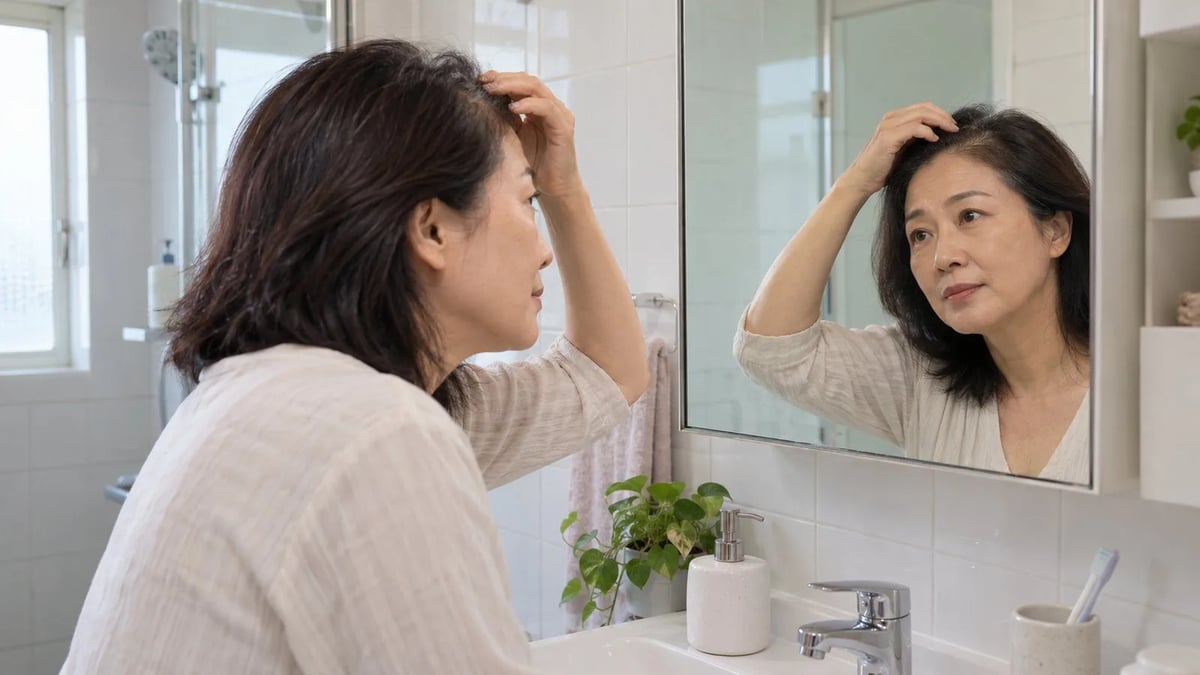
Can you get a hair transplant if you have scarring alopecia? We can certainly talk about it, but the order of steps matters. With this kind of hair loss, inflammation destroys the follicles and leaves scar tissue behind, so the hair that falls out usually doesn’t come back. And if that inflammation is still active, any new grafts we put in could get attacked too. We have to nail down the diagnosis first, calm the scalp down, and make sure things stay quiet for a good while before surgery is even on the table.
Just recently, a woman in her fifties came to see me because her forehead looked higher and the tails of her eyebrows were fading. She assumed it was just normal aging. She’d even tried hair growth products for a few months, with nothing to show for it. When I checked her scalp with a dermatoscope, I spotted fine scaling and redness ringing the pores right along her hairline, and in a few spots, the follicular openings had vanished completely. That isn’t what typical thinning looks like, so I sent her straight to a dermatologist for a biopsy.
Key Takeaways: Hair lost to scarring alopecia generally won’t grow back on its own, which means step one is stopping the inflammation to protect the hair you still have. A transplant isn’t off the table, but we can only consider it after a confirmed diagnosis, proper medical care, and a solid stretch of stability—and you have to expect more modest results than you’d see with ordinary pattern baldness.
What Is Scarring Alopecia, and Why Doesn’t the Hair Grow Back?
In most kinds of hair loss, the follicles are still sitting there under the skin. They’ve just shrunk or slipped into a resting phase, so they can still wake up and produce hair again. Scarring alopecia doesn’t work like that: ongoing inflammation around the follicle actually wipes the structure out and fills the space with scar tissue.
Once a follicle is gone, that spot simply can’t grow hair anymore. That’s why I always tell patients not to wait. The sooner you quiet the inflammation, the more of your existing hair you get to keep.
When people hear the word “scarring,” they usually picture a mark from a cut, a burn, or a past operation. That’s a different story. The scarring here happens quietly underneath the surface because of inflammation, even when the skin on top looks completely unbroken.
If you suspect your hair loss might be something other than standard pattern baldness, have a look at Sudden Faster Hair Loss: 5 Common Causes and How Doctors Assess It.
What Are the Common Types of Scarring Alopecia?
Scarring alopecia isn’t just one condition; it’s a broad label for several different disorders. In the clinic, these are the ones we see most often:

| Type | Common Group | Typical Location and Features |
|---|---|---|
| Lichen planopilaris | Adults, more common in women | Crown or any part of the scalp; redness and scaling around pores, often accompanied by itching or stinging |
| Frontal fibrosing alopecia | Most common in perimenopausal and postmenopausal women, though men can get it too | Gradual recession of the front and side hairline, frequently paired with thinning eyebrows |
| Central centrifugal cicatricial alopecia | More common in people with naturally curly or coiled hair | Starts near the center of the crown and gradually spreads outward |
| Folliculitis decalvans | Adults | Recurrent pustules and crusting; sometimes several hair shafts can be seen emerging from a single pore |
| Discoid lupus erythematosus | Adults | Localized red plaques and scaling that later leave behind pigment changes and scarring |
Those medical names are a mouthful, and there’s no need to memorize them. What you do need to know is that each type calls for a different treatment plan, so getting an accurate diagnosis comes first—don’t try to guess on your own.
What Warning Signs Point to Scarring Alopecia?
Early on, scarring alopecia can easily pass for everyday thinning or a stubborn scalp flare-up. If you notice any of the signs below, don’t sit on it—have a doctor take a look sooner rather than later:
- Thinning patches that feel strangely smooth to the touch, almost like the pores have disappeared
- Scalp itching, stinging, or burning that just won’t quit
- Redness, flaking, or pimple-like bumps that keep popping up around the hair roots
- A hairline that’s creeping back while your eyebrows thin out at the same time
- Bald spots that keep widening even after you’ve used standard hair loss products for a while
Don’t use this list to diagnose yourself, though. Plenty of common scalp issues itch and flake too, so getting a clear answer takes an in-person exam and, when necessary, a quick scalp biopsy.
How Can You Tell Scarring Alopecia Apart from Pattern Baldness or Menopausal Hair Loss?
It mostly comes down to one thing: are the follicular openings still there? With androgenetic alopecia (pattern baldness) or menopausal thinning, the individual strands get finer over time, but the pores themselves stay visible on the scalp. In later-stage scarring alopecia, those tiny openings vanish altogether, leaving the skin smooth and shiny.
Here’s where it gets tricky: you can have both at once. Frontal fibrosing alopecia, for example, often starts up right around menopause. Plenty of women chalk it up to normal midlife thinning and wait years before realizing how far back their hairline has actually moved.
So if your hairline is retreating and your eyebrows are getting sparse at the same time, don’t blame it all on hormones. Let a doctor check your scalp with a dermatoscope.
If you’re also wondering how menopause affects your hair, you can read Menopause Hair Loss: Hormonal Changes, Thinning at the Crown and Transplant Assessment.
Can You Get a Hair Transplant for Scarring Alopecia, and How Long Do You Have to Wait?
We can evaluate you for one, yes, though a hair transplant is almost never step one. First, we need a firm diagnosis and proof that the inflammation has been completely quiet for a solid stretch of time.

How long is that wait? It varies from patient to patient. I usually go over the checklist with the patient’s dermatologist: Has the bare patch stopped spreading? Are the redness and scaling totally gone? Has the itching or stinging calmed down? For a lot of people, we want to see the scalp stay quiet for at least one to two years—sometimes even longer.
Waiting that long is frustrating. I get it. But if we transplant hair while inflammation is still smoldering under the skin, your immune system can attack the new grafts too. That wastes healthy follicles from the back of your head, and you only have a limited supply to work with.
We also have to be upfront about another limitation. Scar tissue doesn’t have the same rich blood flow as healthy skin, which means graft survival and final density are usually more modest than what we see in routine pattern baldness cases. Sometimes we’ll even place a small test patch first, wait to see how well those follicles take, and then decide on the rest.
If you also have questions about how your skin heals or forms scars, check out Can You Get a Hair Transplant with Keloids? Scarring Risks & Evaluation.
What Will the Doctor Assess Before a Hair Transplant?
Evaluating scarring alopecia for surgery takes more legwork than a standard hair transplant. Before we move forward, we look closely at several things:

- Your confirmed diagnosis, along with past treatment notes and follow-up records from your dermatologist
- How long the scalp has been quiet, and whether the edges of the thinning area have shifted lately
- How thick, flexible, and well-supplied with blood the scarred tissue actually is
- Whether the donor hair at the back and sides of your head is completely healthy and untouched
- Any medications you’re currently on, and how we should coordinate with your dermatologist
- Whether what you’re hoping for in terms of coverage and hairline design matches what the tissue can handle
And because certain types of scarring alopecia can flare back up down the road, you can’t skip your dermatology follow-ups after surgery. Think of it this way: the transplant fills in the appearance, while your dermatologist keeps watching the underlying condition.
To see how we check follicle health and donor supply in general, read What Hair Conditions Are Assessed Before a Hair Transplant?.
When Should You Hold Off on a Hair Transplant?
If I see any of the following during an exam, I’ll usually tell a patient to hit pause on surgery for now:
- You don’t have a clear diagnosis yet, or we’re still just guessing at the cause
- Your scalp still itches, stings, or looks red and flaky, and the bare patch is still creeping outward
- You just started treatment or recently changed your regimen, so it’s too soon to tell if things are stable
- The donor area at the back of your head is showing signs of inflammation or thinning too
- You’re hoping surgery will bring back the exact same thick density you had before this started
Holding off isn’t a hard “no.” It’s just about picking the right moment so the healthy follicles we move actually have a fighting chance to survive.
A Note from the Doctor: Stop the Inflammation First, Then Talk About Hair Transplants
Plenty of patients sit down in my office and ask right away, “Can’t we just fill this spot in with a transplant?” I understand why you want it fixed fast, especially when you’re watching your hairline creep back in the mirror. With scarring alopecia, though, cutting corners backfires: you have to get the right diagnosis, quiet the inflammation, and give the scalp time to prove it’s stable.
Waiting doesn’t mean doing nothing. In the meantime, I help patients track the borders of their hair loss, check on their donor hair, and stay coordinated with their dermatologist. Once the scalp has truly settled down, we can sit down together and figure out if a transplant makes sense for you, where to place the grafts, and what kind of coverage you can realistically expect.
Medical References
- American Academy of Dermatology: Frontal fibrosing alopecia
- British Association of Dermatologists: Lichen planopilaris patient information leaflet
- British Association of Dermatologists: Frontal fibrosing alopecia patient information leaflet
- Ross EK, Tan E, Shapiro J. Update on primary cicatricial alopecias. Journal of the American Academy of Dermatology (2005)
- MedlinePlus (U.S. National Library of Medicine): Hair Loss
- International Society of Hair Restoration Surgery: A Guide to Hair Transplant Surgery
Will hair lost to scarring alopecia grow back? +
Once a follicle is destroyed and replaced by scar tissue, it generally won't grow hair again. Still, neighboring follicles that haven't been damaged yet can often be saved if we calm the inflammation down early. That's why getting a prompt diagnosis makes such a difference.
Is scarring alopecia contagious? +
No, you can't catch it from someone else. It stems from inflammation around the hair follicles rather than contact transmission. Certain types do tie back to infections, though, so you still need a doctor to look at it.
How do you confirm if it is scarring alopecia? +
We start by examining your scalp closely with a dermatoscope, and if needed, we take a small scalp biopsy to pin down the exact type. Because each type is treated differently, guessing on your own or trying random products isn't a good idea.
How long does scarring alopecia need to be stable before a hair transplant? +
There's no single timeline—it really depends on which type you have and how it behaves. What we look for is a clear stretch of time where the bald patch stops growing and the scalp shows zero signs of inflammation. You and your dermatologist will make that call together.
Can scarring alopecia flare up again after a hair transplant? +
It can. Some types wake back up even after surgery, so you'll need to keep seeing your dermatologist for regular checkups afterward and step in early if anything changes.
Can someone with frontal fibrosing alopecia get an eyebrow or hairline transplant? +
We can evaluate it, as long as the condition has truly settled down first. Since this condition hits both the hairline and the eyebrows—and could eventually affect transplanted hairs too—we have to talk through the realistic outcomes before you decide.
Related articles
This article has been reviewed and medically approved by Dr. Wen-Yi Wu

Dr. Wen-Yi Wu|Director, Mong Hair Clinic
- ● Fellow of ISHRS (FISHRS)
- ● ABHRS Board-Certified Hair Restoration Surgeon
- ● President of TSHRS (Taiwan Society of Hair Restoration Surgery)