

Can a Hair Transplant Be Quoted From Photos? Online vs In-Person Assessment
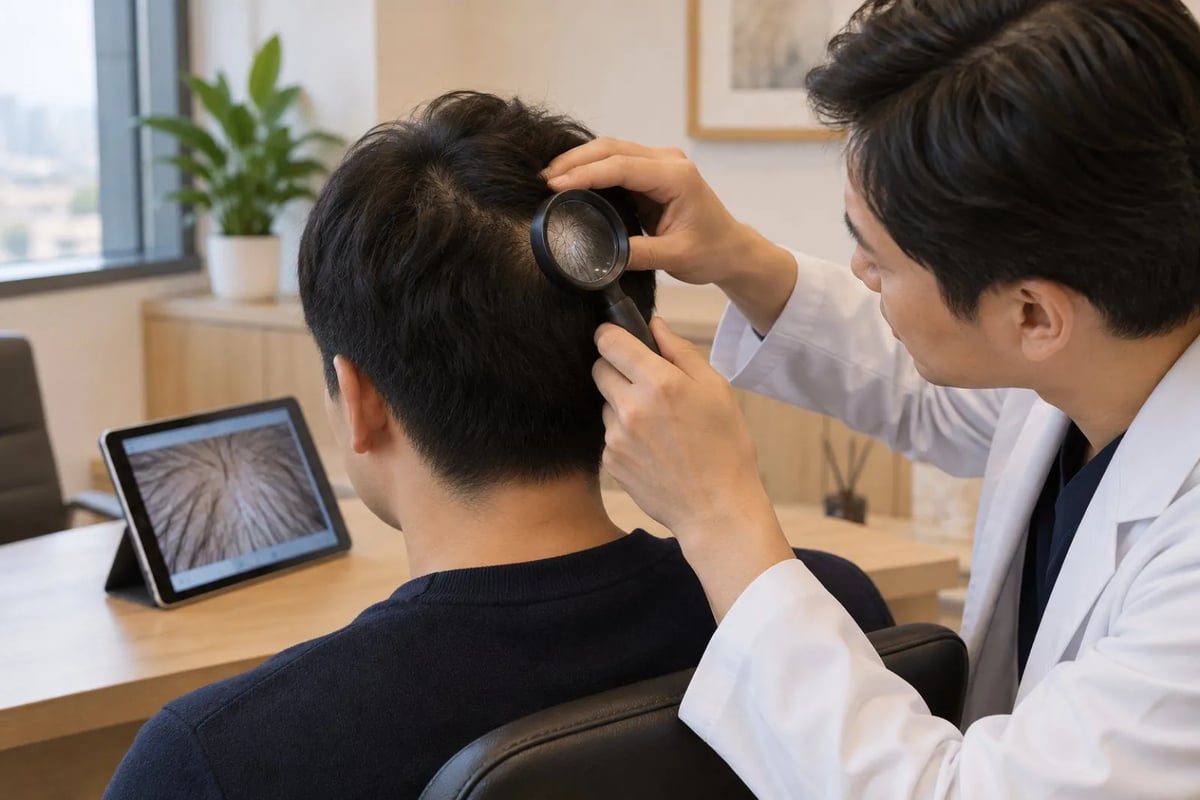
You can start with an online consultation by sending photos, but photographs mainly help discuss the extent of hair loss and possible directions. The final graft count, technique and formal quotation still require a doctor to examine your scalp and donor area in person.
Many patients living in Hong Kong or overseas ask: “My photos are ready — can you just give me a price?” Talking online first is useful and helps organise your questions, but lighting, hair length and camera angle all change how thinning looks, and photos cannot show every surgical factor.
Key points: photos are suitable for an initial look at your main concern, the pattern of hair loss and what kind of visit you need. An in-person consultation is where the scalp, donor density and hair characteristics are examined before discussing the treatment area, graft count and fee. Sudden heavy shedding, a red or painful scalp, or patchy bald spots should be assessed by a doctor first rather than waiting for an online quote.
What can a doctor learn from photos alone?
Clear front, temple, top and back-of-scalp photos let the doctor see roughly where and how extensive the thinning is, whether your priority is the hairline or the crown, and what additional information is needed. Photos are an initial conversation, not a diagnosis or surgical plan.

If you have not taken your photos yet, see how to take hair transplant consultation photos. Noting when the hair loss began, recent changes, medication and past treatments also helps the doctor decide what to address first.
Why can’t photos be converted directly into a formal fee?
Hairline proportions, the recipient area, the condition of the donor follicles and the surgical method all shape an individual plan. Even when two people’s photos look similar, their usable donor supply, hair calibre and desired visual density may differ.
Phone photos are affected by parting, hair length, lighting and distance. They cannot accurately measure the recipient area, let alone follicle density per square centimetre in the donor zone. The ISHRS FUE clinical practice guidelines list recipient and donor density, scarring or scalp disease, and hair calibre and direction among the assessment items.
| Assessment item | What online photos can show | What still needs an in-person check |
|---|---|---|
| Extent of hair loss | Approximate location and appearance | Measured area, hair direction and native hair |
| Donor area | Visual appearance of the back of the scalp | Density, calibre, scalp condition and safe harvest area |
| Grafts and fee | Factors that may affect cost | Graft count, technique and quotation based on the plan |
| Cause of hair loss | Initial clues from photos and history | Consultation, scalp examination and tests if needed |
How does the doctor assess you in person?
The doctor usually asks how long the hair loss has lasted, how quickly it is changing, family history and current medication, then examines the scalp and hairline. If the hair loss is still progressing, confirming the cause or starting treatment may come before deciding when to operate.

Next come the recipient area, preferred hairline position, donor density and usable range, followed by a discussion of technique, graft count and distribution. The exact examination depends on the individual; see our hair transplant evaluation guide for what is typically covered.
What should you ask before accepting a quote?
Ask the doctor to explain the planned treatment area, how the graft count was estimated, whether the donor supply is sufficient and why a particular technique is recommended. Also clarify which medical and aftercare items are included, what could cost extra and how follow-up is arranged.
To understand pricing, see hair transplant cost; when comparing plans, read how many grafts you need.
When should you not wait for an online quote?
Sudden heavy shedding, well-defined bald patches, or a scalp that is painful, red, swollen or visibly scaling should be examined by a doctor first. The cause needs to be clarified; photos alone cannot decide whether a transplant is appropriate.
Likewise, a high forehead or thinning hairline in women cannot be judged suitable for surgery from photos. A naturally high hairline must be distinguished from progressive hair loss and other scalp conditions — see how far a female hairline can be lowered.
References
Can I get an approximate price after sending photos? +
Photos allow a discussion of the factors that affect cost, and sometimes a preliminary direction. They cannot confirm donor density or the final graft count, so the formal quotation requires an in-person assessment.
Why can two people with similar thinning receive different quotes? +
Hair calibre, donor supply, the distribution of native hair, target density and technique may all differ. A doctor needs to examine you before proposing an individual surgical plan and fee.
Do I need a donor-area check if I only want my temples treated? +
Yes. Transplanted follicles usually come from the back of the scalp. Photos show its appearance, but the safe harvest area and density must be examined in person.
Can a woman with a high forehead decide on surgery from photos alone? +
No. A naturally high hairline, ongoing hair loss and other causes must be distinguished first, followed by a donor-area and hairline-design assessment by a qualified doctor.
What should I prepare before an online consultation? +
Clear front, temple, top and back-of-scalp photos, plus when the hair loss began, current medication and previous treatments. Sudden shedding or scalp discomfort should be seen by a doctor promptly.
Related articles
This article has been reviewed and medically approved by Dr. Wen-Yi Wu

Dr. Wen-Yi Wu|Director, Mong Hair Clinic
- ● Fellow of ISHRS (FISHRS)
- ● ABHRS Board-Certified Hair Restoration Surgeon
- ● President of TSHRS (Taiwan Society of Hair Restoration Surgery)