

Does microplastic cause hair loss?
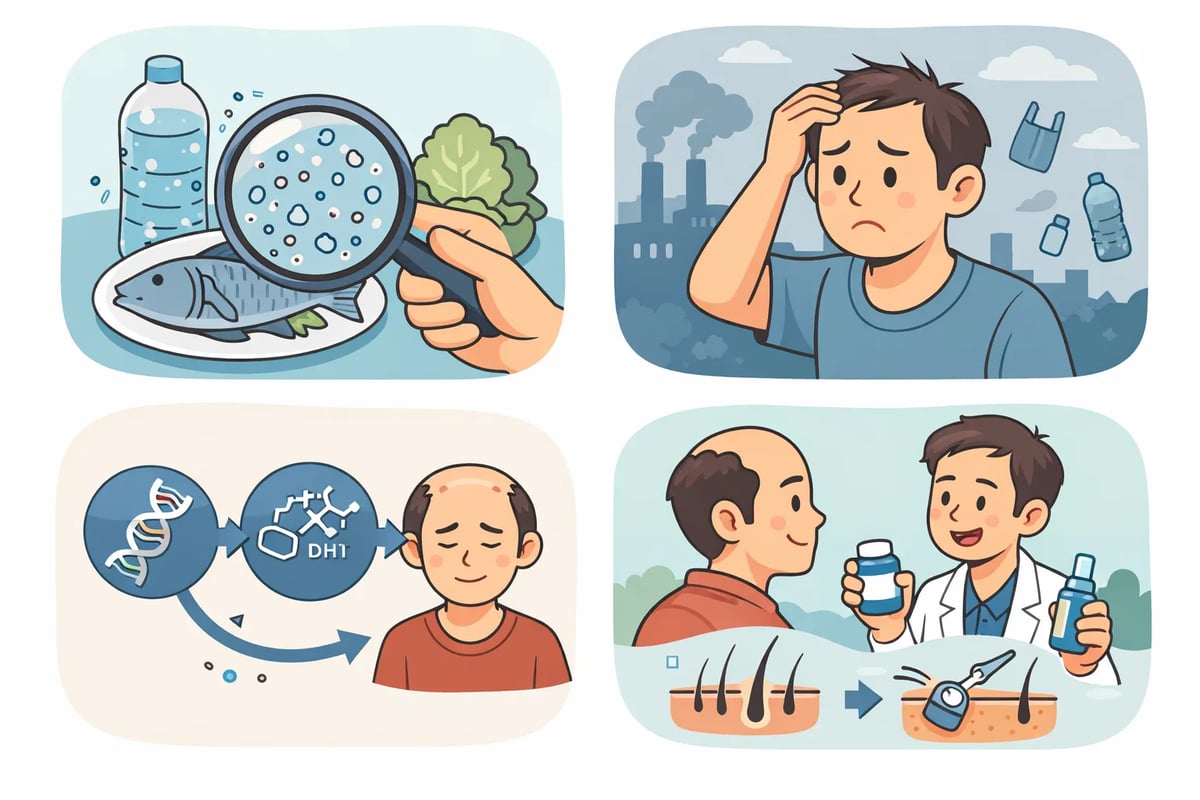
What are Microplastics?
Microplastics refer to plastic particles with a diameter of less than 5mm. Their main sources include:
- The degradation of plastic bags and PET bottles
- Synthetic fibers (clothing)
- Industrial and environmental pollution
Research indicates that microplastics may enter the human body, including:
- Blood
- Lungs
- Intestines (even the placenta)
Does Microplastics Cause Hair Loss? The Conclusion First
Currently, there is no clinical evidence to prove that microplastics cause hair loss (androgenetic alopecia)
The most common causes of hair loss clinically remain:
- Genetics (Family history)
- DHT (Dihydrotestosterone)
- Age factors
And not microplastics
Why Do Some People Think It “Might Be Related”?
Although there is no direct evidence, from a theoretical mechanism perspective, microplastics can indeed affect the body:
| Theoretical Mechanism | Explanation | Possible Impact on Hair | Medical Evidence |
|---|---|---|---|
| Chronic Inflammation | May induce low-grade chronic inflammation | Hair follicles are sensitive to inflammation, potentially affecting the follicular microenvironment | ❌ No direct evidence |
| Oxidative Stress | Increase in free radicals | May affect hair follicle stem cells and the anagen phase | ❌ No direct evidence (although an established factor in hair loss) |
| Endocrine Disruption | Contains BPA, plasticizers | May affect the hormonal system | ❌ No evidence affecting androgenetic alopecia |
Why is the effect not visible in clinical practice?
Hair loss is a “multifactorial disease”; the most significant factors are:
DHT (Dihydrotestosterone) + Inherited Predisposition
In comparison:
- Exposure to microplastics is difficult to quantify
- Large individual variations
- Even if there is an effect, it is extremely weak
- It is almost impossible to identify clinically in practice
Doctor’s Perspective: What should we be concerned about?
Questions more commonly seen in clinics are:
Ignoring the standard treatment for androgenetic alopecia
Currently, the most effective methods supported by the strongest evidence include:
- Oral Finasteride (inhibits DHT)
- Topical Minoxidil (promotes hair follicle growth)
- Hair transplant surgery, if necessary
These are the key factors that can actually change the progression of hair loss.
Q: Do I need to avoid microplastics to prevent hair loss? +
You can reduce exposure, but the impact on hair loss is very limited.
Q: Will using plastic bags for food cause hair loss? +
No. Everyday exposure has no direct relationship with hair loss.
Q: Can environmental pollution make me go bald? +
There is no evidence to support this. The real causes are DHT (dihydrotestosterone) and genetics.
Q: Can microplastics affect hair follicle health? +
Theoretically, they may have an effect through inflammation or oxidative stress, but there is currently no clinical evidence proving they cause hair loss.
Q: What should be the top priority when treating hair loss? +
DHT (dihydrotestosterone) and genetic factors should be addressed first, with early professional treatment.
Related articles
This article has been reviewed and medically approved by Dr. Wen-Yi Wu

Dr. Wen-Yi Wu|Director, Mong Hair Clinic
- ● Fellow of ISHRS (FISHRS)
- ● ABHRS Board-Certified Hair Restoration Surgeon
- ● President of TSHRS (Taiwan Society of Hair Restoration Surgery)