

Can You Transplant Hair into a Scalp Scar? Assessment and Limits
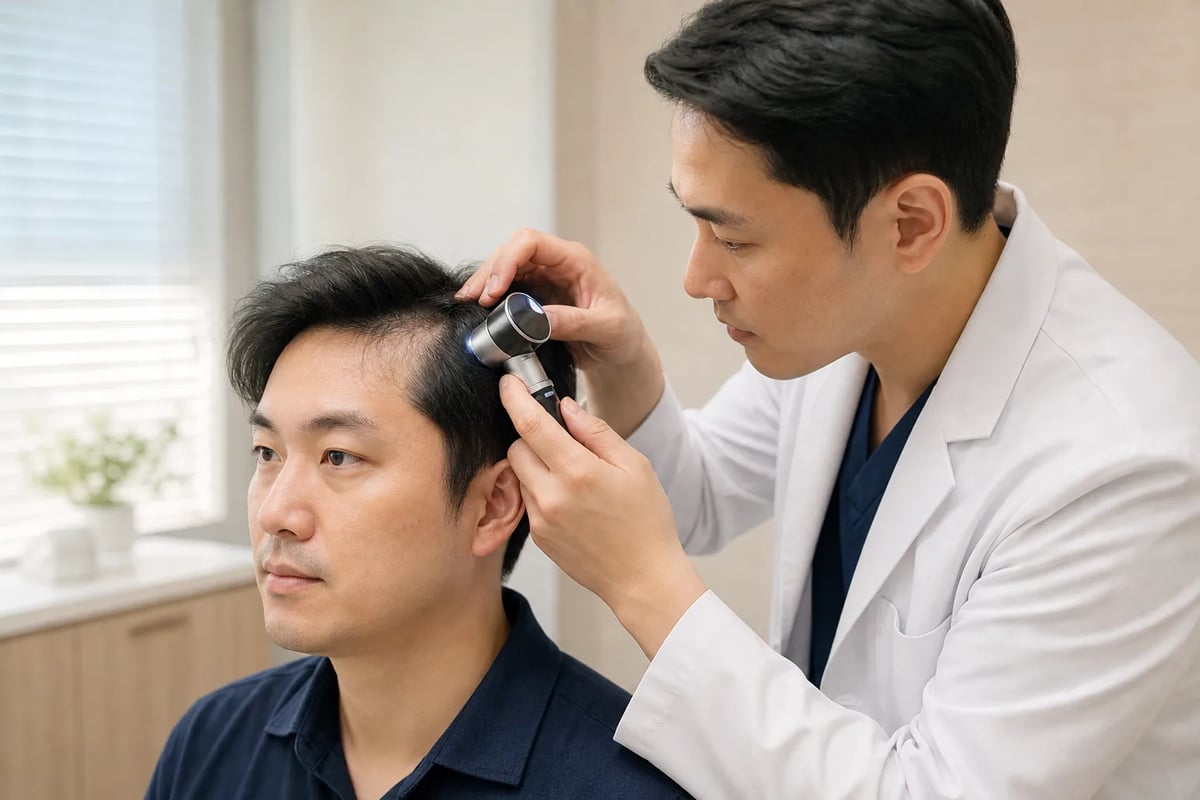
A scalp scar does not automatically rule out hair transplantation. Some localised scars left by trauma, surgery or burns may be considered when the wound is fully healed, the scar is mature and stable, and donor hair is adequate.
Scar tissue is not the same as normal scalp. Its blood supply, thickness and flexibility can vary, making graft survival and safe density harder to predict. If the hairless area comes from active inflammatory scarring alopecia, controlling the disease comes before cosmetic surgery.
Key point: suitability depends on the cause and stability of the scar, tissue quality and donor supply—not simply how old the scar is. Planning is usually conservative, and some uncertain cases may benefit from a small test session.
Which scalp scars can be assessed for hair transplantation?
Common scenarios include healed lacerations, craniofacial or scalp surgery, burns and other single-event injuries. These secondary scars may be assessed after healing and a sustained period without expansion, inflammation or troublesome symptoms.
Primary scarring alopecias—such as lichen planopilaris, frontal fibrosing alopecia or discoid lupus—are different. Their inflammation can relapse, and surgery may be followed by recurrence or damage to transplanted follicles.
| Cause | Main assessment | Can surgery be scheduled immediately? |
|---|---|---|
| Stable injury or surgical scar | Maturity, circulation, thickness, site and donor supply | Assessment may be possible, but suitability is not automatic |
| Burn scar | Extent, contracture, thickness and vascular variation | Often needs cautious or staged planning |
| Inflammatory scarring alopecia | Diagnosis, activity, treatment and stability | Active disease should generally be treated first |
| Hypertrophic or keloid tendency | Previous wound behaviour | Individual review is essential; some patients may not be suitable |
Our hair transplant evaluation guide explains the broader donor and scalp checks used during consultation.
Why is graft survival in scar tissue less predictable?
Newly placed follicles need nutrients and a developing blood supply from the recipient site. Mature scars may contain more fibrosis, fewer vessels, stiffness and uneven depth, so incision depth, direction and graft spacing must be adjusted.

Published studies describe transplantation into scars as more challenging because circulation and tissue stiffness vary. A doctor should not promise a fixed survival percentage or crowd grafts simply to claim high density in one session.
What should be checked before transplanting a scar?
Assessment starts with the cause and timeline: whether the area has expanded, remained itchy or painful, developed scale or pustules, or has been associated with autoimmune or inflammatory scalp disease.
The doctor then examines colour, thickness, softness, mobility, local circulation and surrounding hair direction. Donor density, calibre and miniaturisation are measured as well, because a large scar may require prioritising the most visible areas.
| Pre-operative item | What it helps establish | Possible impact |
|---|---|---|
| Cause and age of the scar | One-off injury versus ongoing disease; maturity | Whether surgical assessment can proceed |
| Redness, itch, pain, scale or pustules | Ongoing inflammation | Treatment or dermatology review may come first |
| Thickness, stiffness and circulation | Ability to create recipient sites and support grafts | Density, depth and staging |
| Donor density and calibre | Sustainable follicle supply | Coverage area and priorities |
| Previous abnormal scars | Hypertrophic or keloid tendency | Risk discussion and suitability |
Use the pre-operative consultation questions to prepare your medical and wound-healing history.
How long must a scar be stable before surgery?
There is no date that makes every scar suitable. A traumatic or surgical wound must first heal and mature; observation depends on redness, firmness, colour, symptoms, size and the original injury.
The threshold is stricter for primary scarring alopecia. Evidence consists mainly of small case reports and reviews, and neither remission periods nor surgical protocols are standardised. Ongoing redness, itch, pain, scale, pustules or an expanding edge calls for diagnosis and disease control first.
Is a small test transplant useful?
When blood supply or disease stability is uncertain, a doctor may place a limited number of grafts and observe wound healing, growth and scalp response. The number of grafts and observation period are individual decisions.
A successful test does not ensure that a large, dense session will behave identically. It provides another data point alongside scar size, donor reserve and the patient’s willingness to undergo staged treatment. See the broader hair transplant safety assessment.
How are density and direction planned in a scar?
Scarred recipient sites are often planned at a more conservative density to reduce competition for limited blood supply. If greater visual coverage is needed, staged surgery may be more appropriate than concentrating many grafts in one area.

Direction matters as much as numbers. The surrounding hair’s angle, calibre and length guide placement so future hair can blend and cover the area. Scars near the hairline, crown or temple require especially careful visual planning.
Read how a hair transplant redistributes follicles. FUE describes a harvesting method; it does not remove the vascular limitations of the scarred recipient site.
Can FUE make the original scar disappear?
No. The purpose is to reduce visual contrast by growing hair through or around the scar, not to turn fibrous tissue into normal skin. The scar may still be visible under bright light, at close range or with a shaved style.
FUE harvesting also leaves small dot-like donor marks. Our guide to FUE and FUT scarring explains the difference between donor scars and an existing recipient scar.
What does the original five-year follow-up show?
The Taiwan article documented a young patient returning five years after follicles were transplanted into a scalp scar. Long-term footage can help review direction, coverage and later priorities, but one case cannot predict every scar.
Cause, site, size, circulation, thickness and individual healing all influence results. A case record is context for planning, not a promise of survival or appearance.
How is the area cared for, and when should you contact the doctor?
Follow the operating doctor’s instructions for washing, medication, sleeping and activity. Do not pick crusts, apply unapproved remedies or scrub the scarred recipient area early.
Increasing redness, heat, swelling or pain; pus, significant bleeding, unusual skin colour or fever require prompt medical advice. Recurrent itch, scale or an enlarging hairless area also needs review. General care is covered in our Common Hair Transplant Myths: Pain, Naturalness and Pre-Surgery Assessment.
Dr Wu’s view: establish stability before discussing density
A scarred recipient site cannot be planned from area and graft count alone. The cause, activity, thickness, blood supply, surrounding direction and donor reserve come first. When conditions are uncertain, conservative or staged planning is more responsible than pursuing maximum density in one sitting.
This article provides general medical information and does not replace diagnosis or individual surgical planning. Hair transplantation carries risks including bleeding, infection, scarring, swelling, temporary shedding, altered sensation and growth below expectations. Suitability should be assessed by a qualified doctor.
References
Can hair be transplanted into a scar caused by a scalp injury? +
Some mature, stable traumatic scars can be assessed. Blood supply, thickness, location, scar behaviour and donor supply all matter, and growth is less predictable than in normal scalp.
How long should a scar be present before transplantation? +
There is no universal month count. The wound must be healed and the scar stable in colour, thickness, symptoms and size. Inflammatory scarring alopecia requires disease control as well.
Can every type of scarring alopecia be treated with a transplant? +
No. Active inflammatory disease should usually be treated first. Even after stability, recurrence, reduced graft survival and staged surgery remain possible.
Is a test transplant needed before grafting a scar? +
A doctor may use a small test area when vascularity or disease stability is uncertain, but it is not required in every case. A good test result does not predict a large dense session perfectly.
Can FUE make an existing scar disappear completely? +
No. Hair may make a scar less noticeable, but it does not convert fibrous scar tissue back into normal scalp. The scar may remain visible at close range, under bright light or with very short hair.
Can a scar be transplanted at the same density as normal scalp? +
Not always. Reduced vascularity and variable tissue quality may require wider spacing or staged work. The achievable coverage depends on the scar and available donor follicles.
Related articles
This article has been reviewed and medically approved by Dr. Wen-Yi Wu

Dr. Wen-Yi Wu|Director, Mong Hair Clinic
- ● Fellow of ISHRS (FISHRS)
- ● ABHRS Board-Certified Hair Restoration Surgeon
- ● President of TSHRS (Taiwan Society of Hair Restoration Surgery)