

More hair shedding in winter? How to tell what may be happening
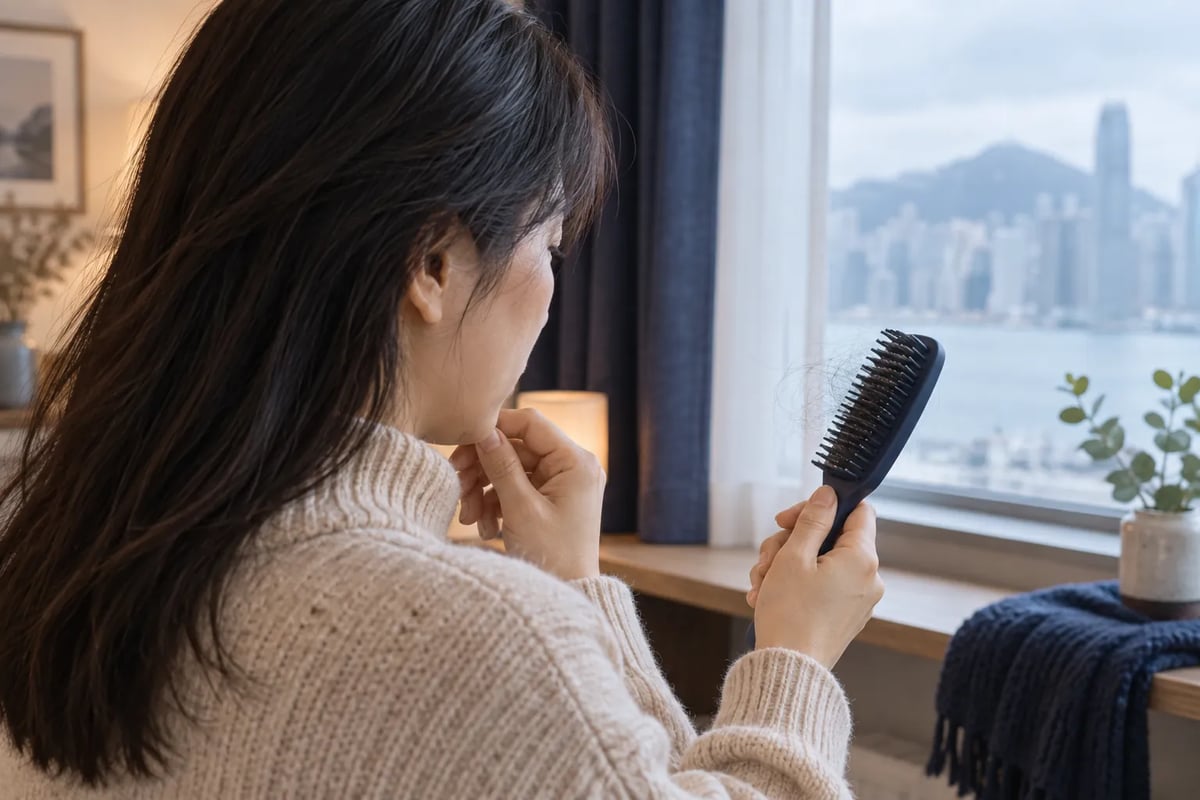
Seeing more hairs in your comb or shower during winter does not mean that cold weather has damaged your follicles. Small studies have found seasonal variation in the hair cycle, but an individual’s shedding may also relate to an illness, stress, weight change, scalp disease or patterned hair loss.
Key point: Dryness and shedding can occur together without one necessarily causing the other. Notice whether shedding began suddenly or density has thinned gradually, how long it has continued, and whether you have a patch, pain, redness or pustules.
Does everyone shed more hair in winter?
Some people notice more hair on the brush or in the drain when seasons change. That observation alone cannot establish winter as the cause. A study of women found seasonal variation in hair cycling, with a higher proportion of resting hairs around late summer and early autumn. It cannot diagnose an individual’s winter hair loss.

The American Academy of Dermatology says shedding about 50–100 hairs a day can be normal. Washing intervals, hair length and how you collect the hairs affect what you see. A sustained change in density or widening part is often more useful to track than a single count.
What patterns can explain increased shedding?
Telogen effluvium can begin a few months after fever, illness, surgery, childbirth, major stress or rapid weight loss and usually causes diffuse shedding. Patterned hair loss more often causes gradual thinning at the hairline or crown. Both can occur together.
| What you notice | A question to explore | Next step |
|---|---|---|
| Sudden, widespread shedding | Illness, stress or another trigger months earlier | Record the timeline and seek assessment |
| Gradual hairline or crown thinning | Patterned or another progressive hair loss | Examine the hair and scalp, not just the daily count |
| Itch, scale, pain or pustules | A scalp skin condition | Address the scalp symptoms; see a dermatologist if needed |
| A distinct bare patch | Alopecia areata, infection or another cause | Arrange an examination promptly |
For pustules or recurrent inflammation, see our guide to scalp folliculitis and hair loss. For gradual thinning, read about recognising patterned hair loss. These are clues, not a diagnosis.
How should I care for a dry or itchy scalp in winter?
Adjust washing to your scalp’s oiliness and activity, use water that is not too hot, and avoid scratching with your nails. Persistent itch, substantial scale or inflammation may need more than a moisturiser; ask a clinician to identify the cause.
One hotpot meal cannot establish the cause of hair loss, and there is no need to stop washing your hair to prevent shedding. See our scalp care habits for practical cleaning guidance.
When should I seek care? Do I need a transplant?
Arrange an assessment if shedding continues to increase, density visibly falls, or you develop a patch, scalp pain, swelling, pustules or heavy scaling. A clinician can review the timeline, examine your scalp and hair, and decide whether further tests are useful.

Do not start hair medication or plan a hair transplant simply because shedding seems worse in winter. The cause, current scalp condition and your health determine which options are appropriate.
A doctor’s note
Write down when the change began, any recent illness or major stress, and whether the hair density or scalp has changed. If symptoms persist or you see pain or a patch, establish the cause before choosing treatment.
Medical references
Does seeing more hair after washing mean I am going bald? +
Not necessarily. Washing frequency and hair length affect what you see. Seek an assessment if your hair density keeps decreasing, your part widens, or your scalp has symptoms.
How long does seasonal shedding last? +
The season alone cannot predict that. Shedding linked to an illness or major stress may appear months later; persistent or worsening shedding deserves evaluation.
Can one spicy hotpot meal directly cause hair loss? +
One meal cannot establish the cause. Ongoing shedding should be considered alongside nutrition, recent health events and scalp findings.
Is a moisturiser enough for an itchy scalp with shedding? +
Gentle care may help mild dryness. Pain, marked scaling, pustules or persistent shedding should be examined by a clinician.
Should I start hair medication or book a transplant because of winter shedding? +
No treatment decision should be based on the season alone. First determine whether the issue is temporary shedding, patterned hair loss or a scalp condition.
Related articles
This article has been reviewed and medically approved by Dr. Wen-Yi Wu

Dr. Wen-Yi Wu|Director, Mong Hair Clinic
- ● Fellow of ISHRS (FISHRS)
- ● ABHRS Board-Certified Hair Restoration Surgeon
- ● President of TSHRS (Taiwan Society of Hair Restoration Surgery)