

Menopause Hair Loss: Hormonal Changes, Thinning at the Crown and Transplant Assessment
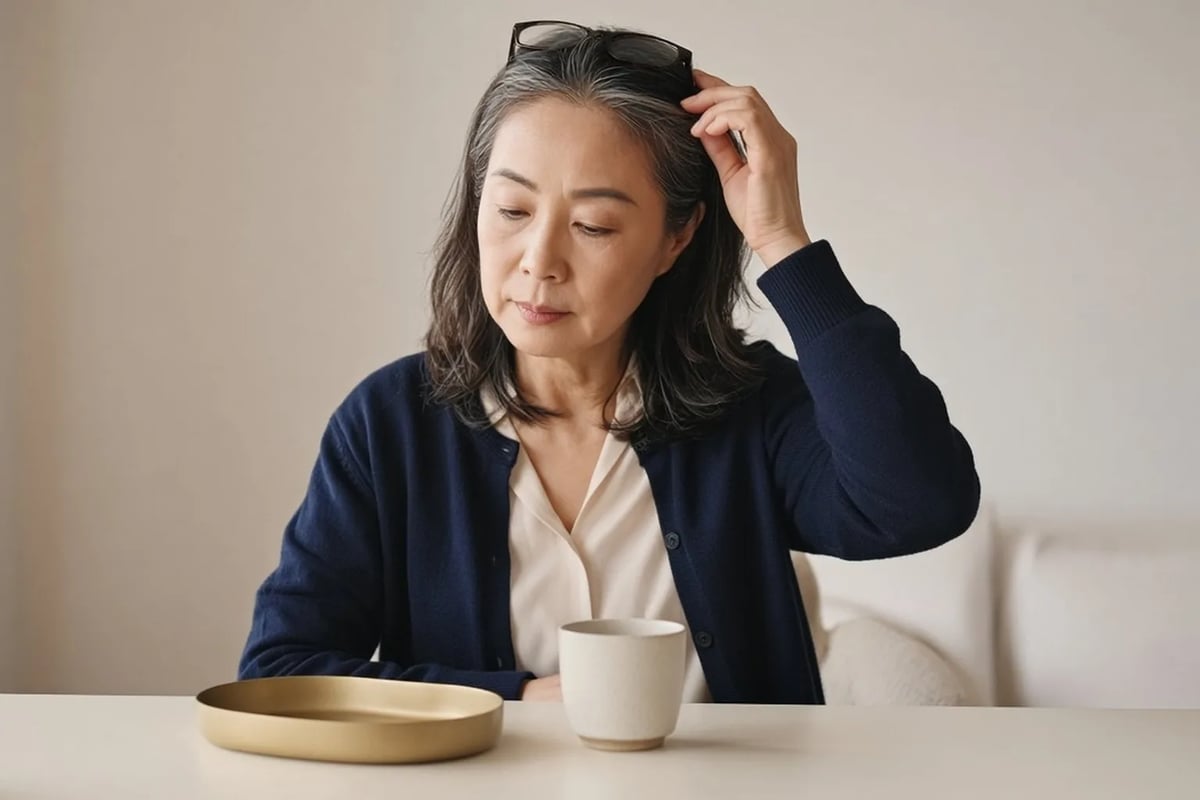
Hair loss and finer hair around menopause are changes many women experience. During this time oestrogen falls and the hormone balance shifts, which can make existing female pattern hair loss more noticeable, or trigger temporary heavy shedding because of changes in sleep, stress or health. Working out which one it is tells you whether to observe, treat, or consider a transplant.
Key points: Menopause hair loss is not a single condition. The two most common types are female pattern hair loss and telogen effluvium (temporary shedding), and they can occur together. A widening parting and gradual thinning at the crown usually point to female pattern hair loss; sudden all-over shedding calls for looking for triggers and blood tests. If the front hairline recedes and the eyebrows also thin, a less common scarring type of hair loss needs to be ruled out.
Why does menopause cause hair loss? How hormones affect follicles
Hair follicles are sensitive to hormones. Oestrogen helps hair stay in the growth phase; after menopause the ovaries produce less oestrogen, and the relative effect of androgens becomes more noticeable. In people with a genetic tendency, follicles around the crown and parting may gradually shrink, and the hair they grow becomes finer.
Besides hormones, the poorer sleep, hot flushes disrupting rest, emotional stress and weight changes that often come with menopause, as well as thyroid problems and anaemia that are more common at this age, can all increase shedding. So in my clinic I don’t simply put it down to age; I look for the possible causes one by one.
If you are also worried that your hair loss is linked to genetics, see Is baldness inherited from dad or uncle?.
What types of menopause hair loss are there, and how can you tell?

“Less hair” can have different causes, and each is handled differently. These are the most common patterns around menopause:
| Type | Typical signs | Possible causes | Approach |
|---|---|---|---|
| Female pattern hair loss | Widening parting, gradual thinning at the crown, front hairline usually kept | Genetic tendency plus a shift in hormone balance | Doctor assesses medication and follow-up; a transplant can be assessed once stable |
| Telogen effluvium | Sudden increase in all-over shedding, handfuls when washing or brushing | Sleep, stress, illness, rapid weight loss, poor nutrition | Identify and improve triggers; most cases ease over a few months |
| Frontal fibrosing alopecia (scarring) | Front hairline and sideburns slowly recede, eyebrows may thin | Inflammation destroying follicles; cause still being studied | Early diagnosis and treatment by a dermatologist; not suitable for a transplant until stable |
| Other scalp or medical problems | Local redness, itching, flaking, or tiredness and feeling cold | Scalp inflammation, thyroid problems, anaemia | Treat the underlying problem based on test results |
Overlap is common too, for example mild female pattern hair loss combined with a period of poor sleep and stress during menopause, which suddenly makes the thinning very visible.
If you are also worried that your hair loss may have more than one cause, see Sudden Faster Hair Loss: 5 Common Causes and How Doctors Assess It.
Warning signs: when should you see a doctor?
Some changes can be watched, while others are worth checking early. I recommend booking an appointment if:
- Shedding keeps increasing for more than a few months with no sign of easing.
- Your parting is clearly wider and your ponytail is getting thinner.
- The front hairline or sideburns are receding and your eyebrows are thinning too.
- Your scalp becomes red, swollen, stings, flakes or itches.
- You also have tiredness, feeling cold, palpitations, marked weight change or abnormal bleeding.
- You have round patches of hair loss, or your hair breaks easily.
The sooner the type is confirmed, the better the chance of keeping the follicles. This matters most for scarring hair loss, because follicles that have been destroyed are hard to recover.
If you are also wondering whether sudden extra shedding is just seasonal, see More hair shedding in winter? How to tell what may be happening.
What tests might the clinic do?
When assessing menopause hair loss, I first ask about changes in your periods, sleep and stress, diet and weight, medication and chronic conditions, and whether anyone in your family has thin hair. I then use a dermatoscope to check whether follicles vary in thickness and whether the scalp shows inflammation or scarring, and arrange blood tests if needed.
| Test | Main purpose |
|---|---|
| Dermatoscope examination | Check whether follicles are shrinking or uneven, and whether the scalp is inflamed or scarred |
| Pull test and shedding record | Gauge how active the hair loss is |
| Thyroid function | Rule out an overactive or underactive thyroid |
| Haemoglobin and iron markers | Check for anaemia or low iron |
| Other tests based on symptoms | For example, hormone-related checks if there are marked signs of androgen excess |
| Scalp biopsy (occasionally) | Arranged by a dermatologist if scarring hair loss is suspected or the diagnosis is unclear |
The aim is not to do as many tests as possible, but to confirm the most likely cause based on your symptoms.
If you are also worried that your hair loss is related to your thyroid, see Can Thyroid Problems Cause Hair Loss? Hypothyroid vs Hyperthyroid Shedding, Tests and When to See a Doctor.
Can menopause hair loss be treated? What to know first

Yes. Female pattern hair loss progresses slowly, and treatment aims to stabilise the follicles, slow the thinning and give some finer hairs a chance to thicken. Common options include topical or oral hair-loss medication, but each has its own suitable candidates and side effects to watch for, so they should be prescribed after a doctor’s assessment rather than bought on your own.
Many people ask, “Can hormone replacement make my hair grow back?” Current medical research does not support using hormone therapy just for hair loss. Whether it suits you should be decided mainly on your menopause symptoms and overall health, together with a gynaecologist.
| Approach | When it fits | Things to note |
|---|---|---|
| Improving triggers and daily routine | Telogen effluvium, or when sleep or stress clearly play a role | Takes several months to see a difference |
| Topical hair-loss medication | Mild to moderate female pattern hair loss | Needs continued use; shedding may increase briefly at first |
| Oral medication | Female pattern hair loss judged suitable by a doctor | Needs regular monitoring for side effects and general health |
| Hair transplant | Stable hair loss with an adequate donor area | Existing hair still needs ongoing care afterwards |
Treatment takes patience; it usually needs to continue for some time, with regular photos for comparison, before results can be judged.
If you are also wondering whether diet and nutrition affect hair loss, see What should I eat to improve hair loss? Hair-growth foods, nutrients, and doctor recommendations.
How can you care for your hair during menopause?
Daily habits can’t replace treatment, but they reduce extra triggers for shedding and help keep your hair in better condition:
- Protect your sleep: if hot flushes or insomnia disturb your rest, discuss ways to improve it with your doctor.
- Eat a balanced diet: get enough protein and iron-rich foods, and avoid strict dieting to control weight.
- Clean your scalp gently: use mild washing, avoid very hot water and don’t scratch the scalp hard.
- Reduce stress on the hair: cut down on heat styling and frequent bleaching, and don’t tie your hair too tightly.
- Stay moderately active: exercise helps sleep and mood, and supports overall health.
- Track with photos: photographing your crown in the same light and angle shows trends better than counting hairs every day.
There are many products claiming to regrow hair. If you have spent a lot of time and money without improvement, confirm the type of hair loss first before deciding whether to continue.
Is a hair transplant suitable for women after menopause?

It can be assessed. When female pattern hair loss is concentrated around the crown and parting, has been treated and followed for some time, is now stable, and the back of the head has enough follicles, a transplant can add density to the parting and crown. However, a woman’s donor area sometimes thins as well, which makes the pre-surgery assessment especially important.
Before deciding on surgery, I check these points with you:
| What I assess | Why it matters |
|---|---|
| Whether the type of hair loss is confirmed | Active scarring hair loss is not suitable for a transplant and must stabilise first |
| Whether the hair loss is stable | If it is still progressing quickly, treatment and follow-up come first |
| Whether the donor area has enough follicles | A woman’s donor area may also thin, which limits how much can be covered |
| Chronic conditions and medication | For example blood pressure, blood sugar and blood thinners need to be reviewed beforehand |
| Expectations about density | Keeps the result in line with what your hair allows and avoids disappointment |
| Whether you can keep caring for existing hair | A transplant doesn’t stop changes in your own hair, so follow-up and treatment continue |
Female transplants can often be done without shaving or with only partial shaving, making recovery less noticeable; the exact approach depends on the area and the donor supply.
If you are also wondering how far a female transplant can change things, see How Low Can a Female Hairline Transplant Go? Design Limits Explained.
If you are also wondering what else needs to be assessed before a transplant, see What to Assess Before a Hair Transplant? Suitability, Follicles, and the Evaluation Process.
A note from the doctor
In my clinic, women around fifty often ask me, “Doctor, is this just my age? Will my hair just keep getting thinner?” I understand that feeling, but menopause hair loss is not something you simply have to accept.
I first help you confirm whether it is female pattern hair loss, temporary shedding, or a scarring type that needs special attention, and then we look together for triggers such as sleep, stress, nutrition or thyroid problems. Many people find their hair loss gradually settles once the cause is found, their routine adjusted and treatment followed.
If the hair loss is stable and the donor area is adequate, I will discuss how much a transplant can improve. I will explain clearly where there is a chance to add density and where the limits are, so you can decide once you understand.
This article is general medical information and does not replace an individual diagnosis.
Medical references
- American Academy of Dermatology: Thinning hair and hair loss: Could it be female pattern hair loss?
- NHS: Symptoms of menopause and perimenopause
- NHS: Hair loss
- Kamp E, Ashraf M, Musbahi E, et al. Menopause, skin and common dermatoses. Part 1: hair disorders. Clinical and Experimental Dermatology (2022)
- Fabbrocini G, Cantelli M, Masarà A, et al. Female pattern hair loss: A clinical, pathophysiologic, and therapeutic review. International Journal of Women’s Dermatology (2018)
Does menopause hair loss get better on its own? +
It depends on the type. Shedding triggered by poor sleep, stress or illness usually eases over a few months once the trigger improves. Female pattern hair loss tends to progress slowly, so it is worth having a doctor assess it early.
Can hormone therapy improve menopause hair loss? +
Current research does not support using hormone therapy just for hair loss. Whether you need hormone therapy should be based on your menopause symptoms and overall health, and decided with a gynaecologist.
Which doctor should I see for menopause hair loss? +
Start with a dermatologist or a hair-loss clinic to confirm the type of hair loss. If you also have marked menopause symptoms or abnormal bleeding, talk to a gynaecologist as well.
Do I need blood tests for menopause hair loss? +
Not everyone does. A doctor decides based on your symptoms; common checks include thyroid function, haemoglobin and iron levels, to rule out other causes of hair loss.
Can women in their 50s or 60s have a hair transplant? +
Age itself is not the limit. If the hair loss is stable, the donor area has enough follicles and you are healthy enough for surgery, it can be assessed; chronic conditions and medication are reviewed beforehand.
Will I still need treatment after a hair transplant? +
Usually yes. A transplant moves follicles from the back of the head, but the existing hair on the crown may keep thinning, so ongoing follow-up and treatment help keep overall density.
Related articles
This article has been reviewed and medically approved by Dr. Wen-Yi Wu

Dr. Wen-Yi Wu|Director, Mong Hair Clinic
- ● Fellow of ISHRS (FISHRS)
- ● ABHRS Board-Certified Hair Restoration Surgeon
- ● President of TSHRS (Taiwan Society of Hair Restoration Surgery)